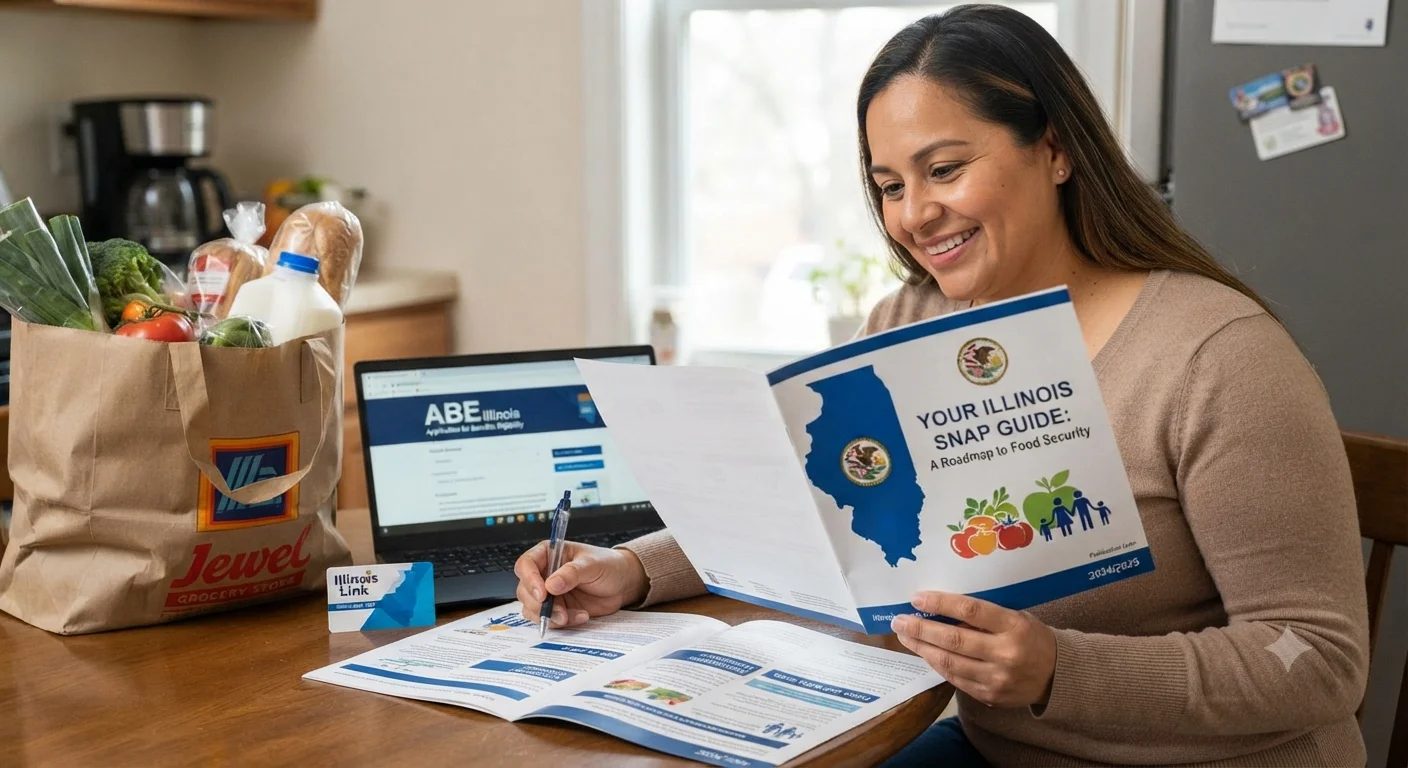
In Illinois, SNAP is commonly referred to as Link benefits, delivered on the Illinois Link card, and administered by the Illinois Department of Human Services through local Family Community Resource Centers and the online Application for Benefits Eligibility, known as ABE. Illinois uses Broad Based Categorical Eligibility, raising the gross income limit to 165 percent of the federal poverty level for most households, and 200 percent for households with a member age 60 or older or living with a disability.
This guide is independently written and is not affiliated with USDA, OPM, the Illinois Department of Human Services, or the official federal Feds Feed Families campaign.
What SNAP in Illinois Is Called and Who Runs It
Illinois still refers to the program informally as food stamps in some contexts, though it operates entirely through electronic benefits rather than paper coupons. The Illinois Department of Human Services, commonly abbreviated IDHS, administers the program through Family Community Resource Centers located in every county, and benefits are delivered on the Illinois Link card.
Income Limits
- What SNAP in Illinois Is Called and Who Runs It
- Income Limits
- Maximum Benefit Amounts
- How to Apply
- Recent Work Requirement Changes
- Protecting Your Link Card From Fraud
- What Happens If You Move Within Illinois
- FAQ
- What is SNAP called in Illinois?
- What is Illinois's SNAP income limit?
- How do I apply for SNAP in Illinois?
- What is Illinois's new SNAP work requirement in 2026?
Illinois applies a two-tier Broad Based Categorical Eligibility structure: most households must have gross income under 165 percent of the federal poverty level, while households with a member age 60 or older, or living with a disability, qualify under a higher 200 percent threshold and also receive uncapped shelter and medical expense deductions. This two-tier structure is a genuinely distinguishing feature of Illinois's program compared to states using a single flat BBCE percentage.
Maximum Benefit Amounts
Illinois households use the same federal maximum allotment table applied nationwide, ranging from $298 a month for a one-person household to $994 a month for a family of four, with $1,183 for a household of five, for federal fiscal year 2026. Your actual benefit reflects your household's net income after deductions.
How to Apply
- Online through the Application for Benefits Eligibility (ABE) portal at abe.illinois.gov
- In person at a local Family Community Resource Center
- By phone through the ABE Help Line
Most interviews are conducted in person, though telephone interviews are available if you're unable to leave your home. You can track your application through ABE's Manage My Case feature after applying online.
Recommended Articles
 STATE-SPECIFIC SNAP GUIDES
 STATE-SPECIFIC SNAP GUIDES
 STATE-SPECIFIC SNAP GUIDES
 STATE-SPECIFIC SNAP GUIDES
Recent Work Requirement Changes
Beginning February 1, 2026, most SNAP recipients between ages 18 and 64 in Illinois are required to report a minimum of 80 work hours each month to maintain benefits, with exemptions for parents, pregnant individuals, and people with disabilities. This represents a significant expansion from previous rules, and Illinois residents affected by this change should watch for correspondence from IDHS about their specific status.
Protecting Your Link Card From Fraud
Illinois specifically recommends changing your Link card PIN regularly, covering the keypad when entering your PIN, and avoiding card readers that look tampered with, since IDHS periodically issues alerts about compromised terminals through social media and text alerts.
What Happens If You Move Within Illinois
If you move to a different county within Illinois, your Link benefits continue without interruption, though you must notify IDHS of your address change within 10 days so your case can transfer to the Family Community Resource Center serving your new county.
Read More Articals
FAQ
What is SNAP called in Illinois?
Illinois SNAP benefits are commonly called Link benefits, delivered on the Illinois Link card, administered by the Illinois Department of Human Services.
What is Illinois's SNAP income limit?
165 percent of the federal poverty level for most households, and 200 percent for households with a member age 60 or older or living with a disability.
How do I apply for SNAP in Illinois?
Apply online through ABE at abe.illinois.gov, in person at a local Family Community Resource Center, or by phone through the ABE Help Line.
What is Illinois's new SNAP work requirement in 2026?
Beginning February 1, 2026, most recipients ages 18 to 64 must report at least 80 work hours a month, with exemptions for parents, pregnant individuals, and people with disabilities.
Sources: Illinois Department of Human Services, Illinois Legal Aid Online, USDA Food and Nutrition Administration.