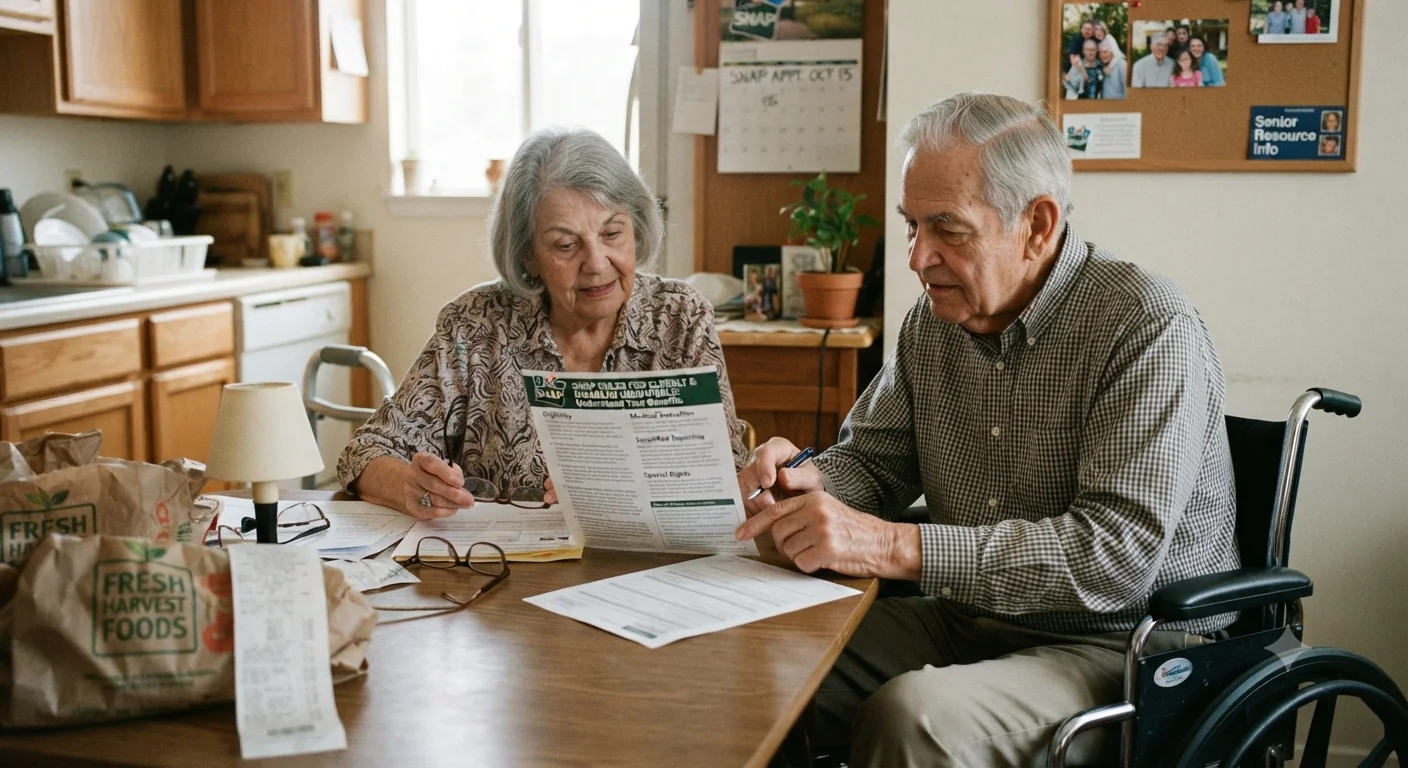
Households with a member who is age 60 or older, or who has a qualifying disability, receive several advantages under SNAP rules that other households do not, including a higher asset limit, an exemption from the gross income test, and access to a medical expense deduction that can significantly increase the monthly benefit amount.
This guide is independently written and is not affiliated with USDA, OPM, or the official federal Feds Feed Families campaign.
Who Qualifies for Elderly or Disabled Status
For SNAP purposes, a household member is considered elderly at age 60 or older. Disabled status generally includes anyone receiving Social Security Disability Insurance, Supplemental Security Income, certain veterans disability benefits, or another qualifying disability determination recognized by the state agency. Only one household member needs to meet either definition for the entire household to receive the associated special rules.
Exemption From the Gross Income Test
- Who Qualifies for Elderly or Disabled Status
- Exemption From the Gross Income Test
- Higher Asset Limit
- The Medical Expense Deduction
- No Cap on the Shelter Deduction
- How to Apply These Rules
- FAQ
- What age counts as elderly for SNAP?
- What medical expenses can I deduct for SNAP?
- Do elderly households have a higher SNAP asset limit?
- Are elderly SNAP recipients subject to work requirements?
Most SNAP households must pass two income tests, a gross income test at 130 percent of the federal poverty level and a net income test at 100 percent. Households with an elderly or disabled member only need to meet the net income test. This matters because some households with fairly high gross income, but very high medical or shelter costs, would fail the gross test and never get a chance to apply their deductions, if not for this exemption.
Higher Asset Limit
Standard SNAP households face a $3,000 asset limit. Households with an elderly or disabled member get a higher limit of $4,500. Countable assets generally include cash and money in bank accounts, while a home, one vehicle, and most retirement accounts remain excluded regardless of which limit applies.
The Medical Expense Deduction
This is one of the most underused SNAP deductions. Elderly or disabled household members can deduct unreimbursed medical expenses above $35 per month from their countable income, which directly increases the household's SNAP benefit. Eligible expenses include:
Recommended Articles
 SNAP EBT
 SNAP EBT
 SNAP EBT
 SNAP EBT
- Doctor and dentist visits, and other health professional services
- Prescription medications and some over the counter medications recommended by a doctor
- Medical supplies, equipment, and hearing aids
- Health insurance premiums, including Medicare premiums
- Transportation costs to receive medical treatment
- Costs of a service animal, including food and veterinary care
Because there is no cap on this deduction, households with significant medical expenses can see a meaningfully larger SNAP benefit once these costs are properly documented and reported.
No Cap on the Shelter Deduction
Standard households can deduct excess shelter costs, meaning housing costs above half their income, but that deduction is capped at $744 per month for most households. Elderly and disabled households face no cap on this deduction, which can make a significant difference for anyone living in a higher cost housing market.
How to Apply These Rules
These special rules are not automatic simply because you are over 60 or have a disability. You typically need to report your status and provide documentation, such as a Social Security award letter or medical provider statement, during your application or recertification. If you are already receiving SNAP and did not report elderly or disabled status previously, contact your caseworker to have your case reviewed, since this could increase your monthly benefit going forward.
Read More Articals
FAQ
What age counts as elderly for SNAP?
Age 60 or older qualifies a household member as elderly under SNAP rules.
What medical expenses can I deduct for SNAP?
Unreimbursed costs above $35 per month for doctor visits, prescriptions, medical supplies, health insurance premiums, and transportation to medical appointments, among other qualifying expenses, for elderly or disabled household members.
Do elderly households have a higher SNAP asset limit?
Yes. Households with an elderly or disabled member have a $4,500 asset limit, compared to $3,000 for standard households.
Are elderly SNAP recipients subject to work requirements?
No. Adults age 65 and older are fully exempt from all SNAP work requirements, and adults 60 to 64 are exempt from general work requirements, though they may still be subject to the ABAWD rule unless another exemption applies.
Sources: USDA Food and Nutrition Administration, Center on Budget and Policy Priorities.