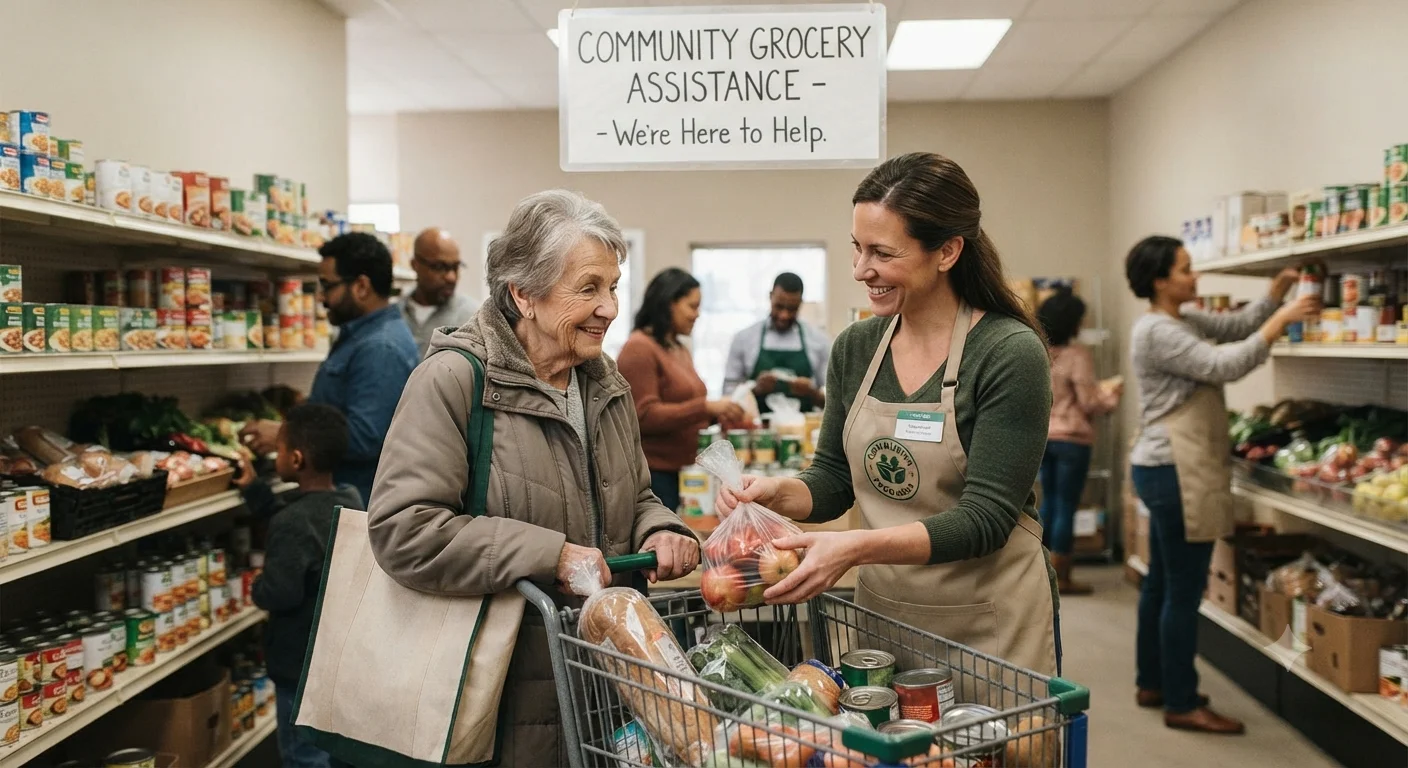
Beyond SNAP, several USDA-backed programs provide free food or grocery vouchers to specific groups including TEFAP for low-income households generally, CSFP for seniors 60 and older, farmers market voucher programs for seniors and WIC participants, and Double Up Food Bucks, which matches SNAP dollars spent on fresh produce. Many of these programs can be used alongside SNAP, not instead of it.
This guide is independently written and is not affiliated with USDA, OPM, or the official federal "Feds Feed Families" campaign.
TEFAP (The Emergency Food Assistance Program)
TEFAP is a federally funded program that supplies USDA-purchased food canned vegetables, fruit, meat, pasta, and other staples to state agencies, which distribute it through local food banks, pantries, and soup kitchens at no cost. Eligibility rules vary by state, but many states set the income limit around 185% of the federal poverty guidelines, and some states qualify entire households automatically if every member already receives public assistance. You don't apply for TEFAP separately in most cases you simply receive TEFAP-sourced food when you visit a participating food pantry.
CSFP (Senior Food Boxes)
- TEFAP (The Emergency Food Assistance Program)
- CSFP (Senior Food Boxes)
- Farmers Market Nutrition Program
- Double Up Food Bucks
- Local Church/Nonprofit Grocery Programs
- FAQ
- What food assistance programs are there besides SNAP?
- Can I use these programs alongside SNAP?
- Who qualifies for CSFP, the senior food box program?
- How do I find these programs in my area?
The Commodity Supplemental Food Program, sometimes called the "senior food box" program, provides a free monthly package of USDA foods items like nonfat dry milk, juice, cereal, rice, peanut butter, dry beans, and canned fruits and vegetables to low-income adults age 60 and older. To qualify, you generally must be at least 60 years old and have household income at or below 130% of the federal poverty level. CSFP operates in approximately 47 states, D.C., Puerto Rico, and several tribal nations as of 2026, but participation is sometimes limited by funding, which can mean a waitlist in high-demand areas. You apply directly at a local CSFP distribution site, typically with photo ID confirming your age.
Farmers Market Nutrition Program
Two related programs put fresh produce specifically within reach:
- Senior Farmers Market Nutrition Program (SFMNP): Provides low-income seniors 60 and older with a set of seasonal vouchers commonly $20 to $50 worth per person, depending on the state redeemable for fresh fruits, vegetables, herbs, and honey at authorized farmers markets, roadside stands, and community-supported agriculture programs. Vouchers are typically distributed once per year, seasonally, and cannot be used at supermarkets.
- WIC Farmers Market Nutrition Program (FMNP): A similar seasonal voucher benefit available to WIC participants specifically, also redeemable only at authorized farmers markets and farm stands.
Double Up Food Bucks
Double Up Food Bucks is a matching program available at participating farmers markets, farm stands, and some grocery stores: every dollar of SNAP benefits spent on eligible groceries earns a matching dollar (in some states, up to two matching dollars) to spend specifically on fresh fruits and vegetables, often capped at $20–$25 per day. This effectively doubles a SNAP household's produce budget at participating locations, though availability depends on which markets and stores in your area have signed up.
Recommended Articles
 GOVERNMENT ASSISTANCE GUIDES
 GOVERNMENT ASSISTANCE GUIDES
 GOVERNMENT ASSISTANCE GUIDES
 GOVERNMENT ASSISTANCE GUIDES
Local Church/Nonprofit Grocery Programs
Beyond federally funded programs, many local churches, synagogues, mosques, and community nonprofits run their own grocery assistance programs free grocery days, standing food pantries, or grocery gift card programs independent of USDA funding. These vary enormously by community, so it's worth calling 211 or a local house of worship directly to ask what's available, since many of these programs aren't listed in national databases.
Read More Articals
FAQ
What food assistance programs are there besides SNAP?
TEFAP (general emergency food distribution), CSFP (senior food boxes), the Senior and WIC Farmers Market Nutrition Programs (produce vouchers), and Double Up Food Bucks (SNAP produce matching), among various local nonprofit programs.
Can I use these programs alongside SNAP?
Yes, in most cases. TEFAP, CSFP, and the farmers market voucher programs are all designed to complement SNAP, not replace it, and receiving one generally doesn't disqualify you from the others.
Who qualifies for CSFP, the senior food box program?
Generally adults 60 or older with household income at or below 130% of the federal poverty level, though exact rules and availability depend on your state.
How do I find these programs in my area?
Call 211, contact your local Area Agency on Aging, or search "[program name] + [your state]" availability and specific rules vary significantly by state and county.
Sources: USDA Food and Nutrition Administration (fna.usda.gov), state Departments of Human Services (Arizona, Missouri, Utah, Oklahoma, Florida), National Council on Aging.