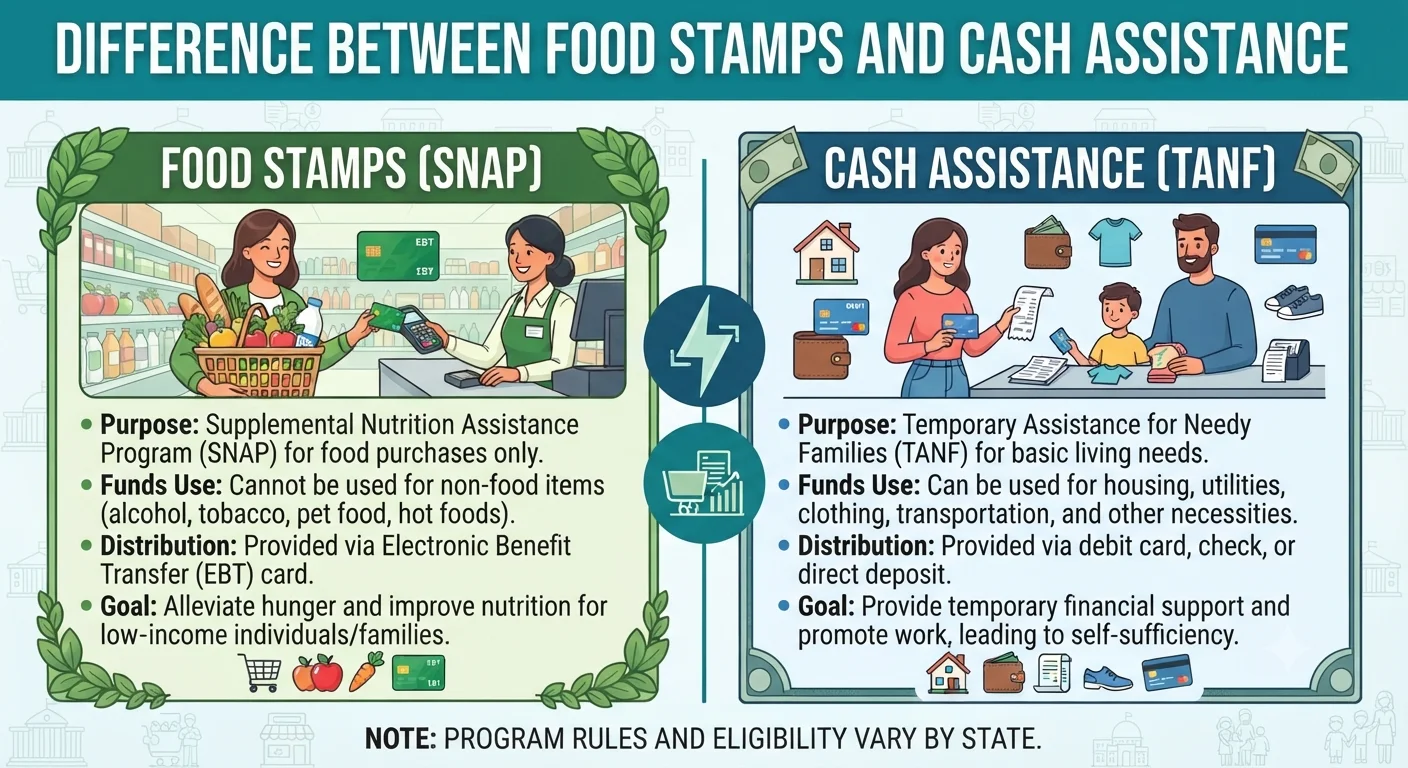
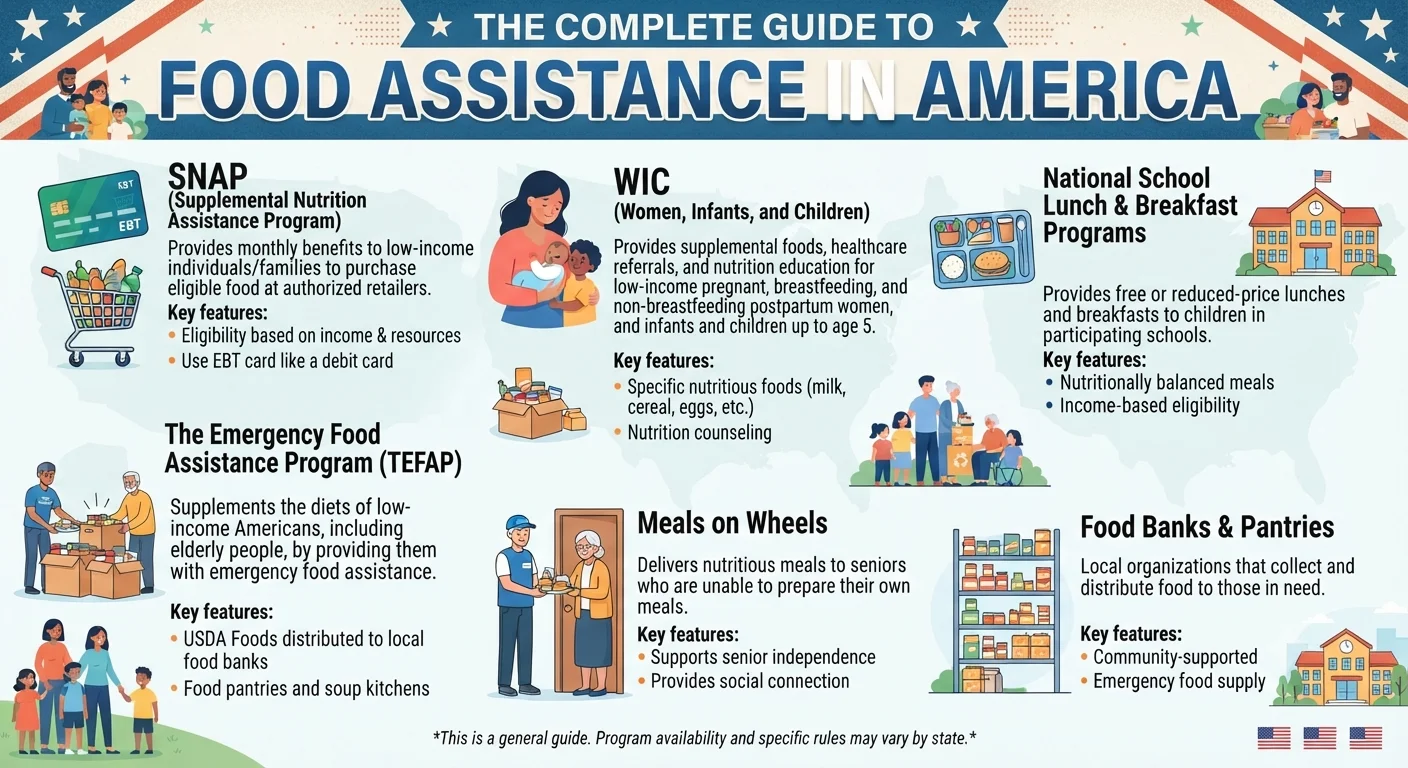
Food stamps, formally SNAP, provide a monthly benefit restricted to purchasing eligible groceries, loaded onto an EBT card. Cash assistance, formally TANF, provides flexible cash that a household can use for any need, including rent, utilities, or clothing, not just food. The two are separate programs with different eligibility rules, though households often qualify for and use both at the same time.
This guide is independently written and is not affiliated with USDA, OPM, or the official federal Feds Feed Families campaign.
What Food Stamps (SNAP) Actually Provide
SNAP delivers a monthly dollar amount, calculated from household income and size, that can only be spent on eligible food items, groceries meant to be prepared at home, at authorized retailers. It cannot be withdrawn as cash, used to pay bills directly, or spent on non-food items like household supplies or clothing.
What Cash Assistance (TANF) Actually Provides
- What Food Stamps (SNAP) Actually Provide
- What Cash Assistance (TANF) Actually Provides
- Key Differences at a Glance
- Why the Terms Get Confused
- How They Work Together
- Applying for Each Program
- FAQ
- Is TANF the same thing as food stamps?
- Can I get both SNAP and TANF at the same time?
- Does TANF have a time limit that SNAP doesn't?
- Why do people sometimes call all government assistance "food stamps"?
TANF provides a genuinely flexible cash payment, deposited monthly, that a household can use for essentially any need, rent, utilities, transportation, clothing, or food, without the same restrictions SNAP places on how the money can be spent. TANF is specifically designed for households with children under 18, or a pregnant household member, and comes with work requirements and a federal 60-month lifetime limit that SNAP does not have.
Key Differences at a Glance
- What it covers: SNAP is food-only; TANF is flexible cash for any household need
- Who qualifies: SNAP is open to any income-eligible household regardless of composition; TANF generally requires a child under 18 or a pregnant household member
- Time limits: SNAP has no lifetime limit as long as you remain eligible; TANF has a federal 60-month lifetime cap for most adult recipients
- Work requirements: Both have work-related requirements, but they're structured differently, with SNAP's ABAWD rule applying to a broader population than TANF's work participation requirements
- Funding structure: SNAP is fully federally funded; TANF is a federal block grant that states supplement with their own funding and administer with significant flexibility
Why the Terms Get Confused
"Food stamps" is an older, informal term that technically refers only to SNAP, but it's sometimes used loosely, and inaccurately, to refer to any government assistance, including cash aid. Similarly, "welfare" is a broad, often outdated umbrella term that historically referred to cash assistance programs like TANF, but gets applied colloquially to almost any benefit program, including SNAP, contributing to ongoing public confusion between the two.
Recommended Articles
 GOVERNMENT ASSISTANCE GUIDES
 GOVERNMENT ASSISTANCE GUIDES
 GOVERNMENT ASSISTANCE GUIDES
 GOVERNMENT ASSISTANCE GUIDES
How They Work Together
Rather than functioning as alternative or competing programs, SNAP and TANF are frequently used together by the same household. TANF recipients are automatically categorically eligible for SNAP, meaning they skip SNAP's standard income and asset tests, while TANF cash counts as income in the SNAP benefit calculation, generally producing a somewhat lower SNAP amount than a household with no TANF income would receive, though the household still typically qualifies for both.
Applying for Each Program
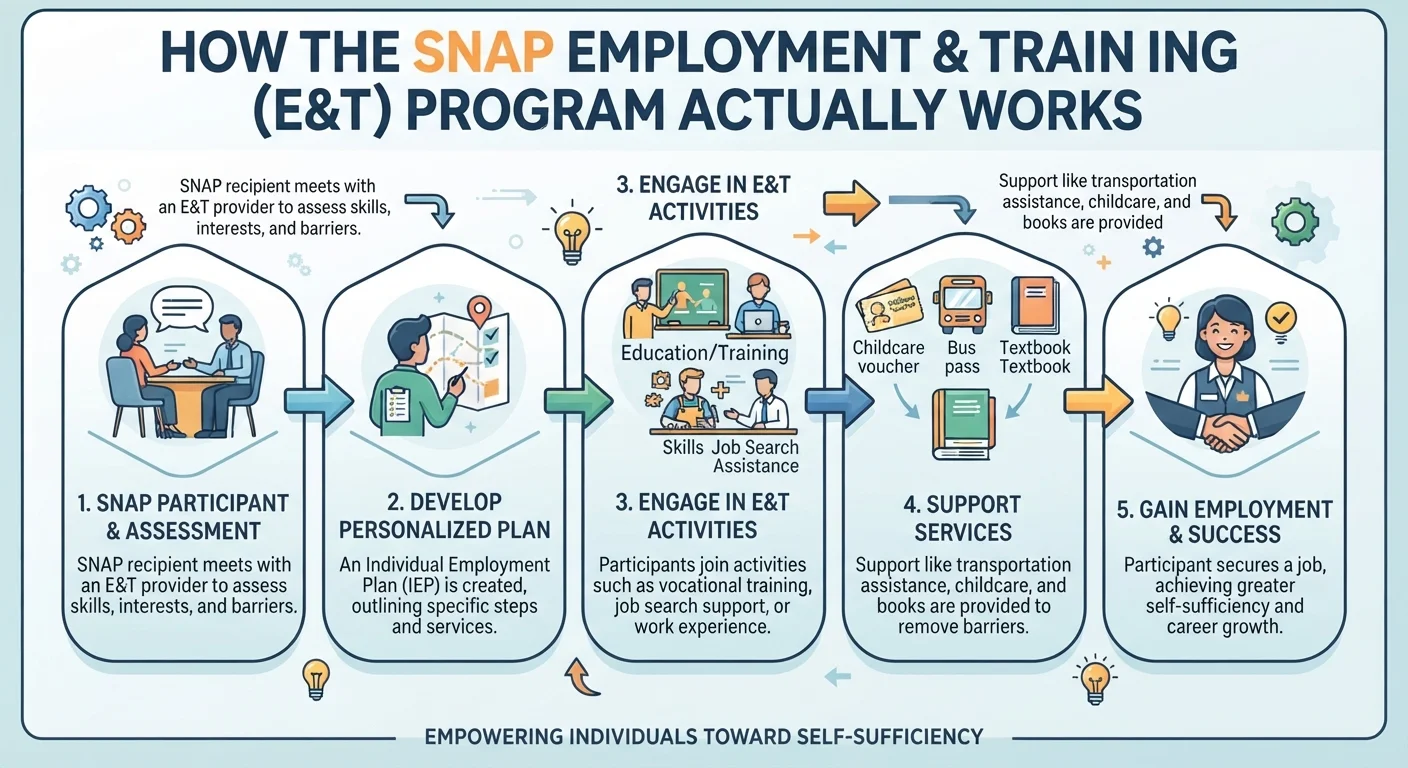
Both programs are administered at the state level, often through the same state agency, and a growing number of states now offer a combined application covering SNAP, TANF, and Medicaid together, which can streamline the process compared to applying to each separately.
Read More Articals
FAQ
Is TANF the same thing as food stamps?
No. TANF is flexible cash assistance usable for any household need, while food stamps, formally SNAP, are restricted to purchasing eligible groceries only.
Can I get both SNAP and TANF at the same time?
Yes. TANF recipients are automatically categorically eligible for SNAP, and many households receive both simultaneously.
Does TANF have a time limit that SNAP doesn't?
Yes. TANF has a federal 60-month lifetime limit for most adult recipients, while SNAP has no lifetime limit as long as a household remains income-eligible.
Why do people sometimes call all government assistance "food stamps"?
It's an informal, often inaccurate usage. "Food stamps" technically refers only to SNAP, but the term is sometimes used loosely to describe government assistance broadly, contributing to confusion between distinct programs like SNAP and TANF.
Sources: U.S. Department of Health and Human Services Office of Family Assistance, USDA Food and Nutrition Administration.