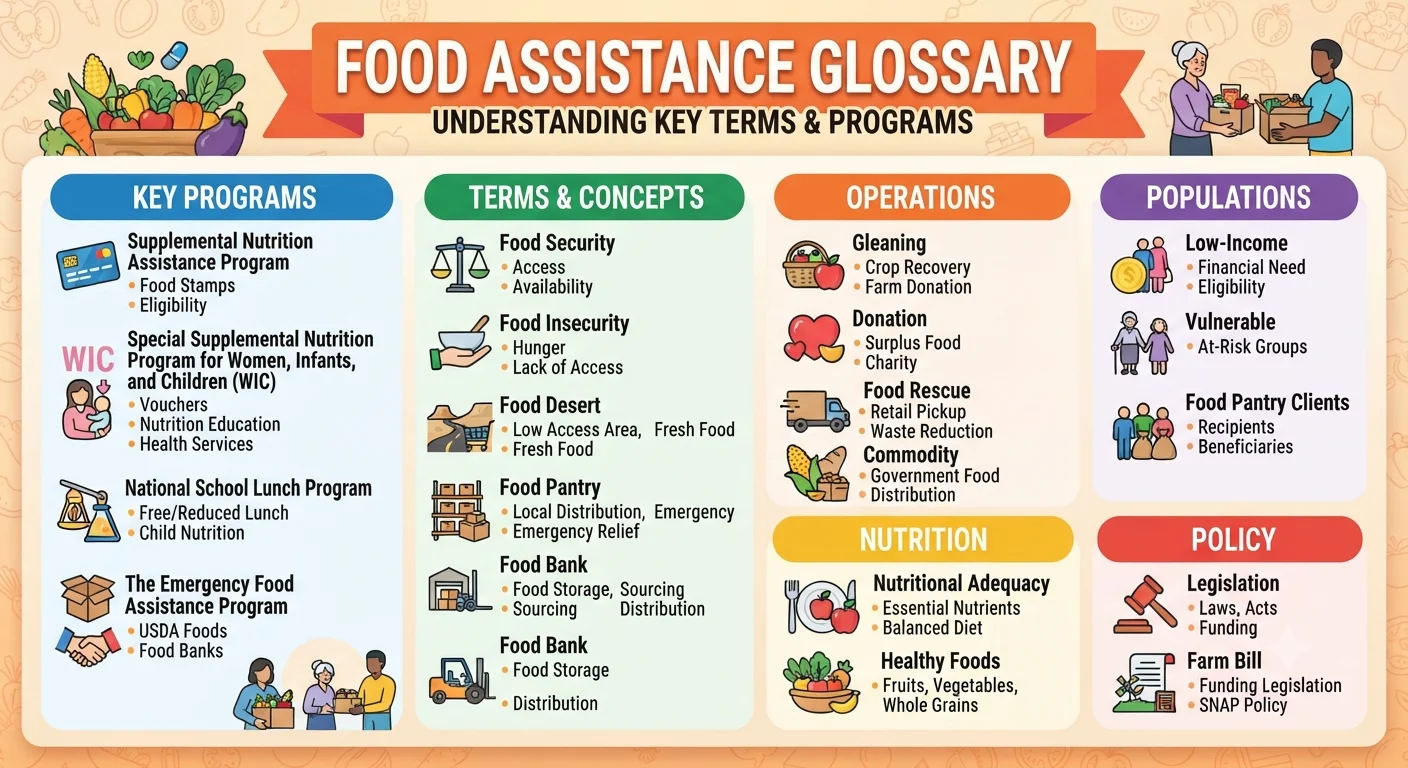
Food assistance programs come with a dense set of acronyms and technical terms, from FPL to ABAWD to categorical eligibility, that can make an already complicated application process feel more confusing than it needs to be. This glossary defines the terms that come up most often across SNAP, WIC, and related programs in plain language.
This guide is independently written and is not affiliated with USDA, OPM, or the official federal Feds Feed Families campaign.
Core Programs
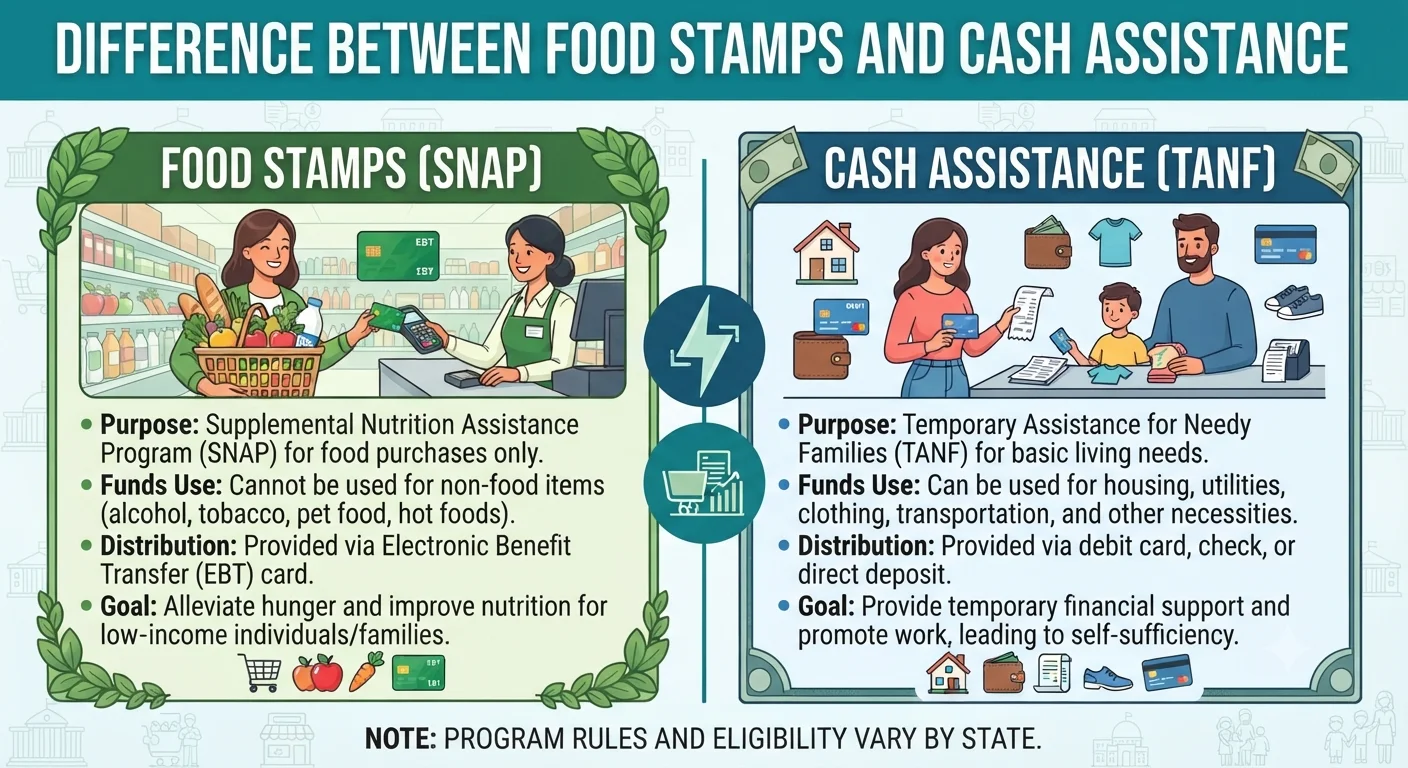
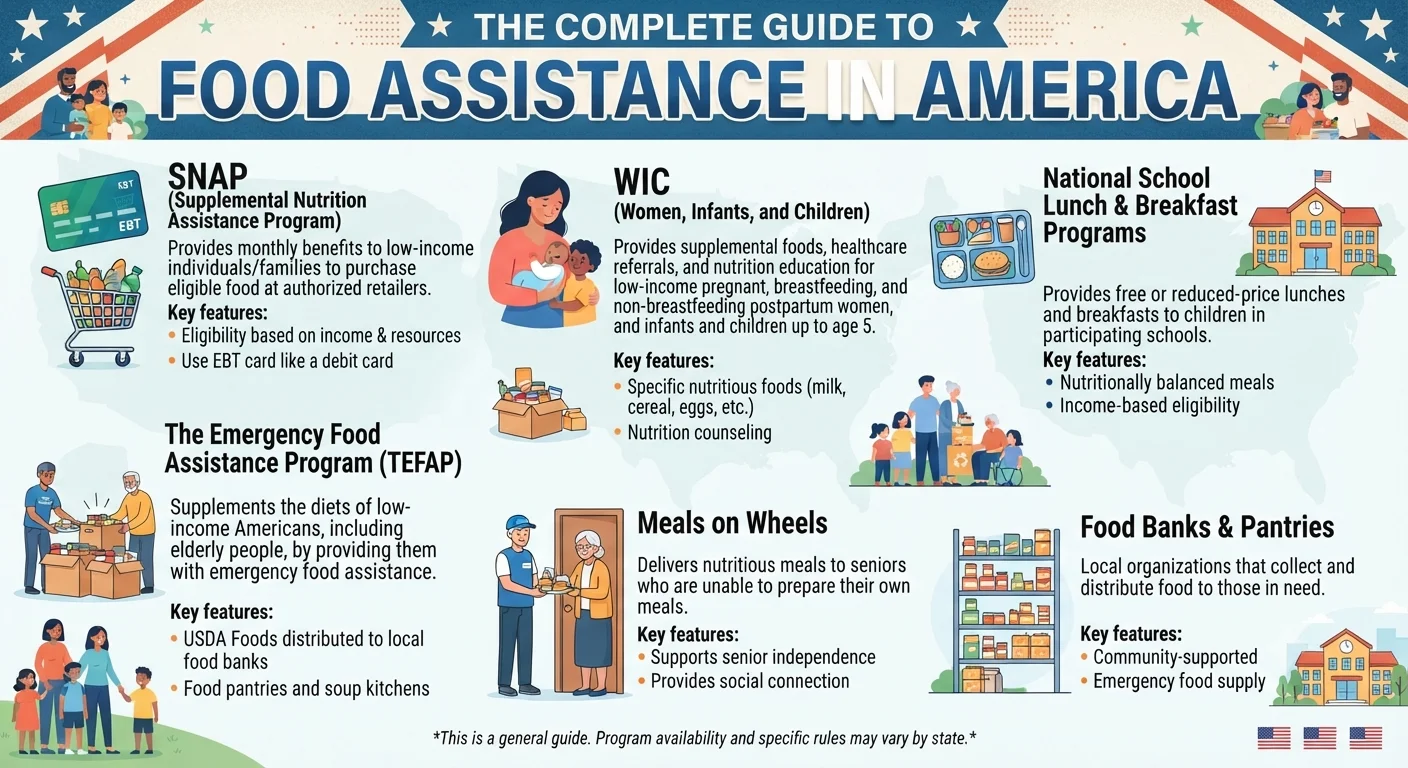
SNAP (Supplemental Nutrition Assistance Program): The largest federal food assistance program, providing monthly grocery benefits on an EBT card to income-eligible households of any composition.
WIC (Special Supplemental Nutrition Program for Women, Infants, and Children): A federal program providing targeted nutrition support, food packages, and services to pregnant, postpartum, and breastfeeding women, infants, and children up to age 5.
TANF (Temporary Assistance for Needy Families): A state-administered cash assistance program for low-income families with children, funded through a federal block grant, usable for general household expenses rather than food specifically.
TEFAP (The Emergency Food Assistance Program): A USDA program that purchases commodity foods and distributes them to state agencies, which supply local food banks and pantries at no cost to recipients.
CSFP (Commodity Supplemental Food Program): Often called the senior food box program, providing a free monthly package of USDA foods to low-income adults 60 and older.
D-SNAP (Disaster Supplemental Nutrition Assistance Program): Temporary emergency food benefits available after a federally declared disaster, using a separate eligibility test than regular SNAP.
FDPIR (Food Distribution Program on Indian Reservations): A USDA program providing a monthly commodity food package as an alternative to SNAP for eligible households on or near Indian reservations.
Agencies and Oversight
FNA (Food and Nutrition Administration): The USDA agency that administers SNAP, WIC, and most other federal nutrition programs, renamed from the Food and Nutrition Service (FNS) as of June 1, 2026.
FRAC (Food Research and Action Center): A nonprofit policy and advocacy organization that publishes research on hunger, SNAP, and school meal programs, distinct from operational food bank organizations.
Eligibility Terms
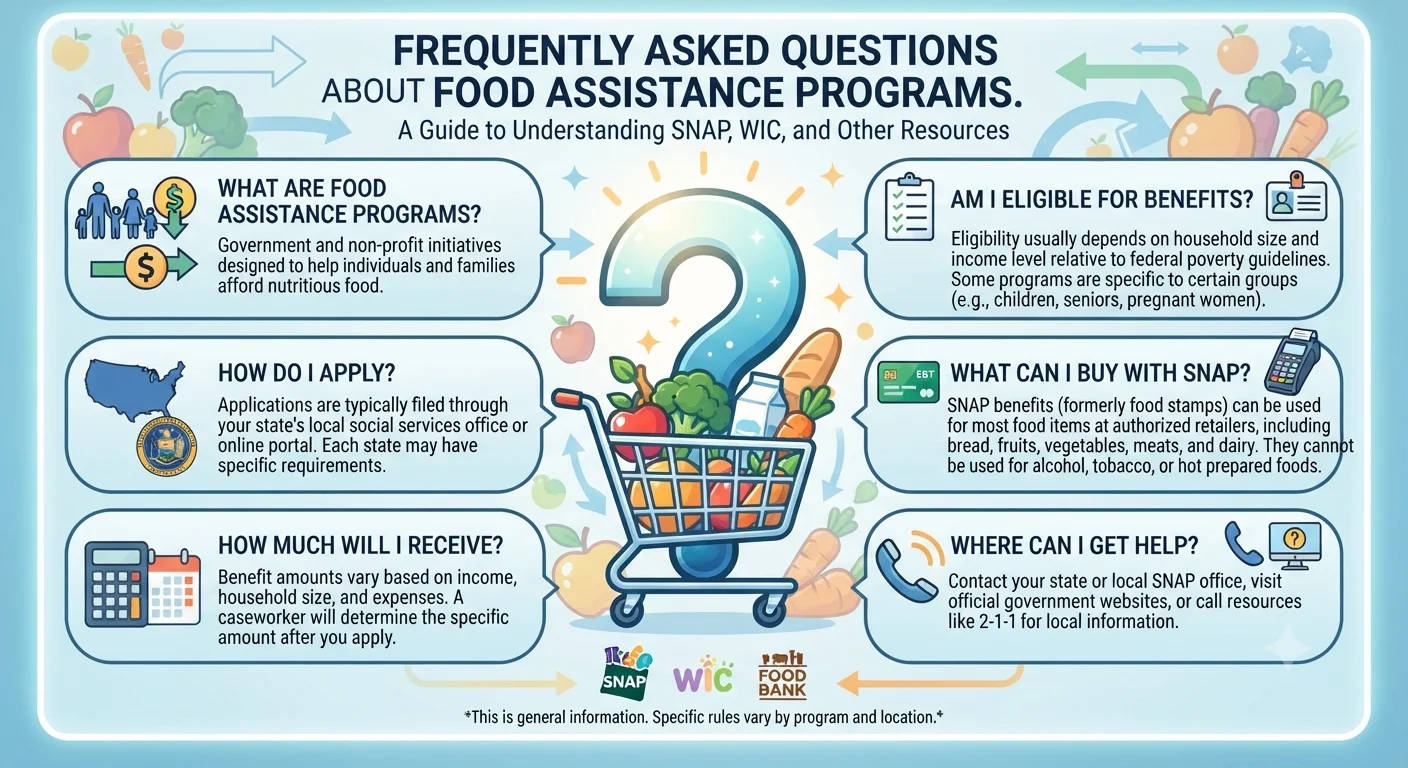
FPL (Federal Poverty Level): An income threshold published annually by the U.S. Department of Health and Human Services, used as the baseline for most benefit program eligibility calculations. For 2026, it's approximately $15,650 for a single person and $32,150 for a family of four.
Gross Income: Total household income before taxes and deductions, used for SNAP's initial eligibility test.
Recommended Articles
 GOVERNMENT ASSISTANCE GUIDES
 GOVERNMENT ASSISTANCE GUIDES
 GOVERNMENT ASSISTANCE GUIDES
 GOVERNMENT ASSISTANCE GUIDES
Net Income: Income after allowable deductions, such as the standard deduction, earned income deduction, and shelter costs, used for SNAP's second eligibility test.
Categorical Eligibility: Automatically qualifying for one program because a household already receives another, such as SNAP or TANF participation automatically satisfying WIC's income requirement.
BBCE (Broad-Based Categorical Eligibility): A state option that raises SNAP's gross income limit, often to around 200 percent of the federal poverty level, and frequently eliminates the standard asset test.
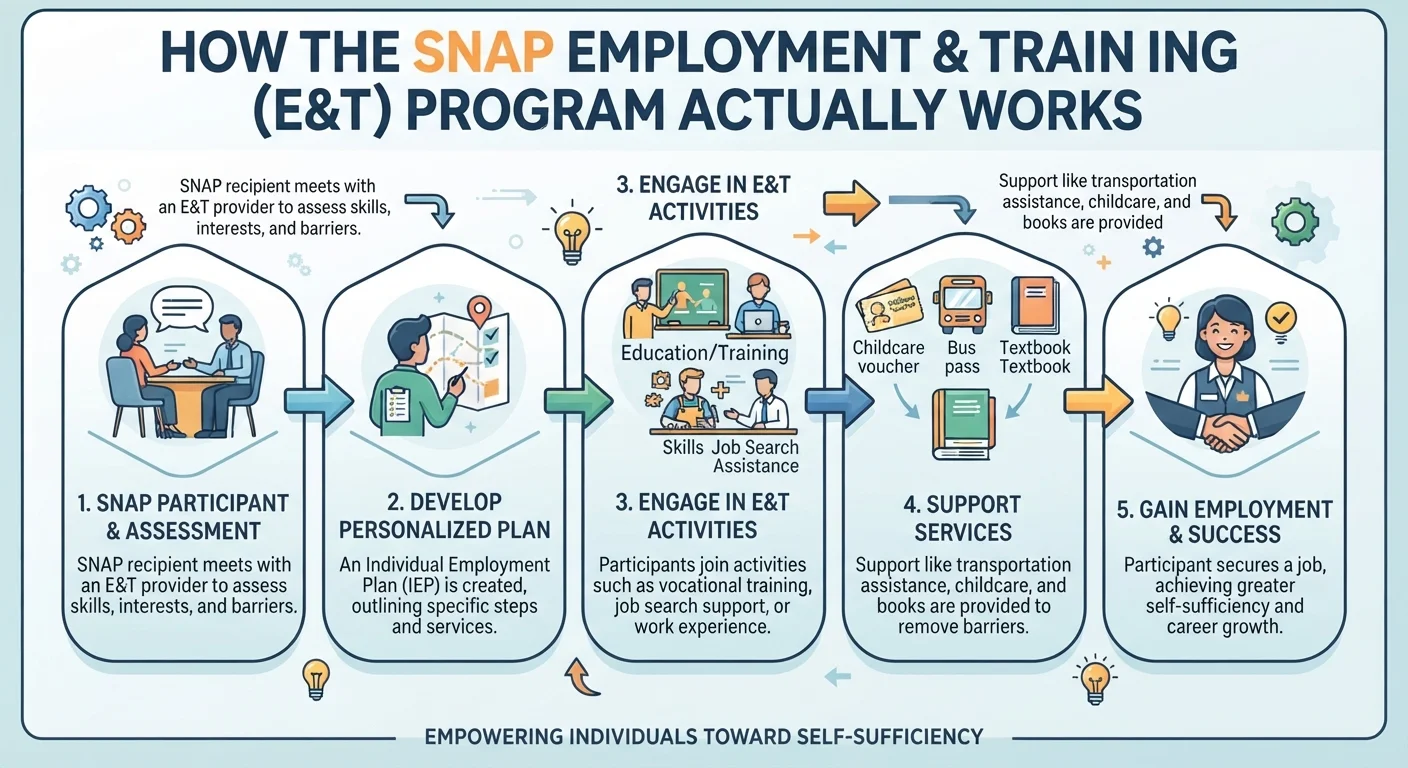
ABAWD (Able-Bodied Adult Without Dependents): A category subject to SNAP's stricter work requirement, generally applying to adults ages 18 through 64 without dependents who aren't otherwise exempt.
Cards and Benefits
EBT (Electronic Benefit Transfer): The card system SNAP, and in some states WIC and TANF, benefits are loaded onto, functioning like a debit card at authorized retailers.
eWIC: The electronic card system used for WIC benefits, replacing older paper vouchers in most states.
Cash Value Benefit (CVB): The specific dollar amount within a WIC food package designated for fresh, frozen, or canned fruits and vegetables.
School and Child Nutrition Terms
CEP (Community Eligibility Provision): An option letting qualifying high-poverty schools serve free meals to all students without individual applications.
NSLP (National School Lunch Program): The federal program providing free and reduced-price school lunches based on household income.
SBP (School Breakfast Program): The federal program providing free and reduced-price school breakfast, using the same income guidelines as NSLP.
SFSP (Summer Food Service Program): Free meals served at community sites in qualifying areas during summer break.
CACFP (Child and Adult Care Food Program): Federal reimbursement for licensed child care providers and adult day care facilities serving nutritious meals.
Read More Articals
FAQ
What does FPL stand for and why does it matter?
FPL stands for Federal Poverty Level, an annually published income threshold that most food assistance programs use as the basis for their eligibility calculations, typically expressed as a percentage, such as 130 percent of FPL for SNAP.
What is categorical eligibility?
It's the process of automatically qualifying for one benefit program because a household already receives another, such as SNAP participation automatically satisfying WIC's income requirement.
What's the difference between EBT and eWIC?
EBT is the general electronic benefit card system used for SNAP and, in some states, TANF, while eWIC is the specific electronic card system used for WIC benefits.
What does ABAWD mean?
ABAWD stands for Able-Bodied Adult Without Dependents, a SNAP category subject to a stricter work requirement, generally applying to adults ages 18 through 64 without dependents who aren't otherwise exempt.
Sources: USDA Food and Nutrition Administration, U.S. Department of Health and Human Services Federal Poverty Guidelines, Feeding America glossary resources.