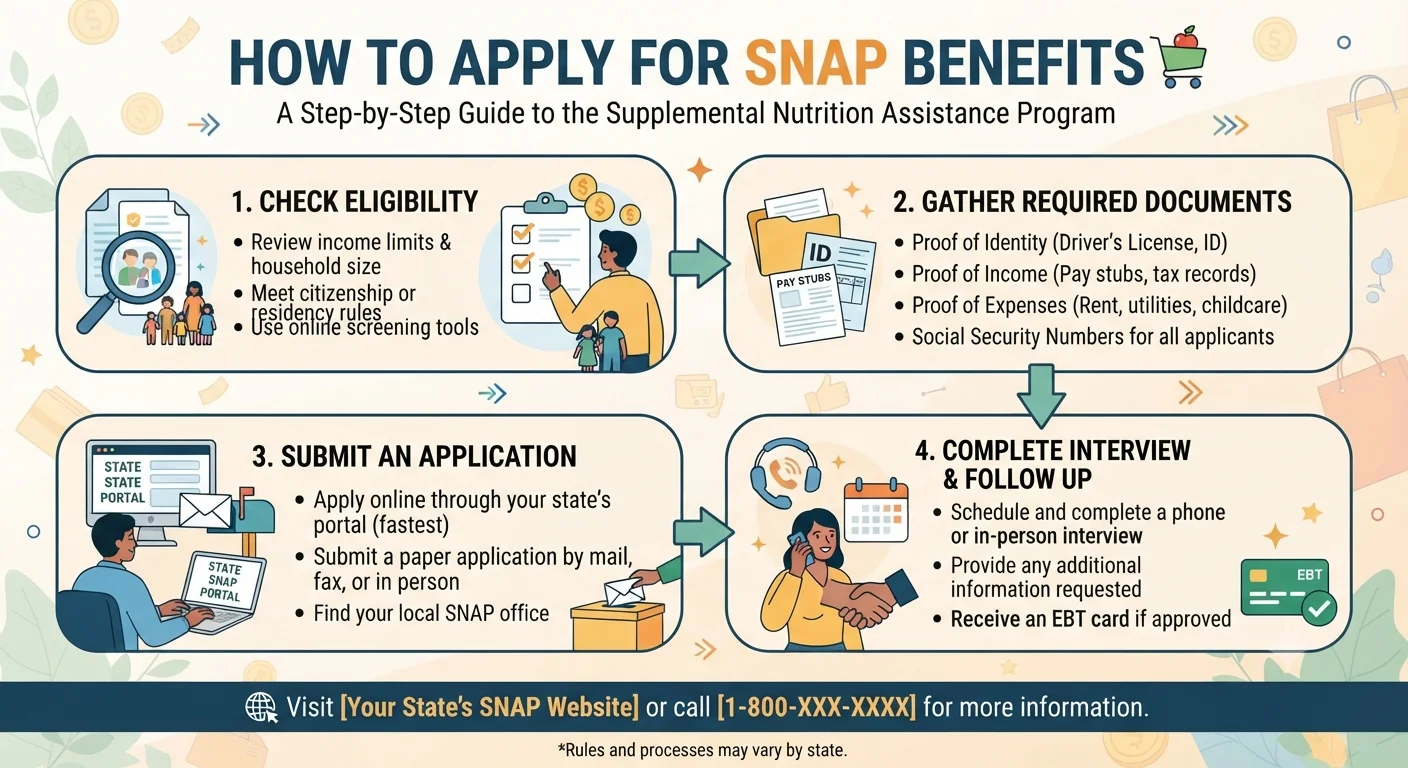
You apply for SNAP through your state's benefits agency, not the federal government directly. Most states let you apply online, by mail, by fax, or in person, and by law you must receive a decision within 30 days of applying or within 7 days if you qualify for expedited service.
This guide is independently written and is not affiliated with USDA, OPM, or the official federal "Feds Feed Families" campaign.
Before You Apply: Documents You'll Need
- Photo ID for the head of household
- Proof of income (recent pay stubs, benefit award letters, or self-employment records)
- Proof of residency (lease, utility bill, or mail addressed to you)
- Social Security numbers for household members applying for benefits
- Proof of housing costs if you plan to claim a shelter deduction
- Immigration documents, if applicable, for non-citizen household members
Step 1: Find Your State Agency
- Before You Apply: Documents You'll Need
- Step 1: Find Your State Agency
- Step 2: Complete the Application
- Step 3: The Interview
- Step 4: Approval Timeline (30-Day Rule)
- Emergency/Expedited SNAP
- Common Application Mistakes
- FAQ
- How do I apply for food stamps?
- How long does it take to get approved for SNAP?
- What if I don't have all my documents yet?
- Can I apply for SNAP if I'm unemployed?
SNAP is federally funded but state-administered, so the application portal and program name vary. California calls it CalFresh; Texas runs it through the Texas Health and Human Services Commission; other states use names like "Food Stamps" or simply "SNAP." Search "[your state] SNAP application" to find your local office and confirm you're on an official state government site.
Step 2: Complete the Application
Most states offer an online application through their Department of Health and Human Services (or equivalent) website. You'll answer questions about household size, income, expenses, and assets. Be thorough and honest incomplete applications are one of the most common causes of processing delays or denials.
If you don't have reliable internet access, you can:
- Request a paper application by phone or mail
- Apply in person at a local SNAP office
- Get help from a community nutrition outreach organization
Step 3: The Interview
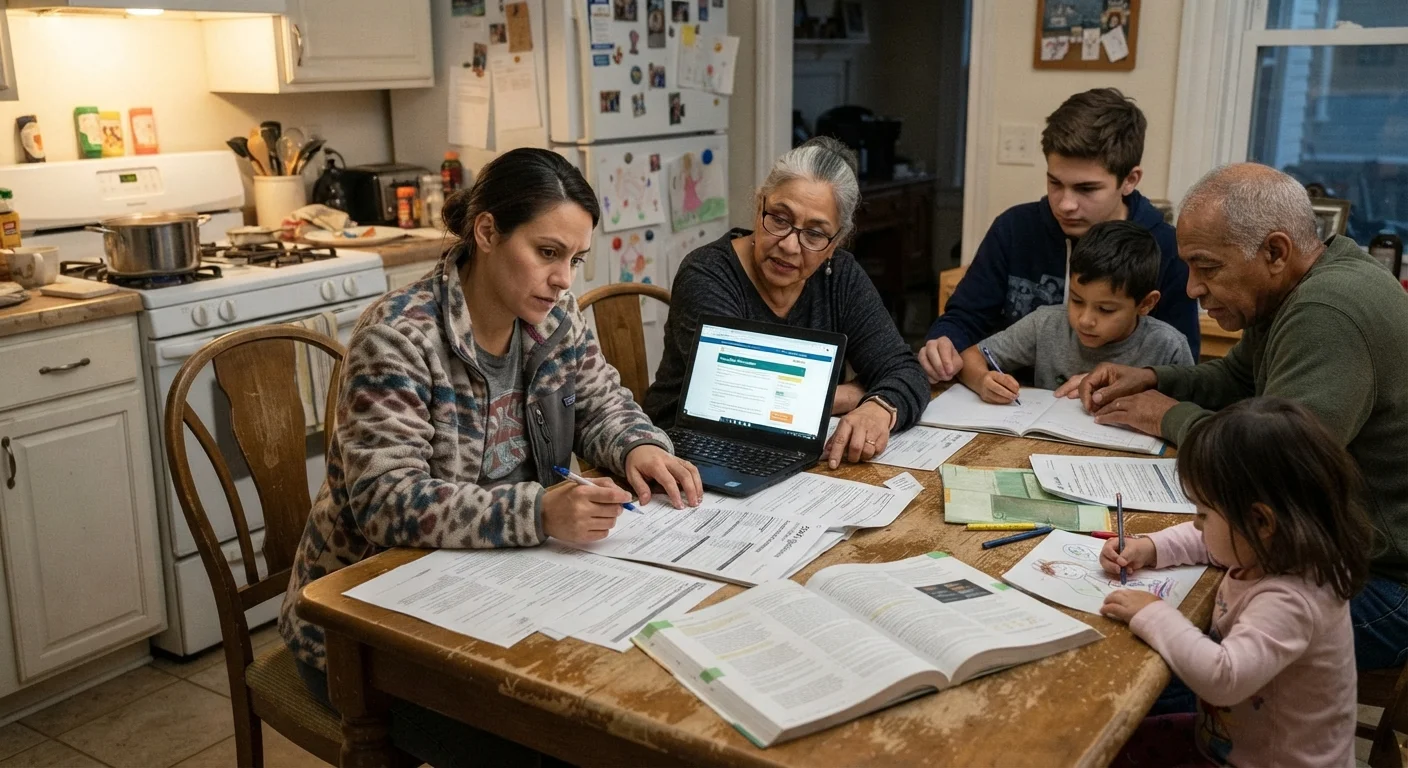
After you submit your application, your state agency will schedule an interview usually by phone, though some offices allow in-person interviews on request. A caseworker verifies your information and asks any follow-up questions about income, household composition, or expenses.
Recommended Articles
 SNAP EBT
 SNAP EBT
 SNAP EBT
 SNAP EBT
Step 4: Approval Timeline (30-Day Rule)
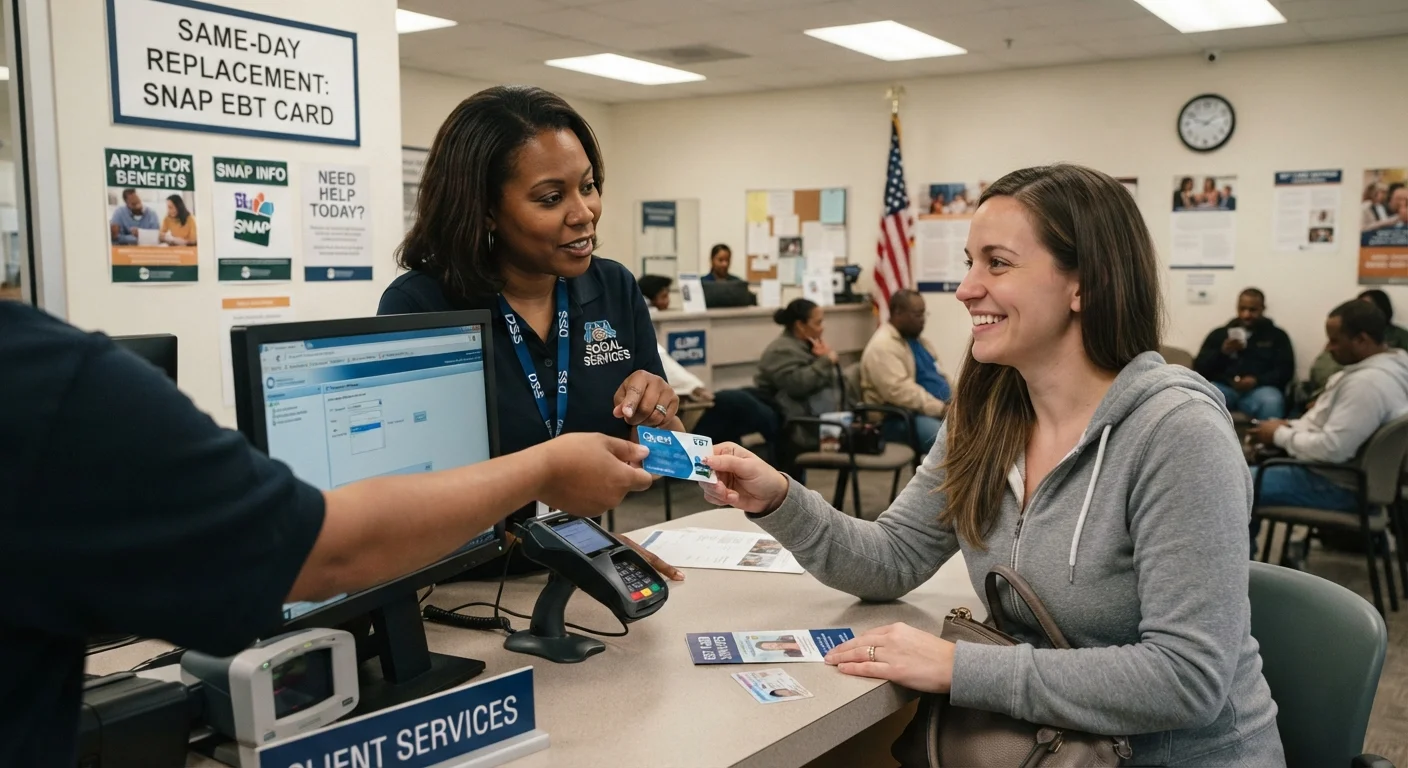
Under the Food and Nutrition Act of 2008, states must determine eligibility and issue benefits within 30 days of your application date. If approved, benefits are typically loaded onto your EBT card within 24–48 hours of the decision.
If you miss your scheduled interview and don't reschedule before day 30, your application may be denied but you can reapply immediately with no penalty.
Emergency/Expedited SNAP
If your household has very little money, you may qualify for expedited SNAP, which guarantees benefits within 7 calendar days instead of 30. You generally qualify if:
- Your household has less than $150 in monthly gross income and $100 or less in cash/liquid resources, or
- Your housing and utility costs exceed your monthly income and available cash, or
- You're a migrant or seasonal farm worker with $100 or less in resources
Common Application Mistakes
- Leaving income fields blank instead of writing "$0"
- Forgetting to report all household members, even those without income
- Missing the interview without calling to reschedule
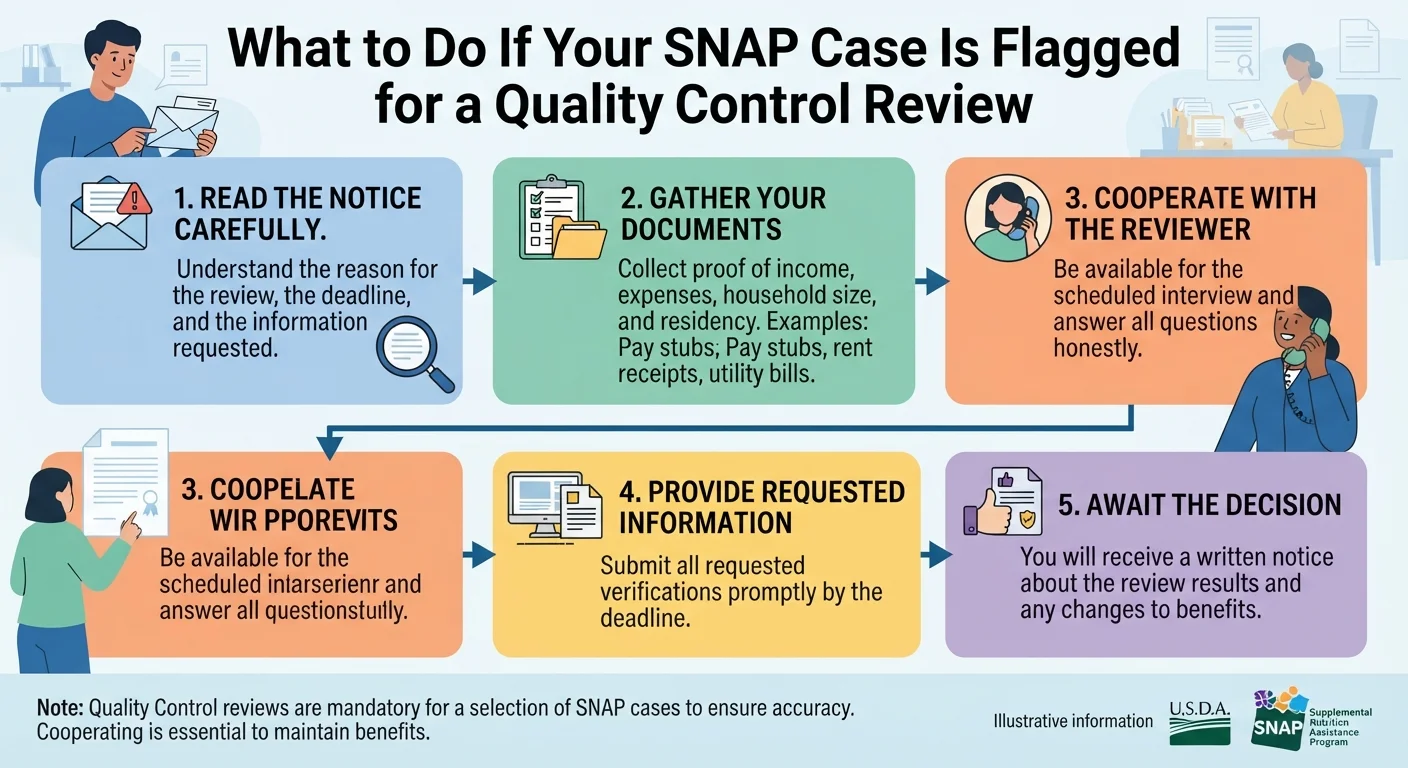
- Not responding to document requests quickly most states give you 10 days
- Assuming you don't qualify because of a car or retirement account these are typically excluded from the asset test
FAQ
How do I apply for food stamps?
You apply through your state's SNAP agency online, by mail, by fax, or in person not through the federal government directly.
How long does it take to get approved for SNAP?
Standard applications must be processed within 30 days; expedited cases within 7 days.
What if I don't have all my documents yet?
Apply anyway. Many states let you submit verification documents after the initial application.
Can I apply for SNAP if I'm unemployed?
Yes. Eligibility is based on household income and resources, not employment status.
Sources: USDA Food and Nutrition Administration (fna.usda.gov), Food and Nutrition Act of 2008.