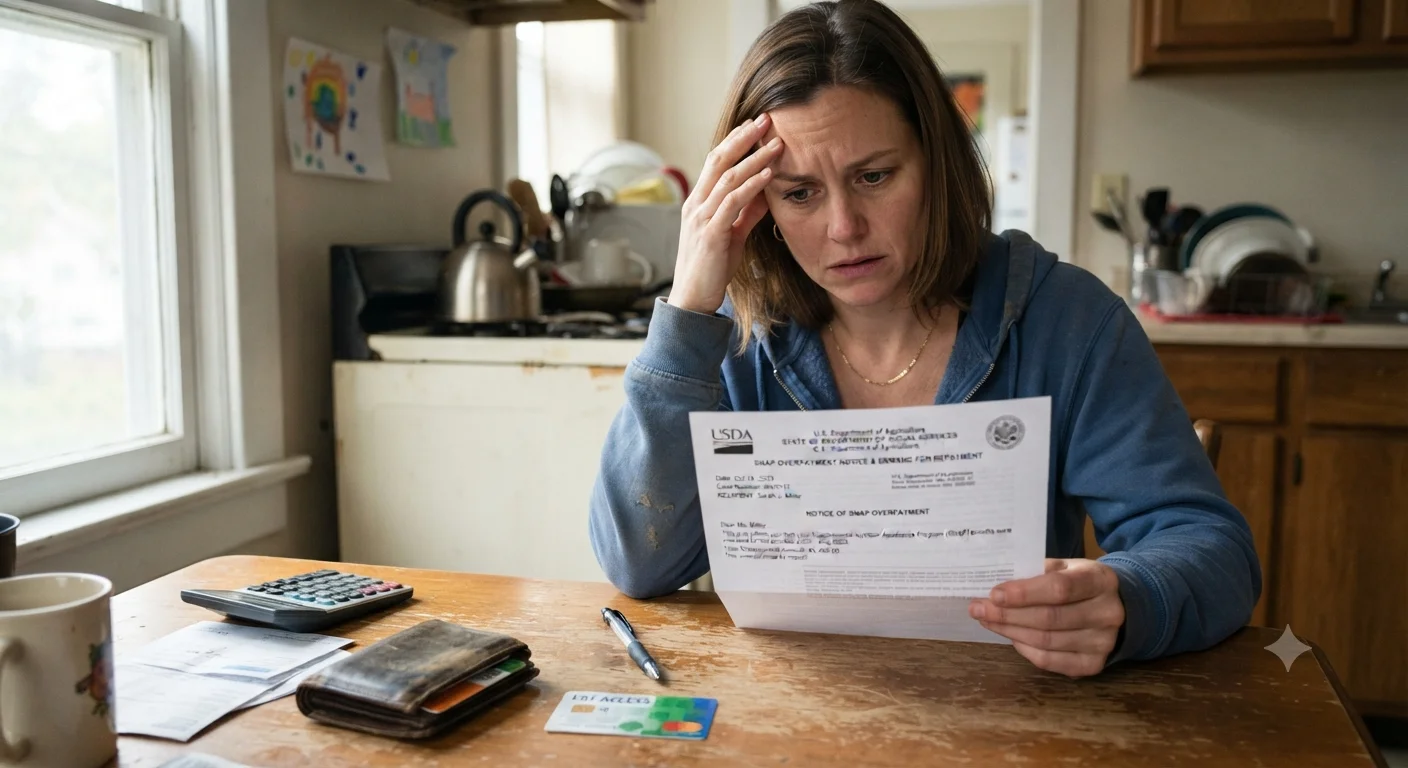
A SNAP overpayment occurs when a household receives more benefits than it was actually entitled to, and in the large majority of cases this results from an honest error, either a household reporting mistake or an agency processing error, rather than intentional fraud. Households facing an overpayment generally have the right to a repayment plan, and to appeal the overpayment determination itself if they believe it's incorrect.
This guide is independently written and is not affiliated with USDA, OPM, or the official federal Feds Feed Families campaign.
Common Causes of Overpayment
- Household error: Failing to report an income increase, a new household member, or another change within the required timeframe, even unintentionally
- Agency error: A caseworker miscalculating income, applying an incorrect deduction, or making a data entry mistake unrelated to anything the household did wrong
- Intentional program violation: Deliberately withholding or misreporting information to receive a higher benefit, which is treated more seriously and can carry additional consequences beyond simple repayment
It's worth understanding that the vast majority of overpayments fall into the first two categories rather than the third, and an overpayment notice alone does not mean you're accused of fraud.
How States Discover an Overpayment
- Common Causes of Overpayment
- How States Discover an Overpayment
- Your Right to Understand and Dispute the Determination
- Repayment Options
- Hardship Considerations
- Preventing Future Overpayments
- Distinguishing Overpayment From Intentional Fraud
- FAQ
- Does a SNAP overpayment mean I committed fraud?
- Can I dispute a SNAP overpayment determination?
- How do I repay a SNAP overpayment?
- How can I avoid a future overpayment?
Overpayments are commonly identified through routine data matching, where a state agency cross-references reported income against other government data sources, such as wage records, and finds a discrepancy, or through a recertification review that reveals a change wasn't reported promptly when it occurred. In either case, the state is required to notify the household of the specific overpayment amount and the reason it occurred.
Your Right to Understand and Dispute the Determination
You have the right to see exactly how the overpayment amount was calculated, and if you believe the determination is incorrect, whether the amount is wrong or you believe no overpayment actually occurred, you can request a fair hearing to formally dispute it, similar to the appeals process used for a denied application.
Repayment Options
If an overpayment determination stands, states generally offer more than one way to repay it:
- Benefit reduction: A portion of your ongoing monthly SNAP benefit is reduced until the overpayment is repaid, if you're still receiving benefits
- A payment plan: Repaying the overpayment directly through a structured monthly payment agreement, particularly relevant if you're no longer receiving SNAP
- A lump-sum payment, if a household is able and chooses to pay the full amount at once rather than through an installment plan
Hardship Considerations
If a proposed repayment plan would create a genuine financial hardship, it's worth discussing this directly with your caseworker, since some states have flexibility to adjust the repayment amount or schedule based on a household's current circumstances, rather than applying a single rigid formula regardless of ability to pay.
Recommended Articles
 SNAP EBT
 SNAP EBT
 SNAP EBT
 SNAP EBT
Preventing Future Overpayments
Because household reporting errors are one of the most common causes of overpayment, promptly reporting any change in income, household size, or other relevant circumstances, generally within 10 days as most states require, is the most reliable way to avoid an overpayment situation developing in the first place. If you're ever unsure whether something needs to be reported, reporting it anyway and letting your caseworker determine its relevance is safer than guessing wrong.
Distinguishing Overpayment From Intentional Fraud
An honest overpayment, resulting from a genuine mistake by either the household or the agency, is handled through the repayment process described above. Intentional program violations, where someone knowingly and deliberately misrepresented their circumstances to receive benefits they weren't entitled to, are handled differently and can carry additional consequences, including disqualification from the program and, in serious cases, referral for potential criminal prosecution. The distinction matters significantly, and most households facing a routine overpayment notice have not committed fraud.
Red More Articals
FAQ
Does a SNAP overpayment mean I committed fraud?
Not necessarily. The large majority of overpayments result from an honest household or agency error, not intentional fraud, which is treated and handled differently under program rules.
Can I dispute a SNAP overpayment determination?
Yes. You have the right to see how the amount was calculated and to request a fair hearing if you believe the determination is incorrect.
How do I repay a SNAP overpayment?
Common options include a reduction in your ongoing monthly benefit, a structured payment plan, or a lump-sum payment, depending on your current SNAP status and your state's specific process.
How can I avoid a future overpayment?
Report any change in income, household size, or other relevant circumstances promptly, generally within 10 days, since unreported changes are one of the most common causes of overpayment.
Sources: USDA Food and Nutrition Administration SNAP overpayment guidance, state SNAP agency overpayment and repayment policy pages.