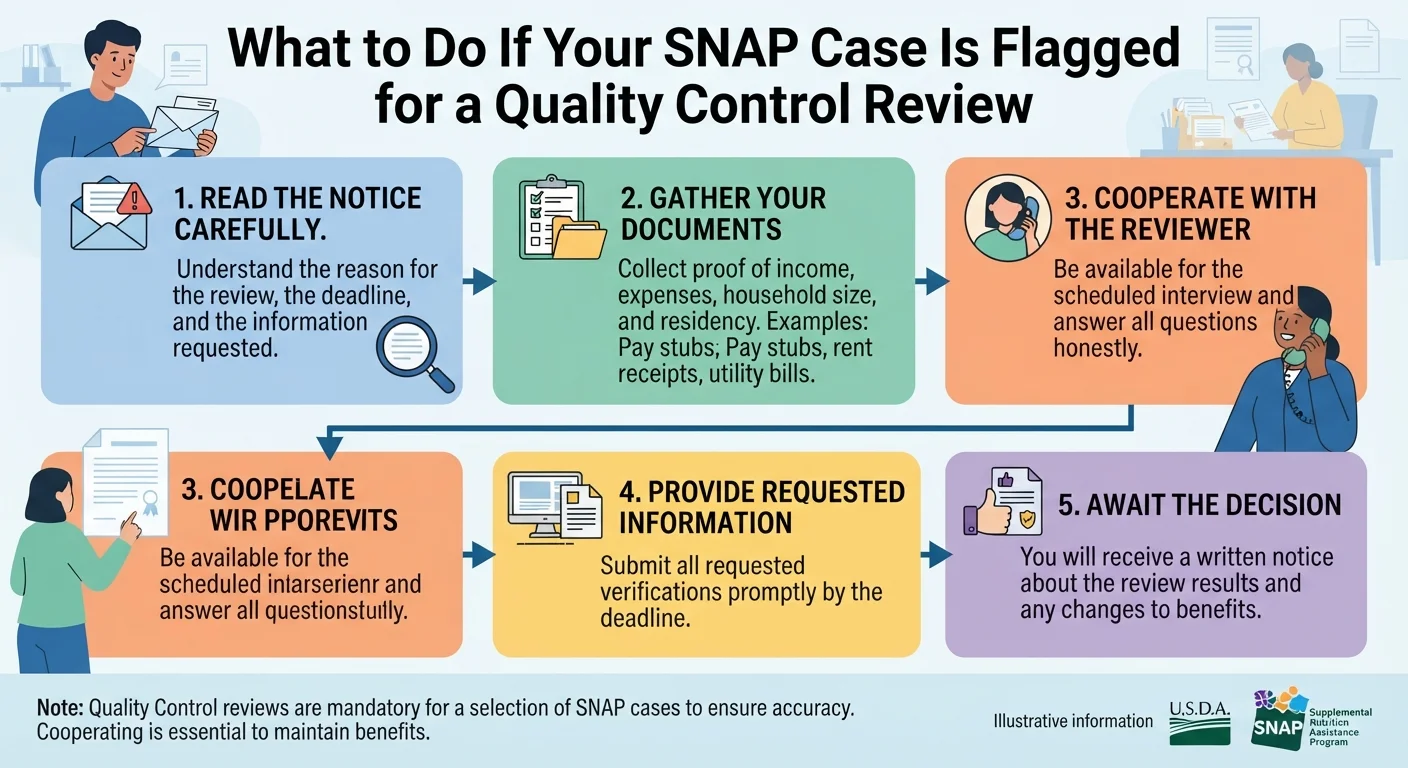
Every state's computer system randomly selects a number of active SNAP cases each month for a federally mandated Quality Control review, and being selected has nothing to do with anything you did wrong, it's a random draw used to verify that both your benefit amount and the state's own processing were correct. Cooperating fully with the review is mandatory, and refusing to participate can result in your SNAP case being closed entirely until the review is completed.
This guide is independently written and is not affiliated with USDA, OPM, or the official federal Feds Feed Families campaign.
Why Every State Runs This Process
The Quality Control review is federally mandated under specific federal regulations, and it exists to verify two things: that your household is receiving the correct amount of SNAP benefits, and that the local SNAP agency processed your case correctly and on time. If a state fails to complete these reviews, it risks losing federal funding to support its entire SNAP program, which is part of why participation isn't optional once selected.
Being Selected Doesn't Mean You Did Anything Wrong
- Why Every State Runs This Process
- Being Selected Doesn't Mean You Did Anything Wrong
- Who Actually Conducts the Review
- What the Interview Covers
- Why You Might Be Contacted by Someone Outside Your Household
- Two Levels of Review
- What Happens If an Error Is Found
- What Happens If You Don't Cooperate
- The Review Doesn't Replace Your Other Reporting Requirements
- Your Information Stays Confidential
- FAQ
- Does being selected for a SNAP Quality Control review mean I did something wrong?
- Do I have to participate if my case is selected?
- What happens if the review finds I was overpaid or underpaid?
- Does a Quality Control review replace my regular recertification?
Nearly every state agency's own guidance on this process makes the same point explicitly: your case was not chosen because of a mistake, suspicion, or a problem, it was picked by a random computer selection process that any household receiving SNAP benefits could be subject to, sometimes more than once, since the selection genuinely is random each month rather than excluding anyone who's already been reviewed before.
Who Actually Conducts the Review
A specialized team of state employees, sometimes called Compliance Specialists or QC Reviewers, works independently from the local office that originally processed your application, contacting the head of household directly to schedule an interview once your case has been selected.
What the Interview Covers
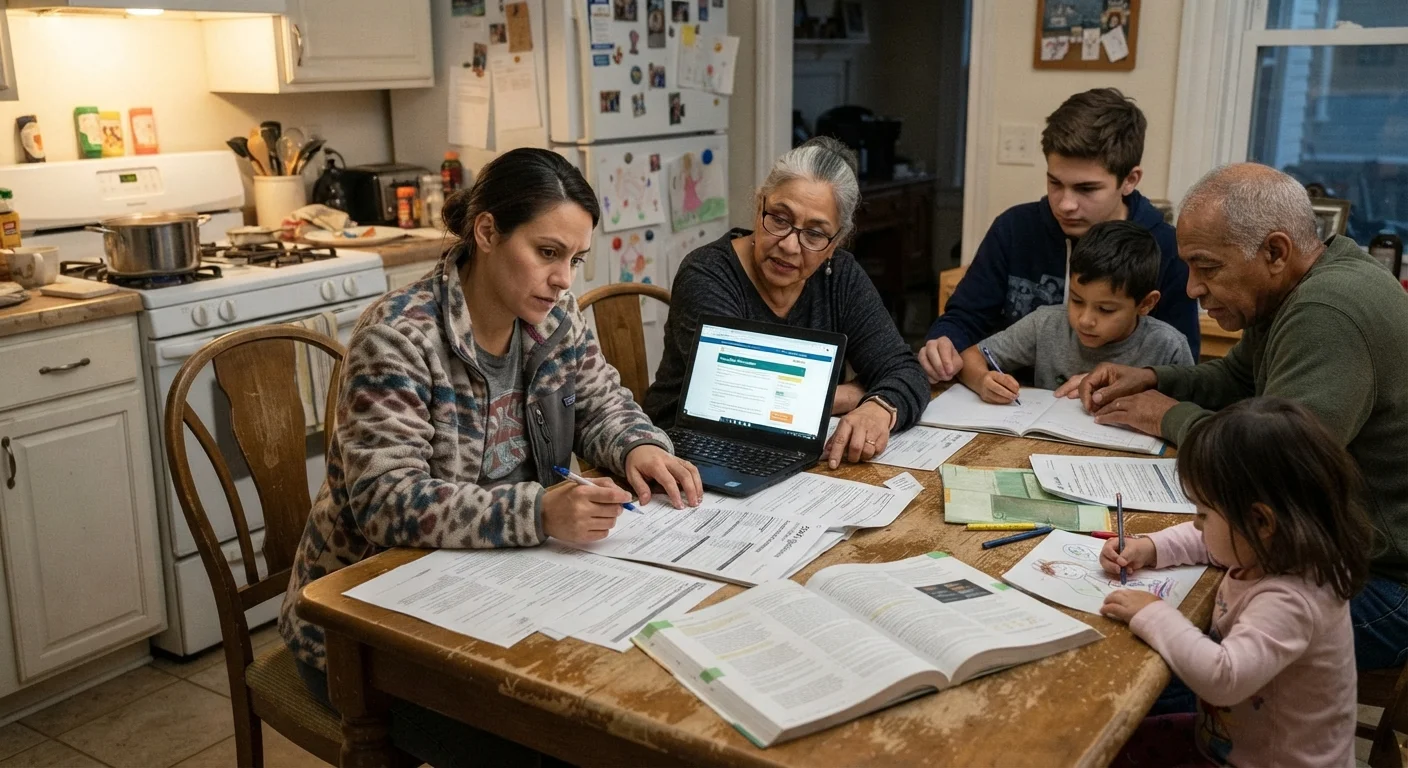
The Quality Control interview closely resembles the interview conducted when you originally applied or last recertified, generally lasting 15 to 30 minutes depending on your household size and circumstances, and covering current documentation of your income, expenses, and who's currently living in your home for the specific month your case was selected for review.
Why You Might Be Contacted by Someone Outside Your Household
As part of verifying the information you've provided, a QC reviewer may contact people or organizations outside your household directly to confirm details like employment or housing costs, part of the comprehensive approach these reviews use to ensure the accuracy of your case's benefit determination.
Recommended Articles
 SNAP EBT
 SNAP EBT
 SNAP EBT
 SNAP EBT
Two Levels of Review
Once your state's QC reviewer completes the field review and analyzes the collected information, they determine whether the correct SNAP benefit amount was issued. A smaller, additional random sample of each state's completed QC cases is then separately reviewed at the federal level by USDA's Food and Nutrition Administration, adding a second layer of verification on top of the state's own review.
What Happens If an Error Is Found
By law, state agencies must correct any errors in SNAP benefits discovered during a Quality Control review. If the review finds you were overpaid, you'll generally need to repay the excess benefits to the state. If the review finds you were underpaid, the state is required to provide the additional benefits you were owed.
What Happens If You Don't Cooperate
Refusing to participate in the interview or provide the documentation requested will result in your SNAP case being closed, and you generally won't be eligible for benefits again until you cooperate with and complete the review. In some cases, a household that had its benefits terminated for refusing to cooperate can reapply, but won't be determined eligible again until the original review is actually completed.
The Review Doesn't Replace Your Other Reporting Requirements
Being selected for a Quality Control review is separate from your regular ongoing SNAP obligations, meaning you still need to complete your periodic reports, recertification, and respond to any other standard verification requests from your local office even while a QC review is happening simultaneously.
Your Information Stays Confidential
Information you provide to a state or federal Quality Control reviewer is used only by staff managing assistance programs to determine eligibility, and by other staff members specifically authorized by law, the same confidentiality standard that applies to the rest of your SNAP case information.
Read More Articals
FAQ
Does being selected for a SNAP Quality Control review mean I did something wrong?
No. Cases are randomly selected each month by a computer system, and selection has nothing to do with suspicion or a problem with your specific case.
Do I have to participate if my case is selected?
Yes, participation is mandatory under federal law. Refusing to cooperate will result in your SNAP case being closed until the review is completed.
What happens if the review finds I was overpaid or underpaid?
States are required by law to correct any error found. An overpayment generally must be repaid, while an underpayment means the state must provide the additional benefits you were owed.
Does a Quality Control review replace my regular recertification?
No. It's a separate process, and you still need to complete your normal periodic reports and recertification even while a QC review is happening.
Sources: USDA Food and Nutrition Administration Navigating SNAP Quality Control guide, DC Department of Human Services, Tennessee Department of Human Services, Florida Department of Children and Families, Oregon Department of Human Services.