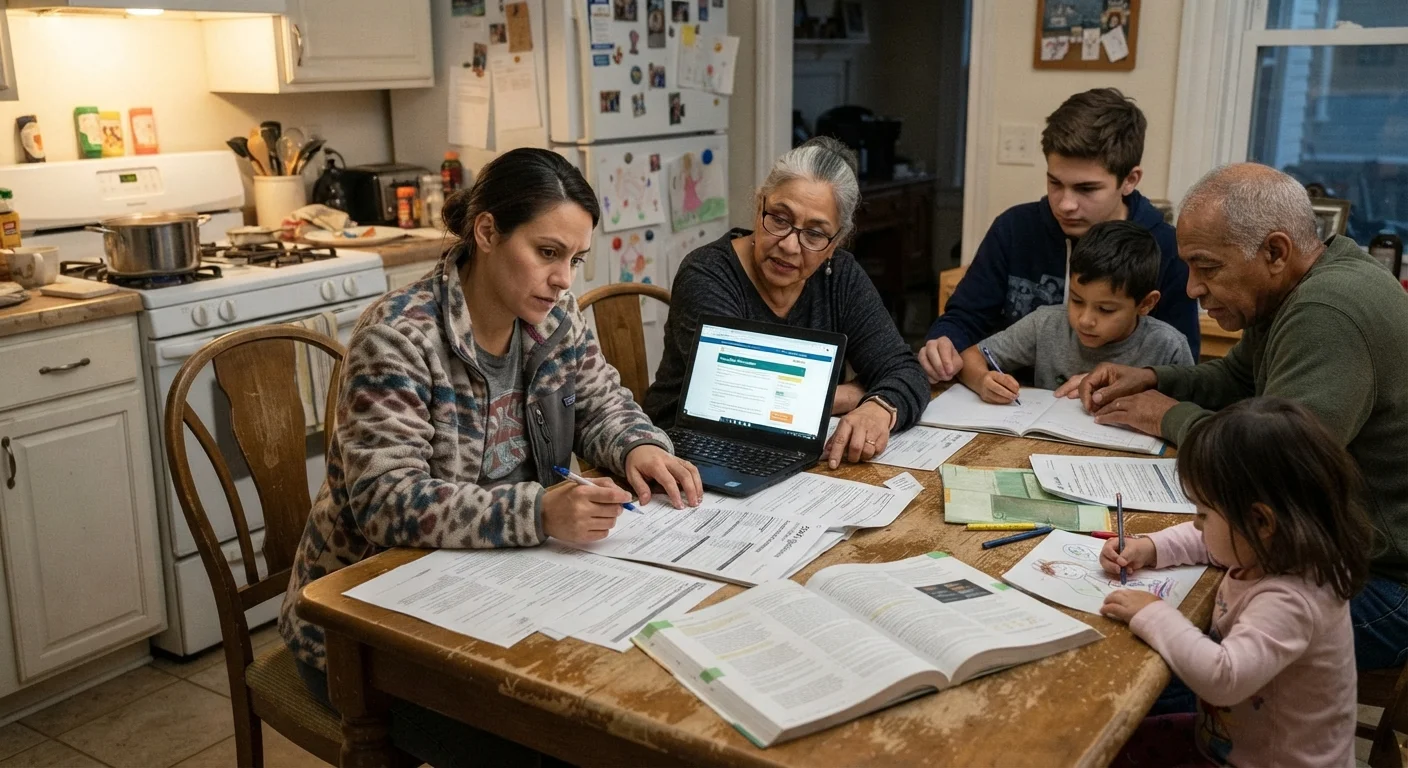
While SNAP's basic household test is whether people buy and prepare food together, federal and state regulations create specific mandatory groupings and exceptions that override this general rule in particular situations, most notably that spouses living together can never be split into separate SNAP households, even if they genuinely buy and prepare their food entirely separately from each other.
This guide is independently written and is not affiliated with USDA, OPM, or the official federal Feds Feed Families campaign.
The Spouse Rule Is Absolute
Under state regulations that implement federal SNAP law, an individual living with their spouse must be part of the same SNAP household as that spouse, and spouses cannot be granted separate household status, regardless of whether they actually purchase and prepare their meals separately in practice. This includes not just legally married couples, but in some states, people who live together, are free to marry, and represent themselves as spouses to relatives, friends, neighbors, and tradespeople, sometimes called a common-law arrangement.
Children Under Parental Control
- The Spouse Rule Is Absolute
- Children Under Parental Control
- Residents of Drug or Alcohol Treatment Centers
- Residents of a Domestic Violence Shelter
- Blind or Disabled Residents of Group Living Arrangements
- Elderly Individuals Unable to Prepare Meals Separately
- Federally Subsidized Elderly Housing
- A Boyfriend or Girlfriend Who Doesn't Live With You
- Why Getting This Right Genuinely Matters
- FAQ
- Can spouses ever apply for SNAP as separate households?
- Can a child living with a non-parent relative be a separate SNAP household?
- Are domestic violence shelter residents treated as their own household?
- Can an elderly person living with family qualify as a separate household?
A child under 18 who buys and prepares meals separately but lives under the parental control of an adult household member who isn't their natural, adoptive, or stepparent generally cannot be treated as a separate SNAP household, since being financially dependent on that adult household member creates the same kind of mandatory grouping the spouse rule creates, unless the state specifically recognizes the child as an emancipated minor or legal adult.
Residents of Drug or Alcohol Treatment Centers
An individual, with or without children, residing in a drug or alcohol treatment center is generally treated as their own separate SNAP household from the other residents of that facility, a specific carve-out that exists because a treatment center is fundamentally different from a typical shared living arrangement.
-
How SNAP Handles Roommates Who Buy and Cook Food Separately
Residents of a Domestic Violence Shelter
Similarly, an individual, with or without children, residing in a shelter for battered individuals and their children is treated as their own separate SNAP household from other shelter residents, reflecting the genuinely different circumstances of shelter residency compared to a standard shared home.
Blind or Disabled Residents of Group Living Arrangements
A blind or disabled resident of a qualifying group living arrangement who applies for SNAP through the facility's authorized representative is treated as their own separate household from other residents, though if that same individual applies on their own behalf rather than through the facility's representative, standard household determination rules apply instead.
Recommended Articles
 SNAP EBT
 SNAP EBT
 SNAP EBT
 SNAP EBT
Elderly Individuals Unable to Prepare Meals Separately
An individual age 60 or older living with others who is unable to purchase food and prepare meals due to a permanent disability may be treated as a separate SNAP household, as long as the income of the other people they live with doesn't exceed 165 percent of the poverty level, and importantly, this rule can allow both the elderly individual's unit and the other household's unit to each participate in SNAP simultaneously.
Federally Subsidized Elderly Housing
Residents of federally subsidized housing specifically for the elderly are also included among the categories that receive specific household treatment under SNAP rules, distinct from the standard general population household determination.
A Boyfriend or Girlfriend Who Doesn't Live With You
If you have a partner who doesn't actually live at your address but you sometimes buy and cook food together during visits, you generally don't need to count them as part of your SNAP household at all, since the underlying test is about who lives together and shares food regularly, not an occasional shared meal with someone from outside the home.
Why Getting This Right Genuinely Matters
Incorrectly combining yourself with a higher-earning household member you should actually be separate from could push your case over an income limit unnecessarily, while incorrectly splitting a household that legally must be grouped together, like a married couple, can be treated as a serious misrepresentation on your application. Explaining your specific, sometimes complicated family situation clearly and honestly during your application and interview, rather than guessing at the classification yourself, is the safest way to ensure your case is set up correctly from the start.
Read More Articals
FAQ
Can spouses ever apply for SNAP as separate households?
No. Spouses living together must be part of the same SNAP household, even if they genuinely buy and prepare their food separately, since this specific rule overrides the general food-sharing test.
Can a child living with a non-parent relative be a separate SNAP household?
Generally no, if the child is under 18 and financially dependent on that adult, since being under that adult's parental control creates a mandatory household grouping in most states.
Are domestic violence shelter residents treated as their own household?
Yes. Shelter residents, with or without children, are generally treated as their own separate SNAP household from other residents of the shelter.
Can an elderly person living with family qualify as a separate household?
Yes, if they're 60 or older and unable to prepare meals separately due to a permanent disability, as long as the income of the household they live with doesn't exceed 165 percent of the federal poverty level.
Sources: Massachusetts Code of Regulations 106 CMR 361.200, Colorado Code of Regulations 10 CCR 2506-1, Quest Information ONline SNAP Household Composition guidance.