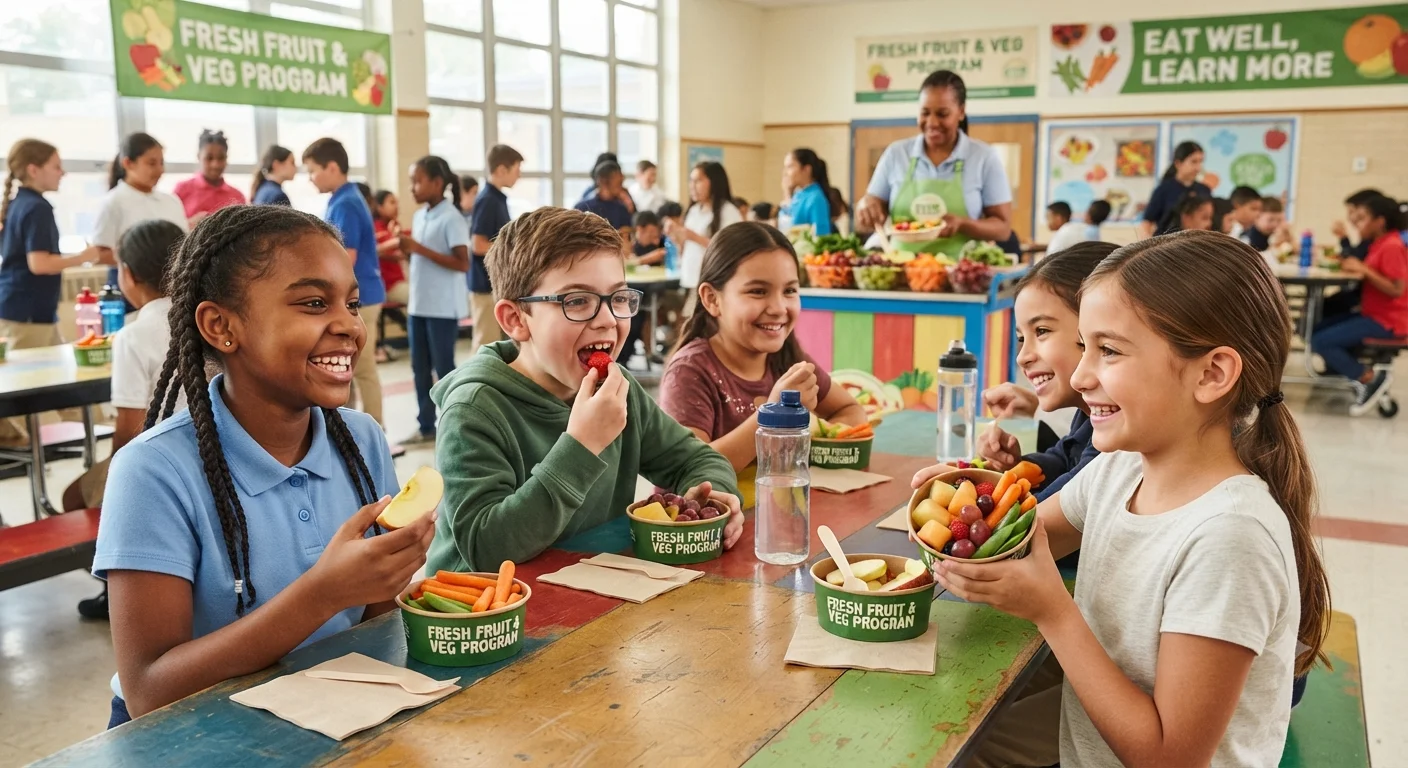
The Fresh Fruit and Vegetable Program provides free fresh fruit and vegetable snacks, separate from regular breakfast and lunch, to every student at qualifying elementary schools, funded through a per-student grant that typically ranges from about $50 to $75 depending on the state and year. Unlike most child nutrition programs, eligibility is determined at the school level based on its low-income enrollment percentage, rather than through an individual family application.
This guide is independently written and is not affiliated with USDA, OPM, or the official federal Feds Feed Families campaign.
What the Program Provides
The Fresh Fruit and Vegetable Program delivers free fresh produce snacks to students during the school day, separate from and in addition to breakfast and lunch. Schools typically pair these snacks with brief nutrition lessons, introducing students to seasonal produce and new foods they might not otherwise have the opportunity to try, with the specific goal of building healthy eating habits that extend beyond the school day itself.
How Schools Qualify
- What the Program Provides
- How Schools Qualify
- How Funding Works
- The Annual Application Cycle
- Does This Program Reach Every Student
- Evidence the Program Works
- How to Know If Your Child's School Participates
- FAQ
- Do individual families need to apply for the Fresh Fruit and Vegetable Program?
- Which schools qualify for the Fresh Fruit and Vegetable Program?
- How much funding does a participating school receive?
- Does every student at a participating school get the free snacks?
Unlike free lunch, which is determined by individual family income, Fresh Fruit and Vegetable Program eligibility is determined at the school level. To qualify, a school generally must:
- Be an elementary school
- Represent a high percentage of students certified for free and reduced-price meals, generally at least 50 percent of enrolled students
- Participate in the National School Lunch Program
Federal law specifically requires that schools with the highest percentage of low-income students be given priority for participation, a criterion that states cannot waive in order to spread the program more broadly across schools with lower need. In practice, this means schools with an eligibility rate above 80 percent are typically far more likely to actually receive funding than those in the 50 to 80 percent range, since available grant funding is limited each year.
How Funding Works
Each participating school receives a grant based on its enrollment in participating grades, with the federal per-student allocation typically falling between $50 and $75 depending on the specific funding cycle and state. This funding covers the cost of purchasing fresh produce, and in some cases modest costs like nutrition education materials or minor equipment needed to serve the snacks.
The Annual Application Cycle
Schools apply for Fresh Fruit and Vegetable Program funding annually, typically during March and April, for participation the following school year, using free and reduced-price meal eligibility data from the prior October to determine which schools qualify. Because this is a competitive grant program with limited total funding, not every eligible school that applies is guaranteed to receive an award in a given year.
Recommended Articles
 SCHOOL CHILD NUTRITION PROGRAMS
 SCHOOL CHILD NUTRITION PROGRAMS
 SCHOOL CHILD NUTRITION PROGRAMS
 SCHOOL CHILD NUTRITION PROGRAMS
Does This Program Reach Every Student
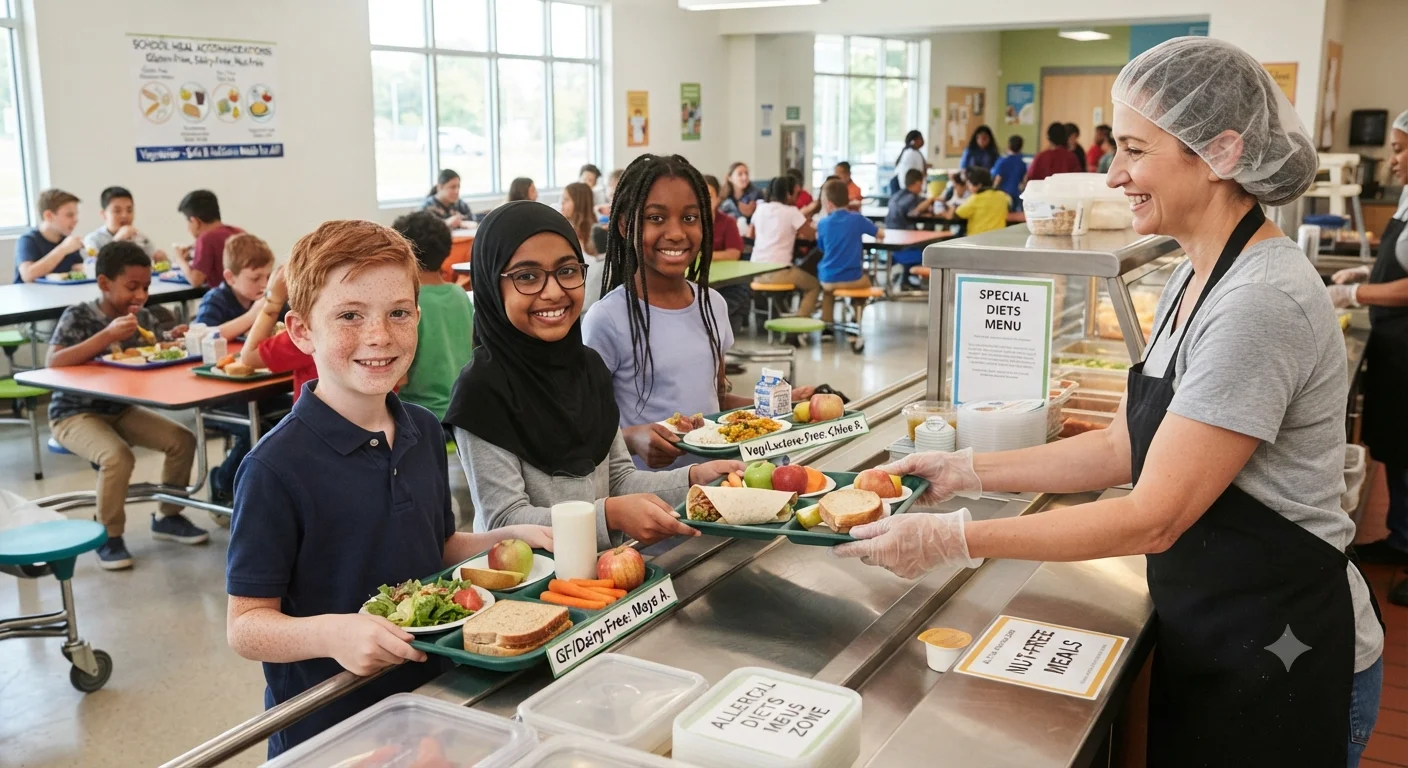
Because eligibility works at the school level rather than the family level, all students at a participating school receive the free produce snacks, regardless of their own individual family's income, similar in structure to how the Community Eligibility Provision works for full meals. This means a student who wouldn't otherwise qualify for free lunch based on family income can still receive Fresh Fruit and Vegetable Program snacks simply by attending a qualifying school.
Evidence the Program Works
USDA-funded research has found that students at schools participating in the Fresh Fruit and Vegetable Program eat more fruits and vegetables than students at non-participating schools, supporting the program's core goal of expanding produce variety and consumption among children who might otherwise have limited access to fresh produce at home.
How to Know If Your Child's School Participates
Because participation depends on annual school-level applications and limited funding, it's worth checking directly with your child's school or your state's department of education for a current list of participating elementary schools, since a school's status can change from year to year based on funding availability and its updated free and reduced-price eligibility percentage.
Read More Articals
FAQ
Do individual families need to apply for the Fresh Fruit and Vegetable Program?
No. Eligibility is determined at the school level based on its overall low-income enrollment percentage, not through an individual family application.
Which schools qualify for the Fresh Fruit and Vegetable Program?
Generally elementary schools participating in the National School Lunch Program with at least 50 percent of students certified for free or reduced-price meals, with priority given to schools with the highest percentages.
How much funding does a participating school receive?
Typically between $50 and $75 per student, based on enrollment in participating grades, though this can vary by state and funding cycle.
Does every student at a participating school get the free snacks?
Yes. Because eligibility is determined at the school level, all students at a participating school receive the free fresh fruit and vegetable snacks regardless of their individual family's income.
Sources: USDA Food and Nutrition Administration Fresh Fruit and Vegetable Program guidance, state department of education FFVP program pages including Wisconsin, Minnesota, and Nebraska.