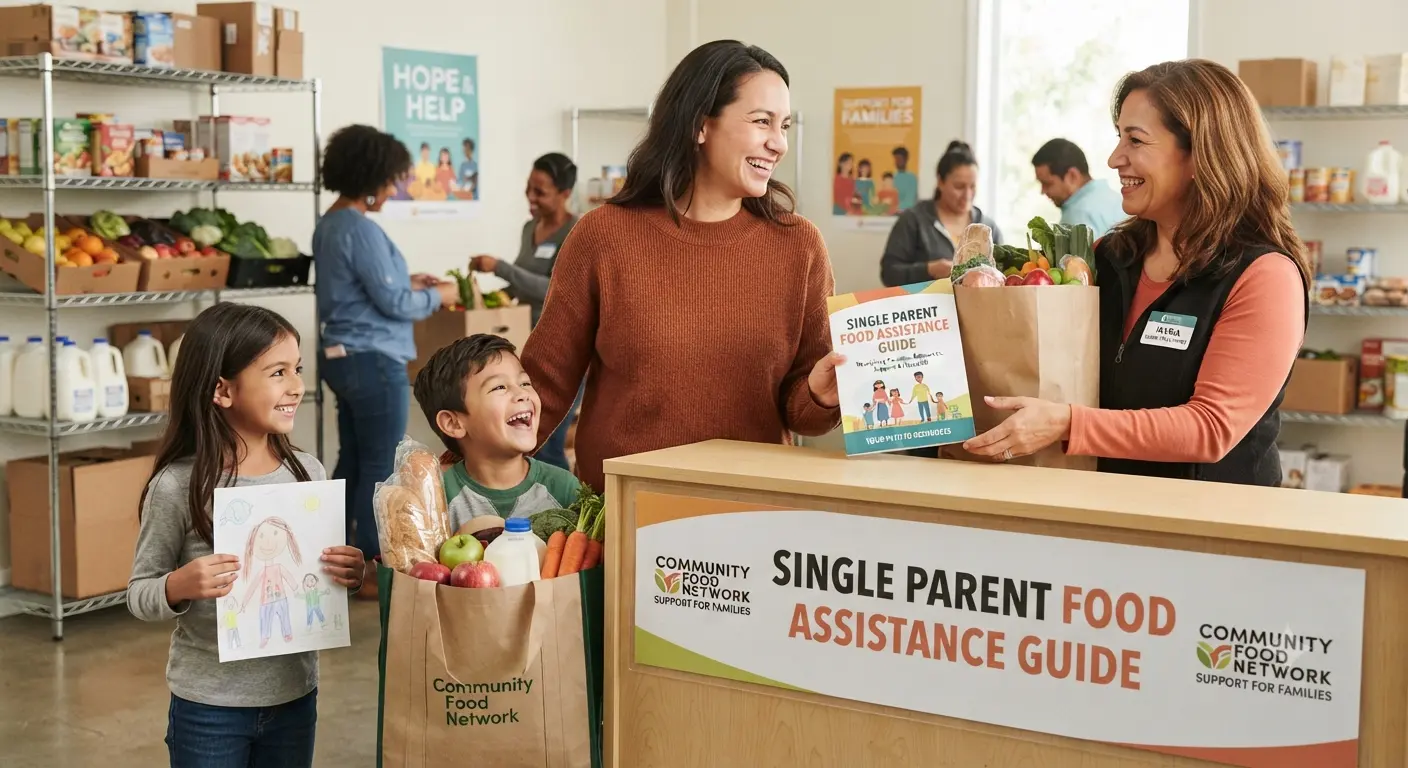
Single-parent households often qualify for several food assistance programs at once, since a single income supporting a full household frequently falls within the income limits for SNAP, WIC, free or reduced-price school meals, and CACFP-participating child care, and many of these programs are designed to work together rather than requiring a choice between them.
This guide is independently written and is not affiliated with USDA, OPM, or the official federal Feds Feed Families campaign.
Start With SNAP
SNAP is generally the broadest and most flexible program available, covering most grocery purchases for the whole household based on income and household size. A single parent with one child, for example, faces a considerably lower gross income limit than a two-parent household of the same size, which means many single-parent households qualify even with a full-time job, especially once deductions for earned income, dependent care, and shelter costs are factored into the net income calculation.
Add WIC If You Have a Young Child
- Start With SNAP
- Add WIC If You Have a Young Child
- Use School Meal Programs Once Your Child Starts School
- Look Into CACFP-Participating Child Care
- Consider TANF for Additional Cash Support
- Don't Overlook Backpack Programs and Summer EBT
- Ask About the Child Care and Dependent Care Tax Credit
- Applying for Multiple Programs at Once
- FAQ
- What food assistance programs should a single parent apply for first?
- Can a single parent qualify for both SNAP and WIC?
- Does having a job disqualify a single parent from food assistance?
- Is there one application that covers multiple benefit programs?
If you're pregnant or have a child under 5, WIC is worth applying for regardless of whether you already receive SNAP, since the two programs don't compete with each other and SNAP participation automatically satisfies WIC's income requirement. WIC's structured food package, plus its Cash Value Benefit for produce, can meaningfully offset the cost of feeding a young child specifically, on top of whatever SNAP covers for the household more broadly.
Use School Meal Programs Once Your Child Starts School
Once a child enters school, free or reduced-price meals become available, and if your household already receives SNAP or TANF, your child is typically automatically certified with no separate income application required. If your child's school participates in the Community Eligibility Provision, every student eats free regardless of income, so it's worth checking whether that applies before assuming you need to submit a separate application.
Look Into CACFP-Participating Child Care
If your child attends a licensed child care center or family day care home, ask whether the provider participates in CACFP. While this reimbursement goes to the provider rather than to you directly, CACFP-participating centers are required not to charge a separate meal fee on top of tuition, which can be a meaningful, if less visible, cost saving for a single-income household paying for full-time child care.
Recommended Articles
 GOVERNMENT ASSISTANCE GUIDES
 GOVERNMENT ASSISTANCE GUIDES
 GOVERNMENT ASSISTANCE GUIDES
 GOVERNMENT ASSISTANCE GUIDES
Consider TANF for Additional Cash Support
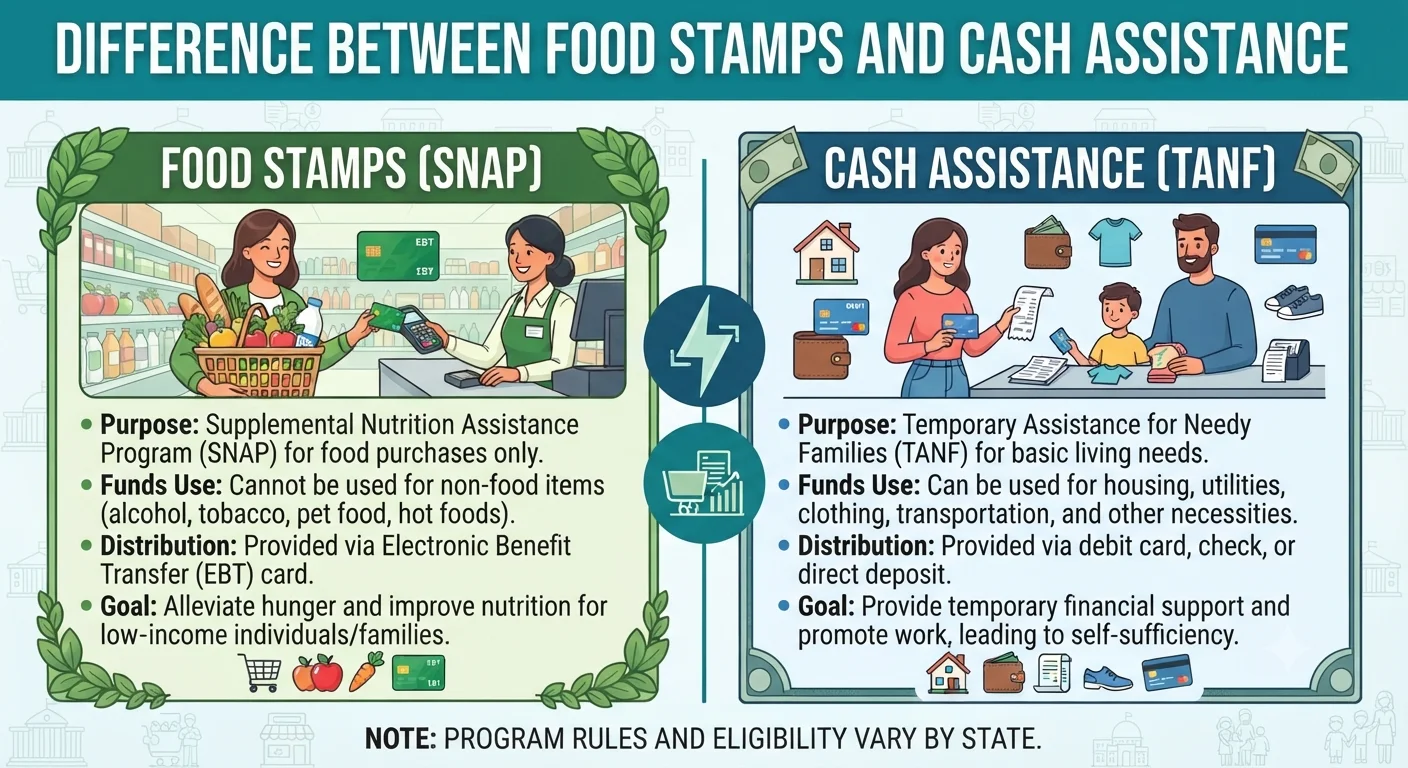
Unlike SNAP and WIC, TANF provides flexible cash assistance that can go toward rent, utilities, or other non-food essentials, freeing up more of your income for groceries indirectly. TANF recipients are also automatically categorically eligible for SNAP, so applying for TANF, if you meet your state's income and work requirement rules, can simplify qualifying for food assistance as well.
Don't Overlook Backpack Programs and Summer EBT
If your child's school runs a backpack program, sending home weekend food discreetly, it's worth asking your child's teacher or counselor directly, since these programs typically don't require a formal application. Similarly, Summer EBT provides a set benefit per child during summer break to replace the school meals that pause when school is out, and most eligible children are enrolled automatically if the household already participates in SNAP or free school meals.
Ask About the Child Care and Dependent Care Tax Credit
While not a food program directly, the federal Child and Dependent Care Tax Credit can offset a portion of child care costs for working single parents, which indirectly frees up more of the household budget for groceries. This is claimed on your annual tax return rather than through a benefits application, so it's worth discussing with a tax preparer or reviewing IRS guidance during tax season.
Applying for Multiple Programs at Once
Many states now offer a combined or integrated application covering SNAP, Medicaid, and TANF simultaneously, which can save significant time compared to applying to each program separately. Even where a combined application isn't available, a caseworker helping with one program will often flag other programs you appear to qualify for, so it's worth mentioning your full household situation, including your child's age and school status, whenever you apply for any single benefit.
Read More Articals
FAQ
What food assistance programs should a single parent apply for first?
SNAP is generally the best starting point because of its broad grocery coverage, followed by WIC if you have a child under 5, and free or reduced-price school meals once your child is school-aged.
Can a single parent qualify for both SNAP and WIC?
Yes. The two programs are designed to work together, and SNAP participation automatically satisfies WIC's income eligibility requirement.
Does having a job disqualify a single parent from food assistance?
Not necessarily. Many working single-parent households still qualify for SNAP once deductions for earned income, dependent care costs, and shelter expenses are applied to the net income calculation.
Is there one application that covers multiple benefit programs?
In many states, yes. An increasing number of states offer a combined application covering SNAP, Medicaid, and TANF together, which can streamline the process significantly.
Sources: USDA Food and Nutrition Administration, Internal Revenue Service Child and Dependent Care Tax Credit guidance, state integrated eligibility system documentation.