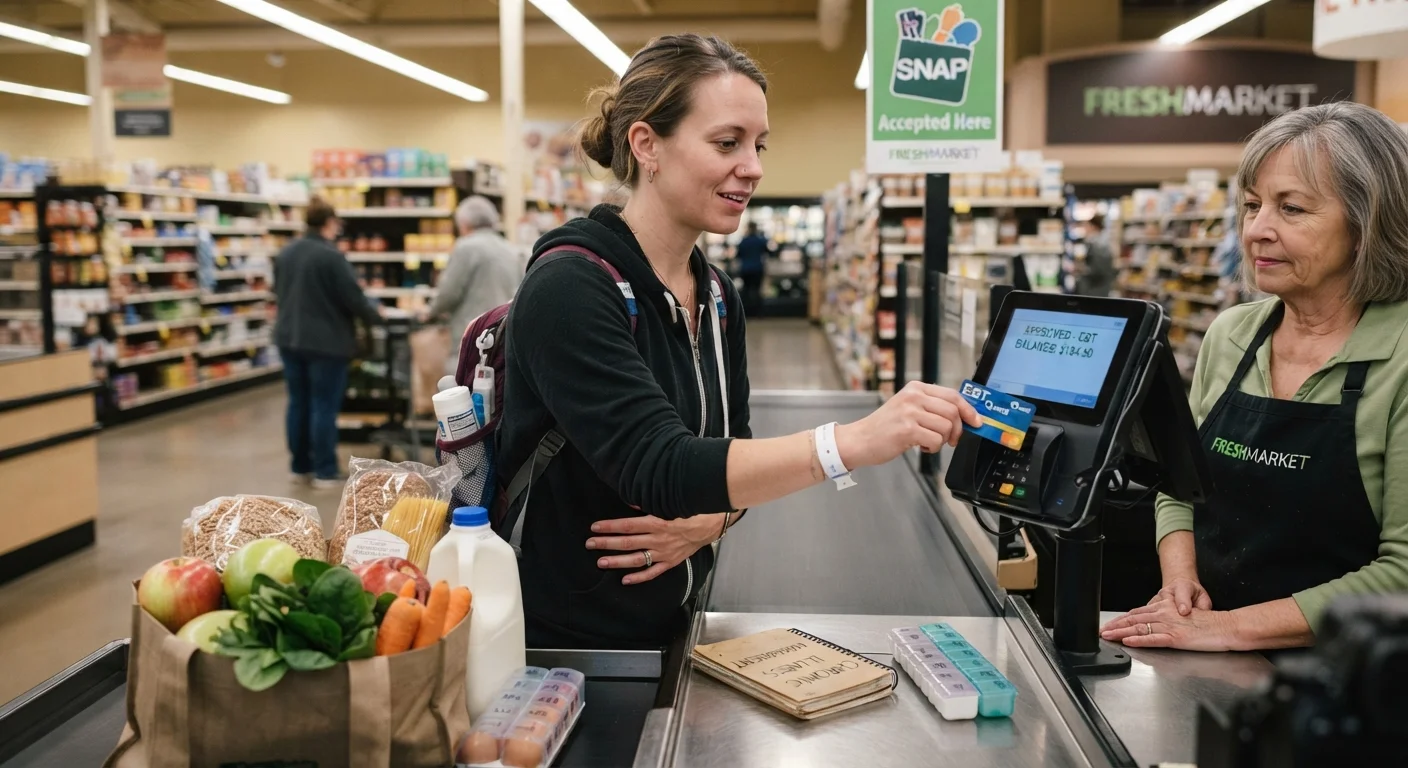
A chronic illness doesn't automatically qualify you for SNAP's disability-related rules simply because it's ongoing; what matters is whether you receive a qualifying disability benefit, such as SSI or Social Security disability, or otherwise meet SNAP's specific disability definition, since the program's favorable rules and deductions are tied to that formal status rather than a diagnosis alone.
This guide is independently written and is not affiliated with USDA, OPM, or the official federal Feds Feed Families campaign.
Does a Chronic Illness Count as a Disability for SNAP
SNAP's definition of disability is specific and generally tied to receiving a qualifying benefit, most commonly SSI or Social Security disability or blindness payments, a government disability retirement benefit, certain Railroad Retirement Act benefits, or being a totally disabled veteran. A chronic illness that hasn't resulted in an approved disability determination through one of these programs generally doesn't automatically trigger SNAP's disability-specific rules, even if the condition genuinely limits your ability to work or significantly affects your daily life.
If You're Pursuing a Disability Determination
- Does a Chronic Illness Count as a Disability for SNAP
- If You're Pursuing a Disability Determination
- Medical Expenses Even Without a Formal Disability Status
- Work Requirements and Chronic Illness
- Fluctuating or Episodic Conditions
- Managing a Restricted Diet on SNAP
- Reapplying After a Diagnosis Changes Your Circumstances
- FAQ
- Does having a chronic illness automatically qualify me for SNAP's disability rules?
- Can I get SNAP's medical expense deduction without a disability determination?
- Am I exempt from SNAP work requirements if I have a chronic illness that limits my ability to work?
- What should I do if my chronic illness fluctuates between stable periods and flare-ups?
If you have a chronic illness and are in the process of applying for SSI or Social Security disability, but haven't yet been approved, you generally don't qualify for SNAP's disability-related deductions and exemptions until that determination comes through. During this period, you'd apply for SNAP under standard household rules based on your current income, and you can update your case once a disability determination is approved.
Medical Expenses Even Without a Formal Disability Status
It's worth understanding that the uncapped medical expense deduction specifically requires being elderly or having a qualifying disability status, so a chronic illness alone, without that formal status, doesn't unlock this particular deduction. However, once you do have a qualifying disability determination, medical costs related to your chronic illness, including prescriptions, doctor visits, and medical transportation, can all be included in that uncapped deduction.
Work Requirements and Chronic Illness
If your chronic illness affects your ability to work but you don't have a formal disability determination, you may still be able to document that you're "physically or mentally unfit for employment" for purposes of the SNAP work requirement exemption, which is a somewhat broader standard than the specific disability-benefit-based rules used elsewhere in the program. This generally requires documentation from a medical provider, and discussing your specific situation directly with your caseworker helps clarify what evidence is needed.
Recommended Articles
 LIFE SITUATIONS & SPECIAL CIRCUMSTANCES
 LIFE SITUATIONS & SPECIAL CIRCUMSTANCES
 LIFE SITUATIONS & SPECIAL CIRCUMSTANCES
 LIFE SITUATIONS & SPECIAL CIRCUMSTANCES
Fluctuating or Episodic Conditions
Many chronic illnesses involve periods of relative stability alongside flare-ups that can temporarily and significantly limit someone's ability to work. If your condition is episodic, explaining this pattern to your caseworker, and providing medical documentation describing the variable nature of the condition, helps ensure your case reflects your actual circumstances rather than being evaluated only against how you're doing on a single given day.
Managing a Restricted Diet on SNAP
Some chronic conditions require a specific diet, whether low-sodium, gluten-free, or another medically necessary restriction, which can genuinely increase grocery costs beyond a standard household's typical spending. While SNAP doesn't provide a separate deduction specifically for diet-related food costs, understanding your overall benefit and combining it with careful budgeting around your specific dietary needs is worth discussing with a registered dietitian or your healthcare provider if cost is a significant barrier to following a prescribed diet.
Reapplying After a Diagnosis Changes Your Circumstances
If a chronic illness diagnosis leads to reduced work hours, job loss, or new medical expenses, this is exactly the kind of change worth reporting to your SNAP office promptly, since it can meaningfully affect your countable income and, once a formal disability status is established, potentially unlock additional deductions you weren't previously eligible for.
Read More Articals
FAQ
Does having a chronic illness automatically qualify me for SNAP's disability rules?
Not automatically. SNAP's disability-related rules generally require a formal disability determination, such as approval for SSI or Social Security disability, rather than a diagnosis alone.
Can I get SNAP's medical expense deduction without a disability determination?
Generally no, since this uncapped deduction is specifically tied to elderly or disabled status, though once that status is established, chronic illness-related costs can be included.
Am I exempt from SNAP work requirements if I have a chronic illness that limits my ability to work?
Potentially, through the "physically or mentally unfit for employment" exemption, which generally requires medical documentation and is somewhat broader than the specific disability-benefit-based rules used elsewhere.
What should I do if my chronic illness fluctuates between stable periods and flare-ups?
Explain this pattern to your caseworker and provide medical documentation describing the variable nature of your condition, so your case reflects your actual overall circumstances.
Sources: USDA Food and Nutrition Administration Special Rules for the Elderly or Disabled, USDA Food and Nutrition Administration SNAP Eligibility.