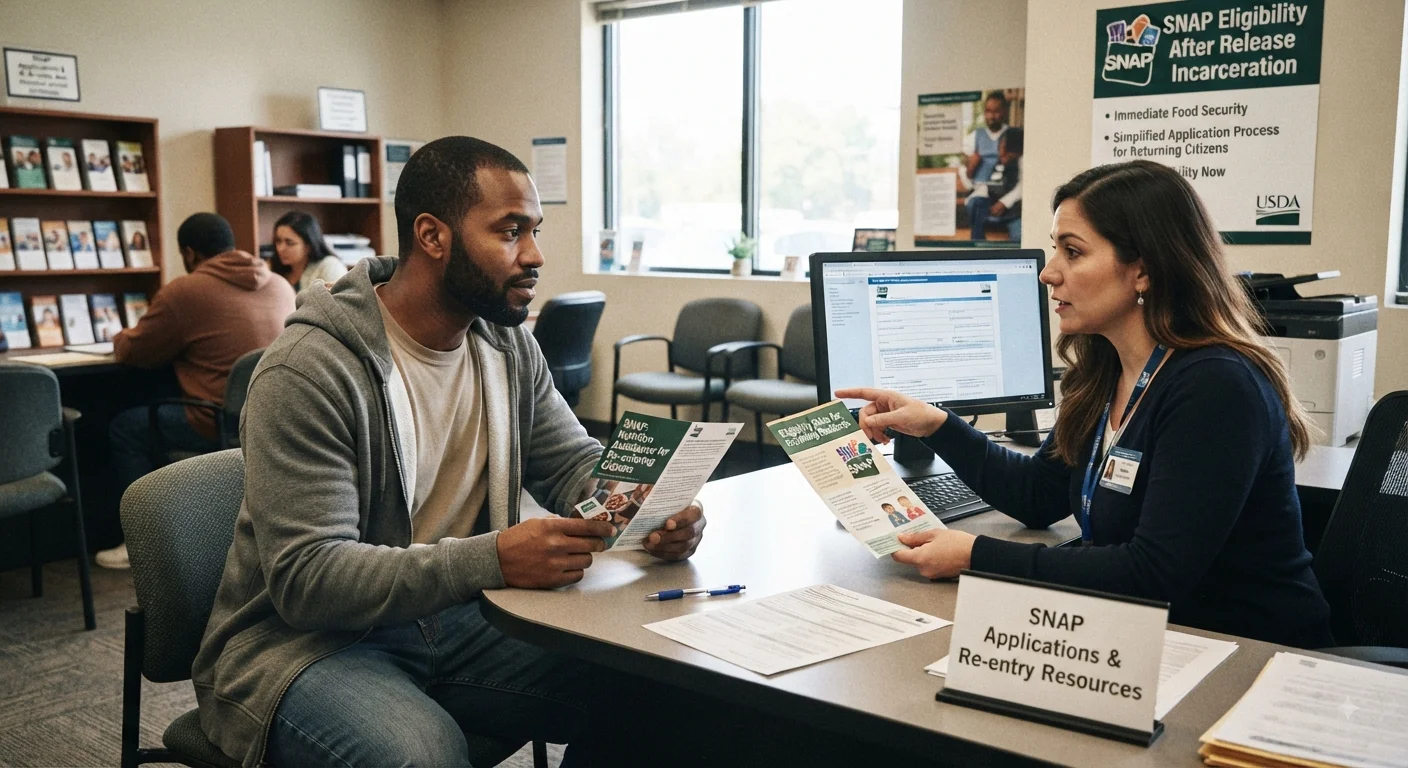
Most states have fully or partially opted out of the federal restriction that would otherwise bar people with certain drug-related felony convictions from receiving SNAP, meaning the large majority of people leaving incarceration are eligible to apply for food assistance under the same income-based rules as any other applicant, though it's worth confirming your specific state's current policy given that it does still vary.
This guide is independently written and is not affiliated with USDA, OPM, or the official federal Feds Feed Families campaign.
The Federal Drug Felony Restriction and State Opt-Outs
Federal law originally imposed a lifetime SNAP ban on anyone convicted of a drug-related felony, but Congress later gave states the option to modify or eliminate this restriction entirely, and the large majority of states have done so. States like Alabama, Minnesota, Maryland, and Washington, among many others, have fully opted out, meaning a drug felony conviction has no effect on SNAP eligibility in those states. A smaller number of states retain some version of the restriction, often limited to specific circumstances or requiring proof of participation in a treatment program, so confirming your specific state's current policy directly with the SNAP agency is worth doing.
Applying Before or Immediately After Release
- The Federal Drug Felony Restriction and State Opt-Outs
- Applying Before or Immediately After Release
- What You'll Need to Apply
- Expedited SNAP for the Reentry Period
- Work Requirements During Reentry
- Reentry-Specific Support Organizations
- If You Have Children
- FAQ
- Does a felony conviction disqualify someone from SNAP?
- Can I apply for SNAP before I'm released from incarceration?
- What address do I use to apply for SNAP if I don't have permanent housing after release?
- Are people recently released from incarceration exempt from SNAP work requirements?
In many states, it's possible to begin the SNAP application process before release, sometimes through a reentry program coordinated with the correctional facility, so that benefits can be active or close to active by the time you're released rather than starting the process from scratch afterward. Asking a case manager, reentry coordinator, or facility social worker about this option well before your release date can meaningfully reduce the gap between release and having active food assistance.
What You'll Need to Apply
- A form of photo identification, which may need to be reissued or renewed if your previous ID expired during incarceration
- Proof of current residence, which can be a halfway house, transitional housing program, shelter, or a friend or family member's address if you're staying there
- Proof of any income, including from a new job, unemployment, or disability benefits
- Social Security number, which should remain valid and unaffected by incarceration
Expedited SNAP for the Reentry Period
Given that many people leaving incarceration have little to no income and minimal cash resources in the immediate aftermath of release, expedited SNAP processing, which guarantees benefits within 7 days, frequently applies. Mentioning your recent release and current financial circumstances explicitly when you apply helps ensure you're properly screened for this faster processing track.
Recommended Articles
 LIFE SITUATIONS & SPECIAL CIRCUMSTANCES
 LIFE SITUATIONS & SPECIAL CIRCUMSTANCES
 LIFE SITUATIONS & SPECIAL CIRCUMSTANCES
 LIFE SITUATIONS & SPECIAL CIRCUMSTANCES
-
Getting Food Assistance After Leaving an Abusive Relationship
Work Requirements During Reentry
It's worth understanding that recent federal changes removed the automatic work requirement exemption that previously covered former foster youth broadly, and the general population of adults leaving incarceration is generally subject to the same ABAWD work requirement rules as any other applicant without an automatic reentry-specific exemption, unless they separately qualify for an exemption like a documented disability. Asking about your local SNAP Employment and Training program, which can provide job training and support services, is worth doing if you're subject to this requirement.
Reentry-Specific Support Organizations
Beyond SNAP itself, many communities have reentry-focused organizations that help with the broader transition, including help navigating benefits applications, employment placement, and housing, often with staff specifically experienced in the unique paperwork and timing challenges reentry presents. Asking a facility social worker, parole or probation officer, or a local reentry nonprofit about these resources before or immediately after release can meaningfully ease this transition.
If You Have Children
If you're reuniting with or gaining custody of children after release, applying for SNAP as a household that includes those children, and separately checking eligibility for programs like WIC if you have a child under 5, or free school meals if children are school-aged, can provide broader support during a financially stretched transition period.
Read More Articals
FAQ
Does a felony conviction disqualify someone from SNAP?
In most states, no. The large majority of states have fully or partially opted out of the federal drug felony restriction, though a smaller number retain some version of it, so confirming your specific state's policy is worthwhile.
Can I apply for SNAP before I'm released from incarceration?
In many states, yes, often through a reentry program coordinated with the facility, which can help benefits be active closer to your release date.
What address do I use to apply for SNAP if I don't have permanent housing after release?
A halfway house, transitional housing program, shelter, or a friend or family member's address can generally be used, since a fixed permanent address isn't required to apply for SNAP.
Are people recently released from incarceration exempt from SNAP work requirements?
Not automatically. Unless a separate exemption applies, such as a documented disability, the general ABAWD work requirement rules typically apply the same way they would to any other applicant.
Sources: USDA Food and Nutrition Administration, state SNAP agency drug felony opt-out policies, Center on Budget and Policy Priorities.