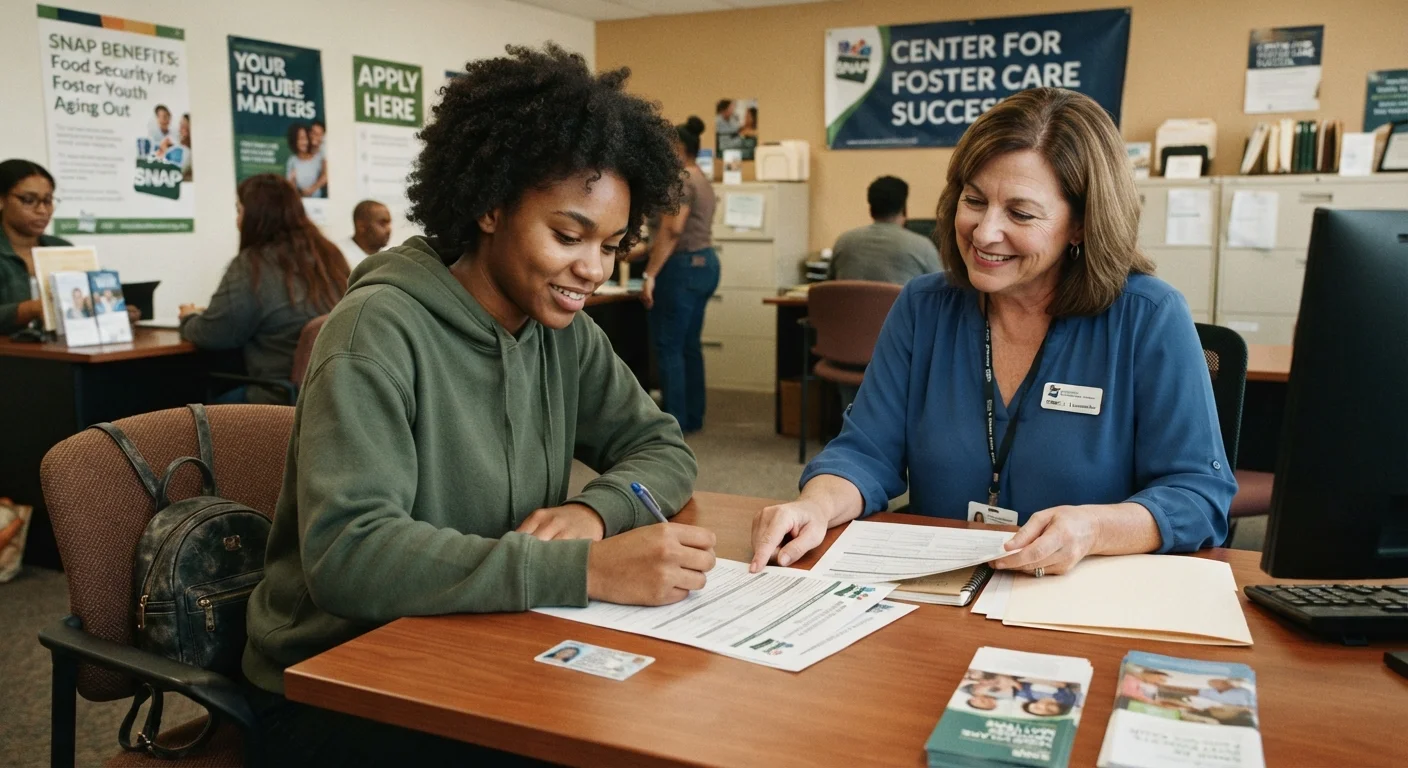
Young adults who age out of the foster care system generally apply for SNAP as their own independent household, since they typically don't have a parent's household to be included in, but it's important to know that recent federal legislation removed the automatic work requirement exemption that previously covered former foster youth broadly, meaning this population is now generally subject to the same rules as other applicants unless a separate exemption applies.
This guide is independently written and is not affiliated with USDA, OPM, or the official federal Feds Feed Families campaign.
Applying as an Independent Household
A young adult who has aged out of foster care and no longer lives with a foster family or biological parent generally applies for SNAP as their own household, based on their own income and circumstances, similar to any other independent adult applicant. This is genuinely different from the situation many peers their age face, since most people under 22 living with a parent must be included in that parent's household case, a rule that simply doesn't apply once someone has aged out and is living independently.
A Special SNAP Age Exemption for Former Foster Youth
- Applying as an Independent Household
- A Special SNAP Age Exemption for Former Foster Youth
- The Recent Change to Work Requirement Exemptions
- Why This Change Matters for This Specific Population
- Extended Foster Care and SNAP
- Housing Instability and Applying for SNAP
- Transition Support Programs
- FAQ
- Can someone who aged out of foster care apply for SNAP on their own?
- Are former foster youth still exempt from SNAP work requirements?
- Can a former foster youth apply for SNAP without a permanent address?
- Where can a young adult get help navigating benefits after aging out of foster care?
SNAP includes a specific rule exempting someone age 24 or younger who was in foster care on their 18th birthday from certain student-related restrictions that would otherwise apply if they're enrolled in college, recognizing the unique circumstances of this population compared to a student who has ongoing family financial support.
The Recent Change to Work Requirement Exemptions
Prior to 2025, former foster youth were automatically exempt from SNAP's stricter ABAWD work requirement, a recognition that young people leaving foster care often face genuine barriers to stable employment without the family support network many of their peers have. The One Big Beautiful Bill Act, signed in 2025, removed this automatic exemption as part of a broader narrowing of work requirement exceptions, meaning former foster youth are now generally subject to the same 80-hour-a-month work requirement as other adults unless they separately qualify for a different exemption, such as a documented disability or being under 18.
Why This Change Matters for This Specific Population
Young adults aging out of foster care often face documented challenges that don't necessarily map neatly onto SNAP's remaining exemption categories, including limited work history, interrupted education, housing instability, and a genuine lack of family financial backup during job searches or unexpected setbacks. If you or someone you're supporting is in this situation and struggling to meet the 80-hour requirement, connecting with a SNAP Employment and Training program can provide job training and support services that count toward satisfying the requirement.
Recommended Articles
 LIFE SITUATIONS & SPECIAL CIRCUMSTANCES
 LIFE SITUATIONS & SPECIAL CIRCUMSTANCES
 LIFE SITUATIONS & SPECIAL CIRCUMSTANCES
 LIFE SITUATIONS & SPECIAL CIRCUMSTANCES
Extended Foster Care and SNAP
Many states offer extended foster care, allowing young people to remain formally connected to foster care support services, sometimes including housing assistance, up to age 21 or in some cases older. If you're still in extended foster care, discussing your specific SNAP eligibility with your caseworker is worth doing, since your household composition and income situation may differ from someone who has fully exited the system.
Housing Instability and Applying for SNAP
If you're experiencing homelessness or housing instability after aging out of care, remember that a permanent address isn't required to apply for SNAP, and you can use a shelter address, a friend's address, or a P.O. box. Given the often very limited income of someone in this transition period, expedited SNAP processing, guaranteeing benefits within 7 days, frequently applies.
Transition Support Programs
Many states and counties have dedicated transition-age youth programs specifically designed to help former foster youth navigate benefits applications, housing, education, and employment together, often with staff who understand the unique documentation and timing challenges this population faces. Asking a former caseworker, a Court Appointed Special Advocate if you had one, or your state's child welfare agency about these resources is worth doing, since they aren't always widely advertised.
Read More Articals
FAQ
Can someone who aged out of foster care apply for SNAP on their own?
Yes, generally, since they typically no longer have a parent's household to be included in and apply based on their own income and circumstances.
Are former foster youth still exempt from SNAP work requirements?
Not automatically anymore. The 2025 federal legislation removed this previously automatic exemption, so former foster youth are now generally subject to the same work requirement rules as other adults unless a different exemption applies.
Can a former foster youth apply for SNAP without a permanent address?
Yes. A permanent address isn't required, and a shelter address, a friend's address, or a P.O. box can generally be used instead.
Where can a young adult get help navigating benefits after aging out of foster care?
Many states have dedicated transition-age youth programs helping with benefits, housing, and employment together. Asking a former caseworker or the state child welfare agency about these resources is a good starting point.
Sources: USDA Food and Nutrition Administration, One Big Beautiful Bill Act of 2025 provisions, state extended foster care and transition-age youth program guidance.