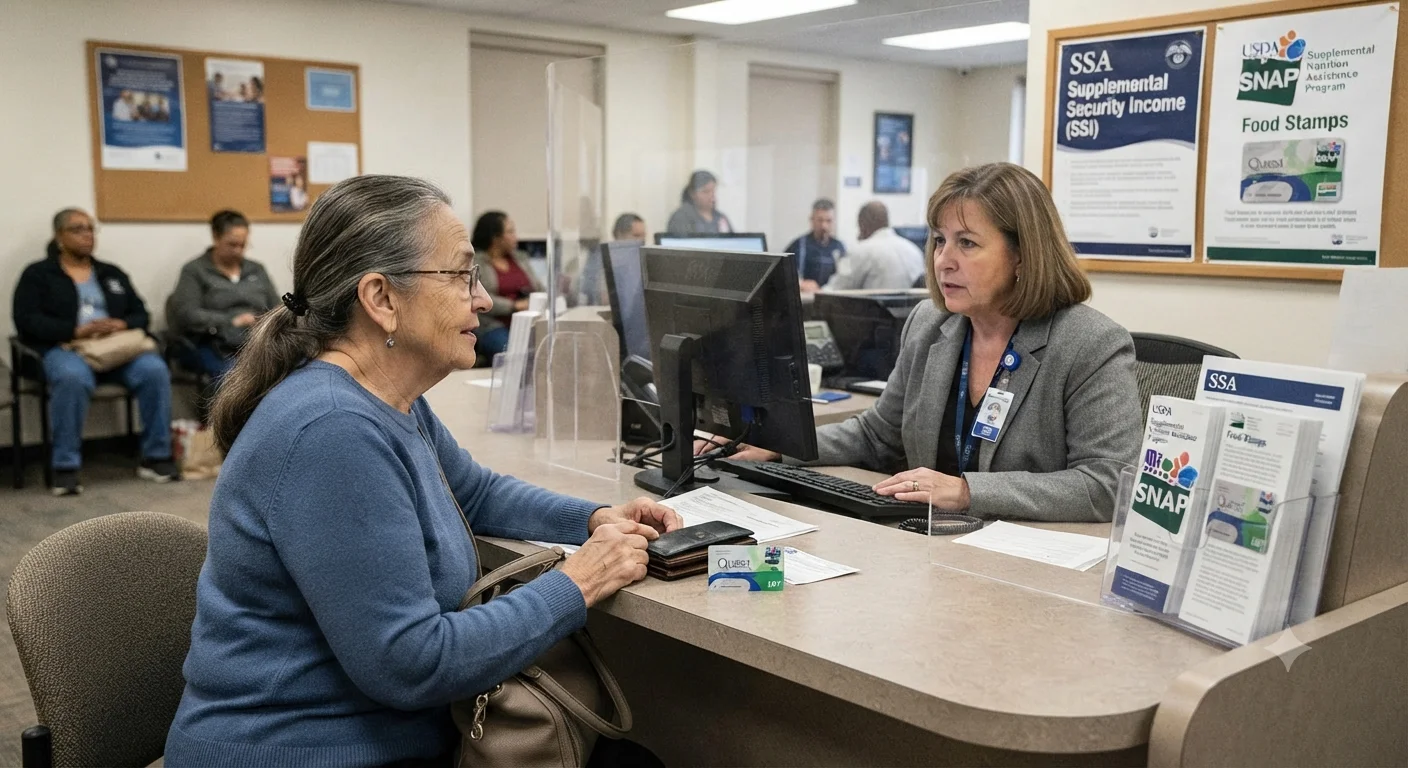
Yes, most people receiving Supplemental Security Income can also receive SNAP. SSI is counted as unearned income when SNAP calculates your household's eligibility and benefit amount, but because SSI is designed for people with very limited income and resources, most SSI recipients still fall comfortably within SNAP's income limits.
This guide is independently written and is not affiliated with USDA, OPM, or the official federal Feds Feed Families campaign.
What Is SSI
Supplemental Security Income is a federal program for adults 65 or older, or people of any age with a qualifying disability, who have limited income and resources. Unlike Social Security retirement or disability insurance, SSI does not require a specific work history. The maximum federal SSI benefit for 2026 is $994 per month for an individual and $1,491 per month for a couple, though some states add a supplemental payment on top of the federal amount.
How SSI Income Is Counted for SNAP
- What Is SSI
- How SSI Income Is Counted for SNAP
- Categorical Eligibility Through SSI
- Applying for SNAP Through Social Security
- How SSI Affects Other Benefits Too
- FAQ
- Can I get SNAP if I receive SSI?
- Does SSI count as income for SNAP?
- What is the 2026 maximum SSI benefit?
- Can Social Security help me apply for SNAP?
SSI counts as unearned income in the SNAP calculation, meaning it is added to your household's gross monthly income before deductions are applied. However, SSI recipients also qualify for SNAP's elderly and disabled special rules, including exemption from the gross income test, a higher asset limit of $4,500, and access to the uncapped medical expense deduction. Together, these rules mean the SSI income itself rarely disqualifies someone who would otherwise be a strong SNAP candidate.
Categorical Eligibility Through SSI
If every member of your household receives SSI, your household may be categorically eligible for SNAP, meaning you skip the standard income and asset tests entirely and only need to meet basic non-financial requirements. If you live with household members who do not receive SSI, the full household must generally meet standard SNAP income limits, though the elderly or disabled exemption from the gross income test may still apply if an SSI recipient is part of that household.
Recommended Articles
 GOVERNMENT ASSISTANCE GUIDES
 GOVERNMENT ASSISTANCE GUIDES
 GOVERNMENT ASSISTANCE GUIDES
 GOVERNMENT ASSISTANCE GUIDES
Applying for SNAP Through Social Security
If you and everyone in your household are applying for, or already receiving, SSI payments, a representative at any Social Security office can help you complete the SNAP application and forward it to your state's SNAP office on your behalf. This can simplify the process significantly, since it avoids a separate trip to a state benefits office for many applicants.
How SSI Affects Other Benefits Too
SSI recipients are often automatically or more easily eligible for other programs as well. Many states categorically enroll SSI recipients in LIHEAP energy assistance, bypassing that program's income test entirely. SSI recipients are also typically eligible for Medicaid through a separate categorical pathway, since SSI income is generally not counted the same way for Medicaid as it is for SNAP.
Read More Articals
FAQ
Can I get SNAP if I receive SSI?
Yes. Most SSI recipients qualify for SNAP as well, since SSI is designed for very low income individuals and SNAP applies favorable rules, like a higher asset limit and no gross income test, to elderly and disabled households.
Does SSI count as income for SNAP?
Yes. SSI counts as unearned income in the SNAP calculation, but favorable deductions and eligibility rules for elderly and disabled households often offset this.
What is the 2026 maximum SSI benefit?
The federal maximum is $994 per month for an individual and $1,491 per month for a couple, though some states add a supplemental payment.
Can Social Security help me apply for SNAP?
Yes, if you and your household are applying for or receiving SSI. A representative at any Social Security office can help complete and submit your SNAP application.
Sources: Social Security Administration, USDA Food and Nutrition Administration, BenefitsUSA Social Security and SNAP eligibility guidance.