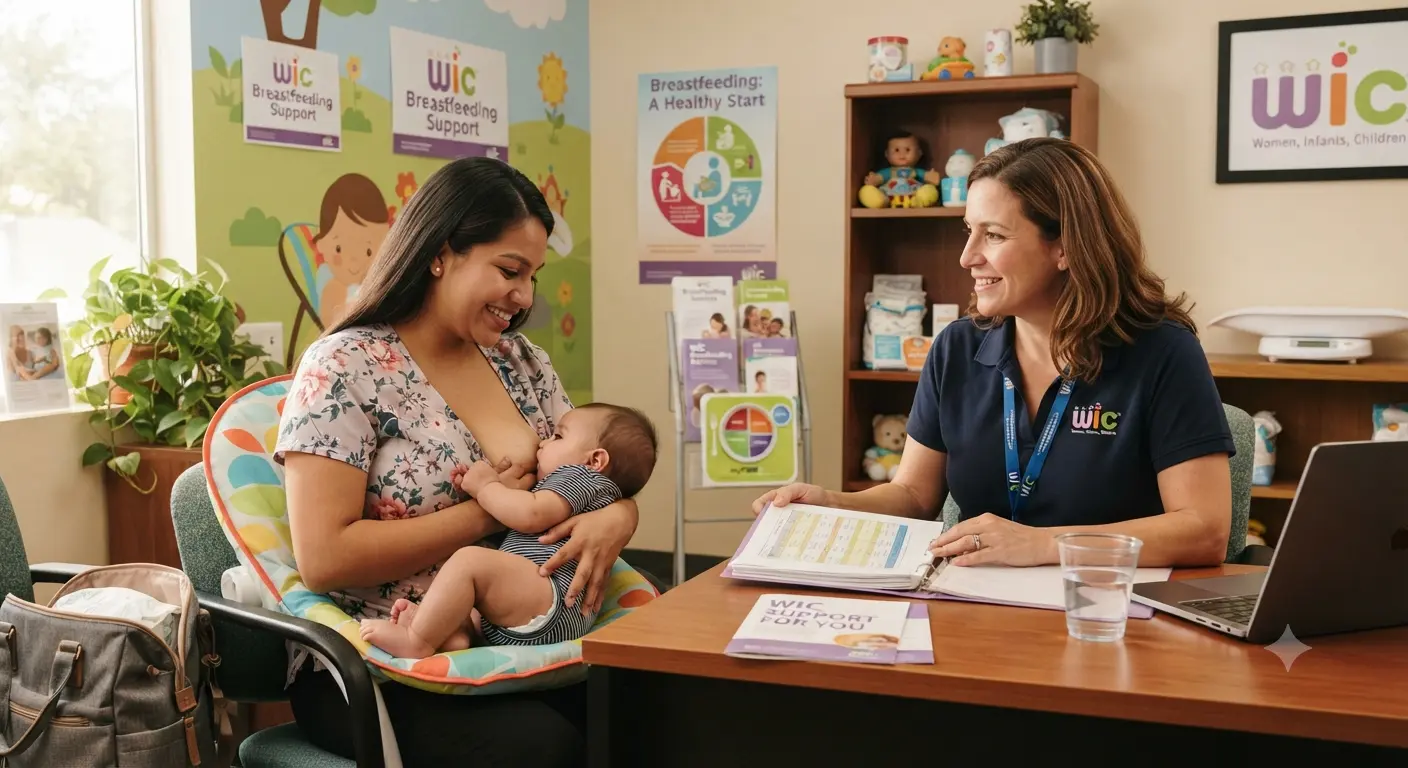
WIC provides some of its strongest benefits to breastfeeding mothers, including an enhanced food package with more food than the standard postpartum package, free breast pumps in most states, and one on one support from trained peer counselors, all designed to make breastfeeding easier to start and sustain.
This guide is independently written and is not affiliated with USDA, OPM, or the official federal Feds Feed Families campaign.
Why WIC Prioritizes Breastfeeding
WIC is structured to actively encourage breastfeeding because of its well documented health benefits for both parent and infant. Mothers who exclusively breastfeed receive a larger, more varied food package than those who formula feed or partially breastfeed, reflecting the additional nutritional needs of exclusive breastfeeding and functioning as a built in incentive within the program itself.
Enhanced Food Package for Breastfeeding Mothers
- Why WIC Prioritizes Breastfeeding
- Enhanced Food Package for Breastfeeding Mothers
- Free Breast Pumps
- Peer Counseling and Lactation Support
- How Long Breastfeeding Benefits Last
- Combining Breastfeeding Support With Other Resources
- FAQ
- Does WIC provide free breast pumps?
- How long can I stay on WIC while breastfeeding?
- Do breastfeeding mothers get more food through WIC?
- Can WIC help if I'm having trouble breastfeeding?
Fully breastfeeding mothers typically receive a food package that includes larger quantities of milk, cheese, and whole grains compared to the standard postpartum package, along with additional items like canned fish, such as tuna or salmon, and a higher fruit and vegetable Cash Value Benefit. Mothers who partially breastfeed, meaning they combine breastfeeding with some formula use, receive a package in between the fully breastfeeding and fully formula feeding tiers.
Free Breast Pumps
Most state WIC agencies provide breast pumps at no cost to breastfeeding participants, ranging from manual pumps for occasional use to hospital grade electric pumps for mothers returning to work or facing specific medical circumstances, such as a baby in the NICU or difficulty with direct breastfeeding. Availability and the specific type of pump offered vary by state and by individual need, so it is worth discussing your specific situation with your WIC clinic's breastfeeding coordinator.
Recommended Articles
 WIC FAMILY NUTRITION
 WIC FAMILY NUTRITION
 WIC FAMILY NUTRITION
 WIC FAMILY NUTRITION
Peer Counseling and Lactation Support
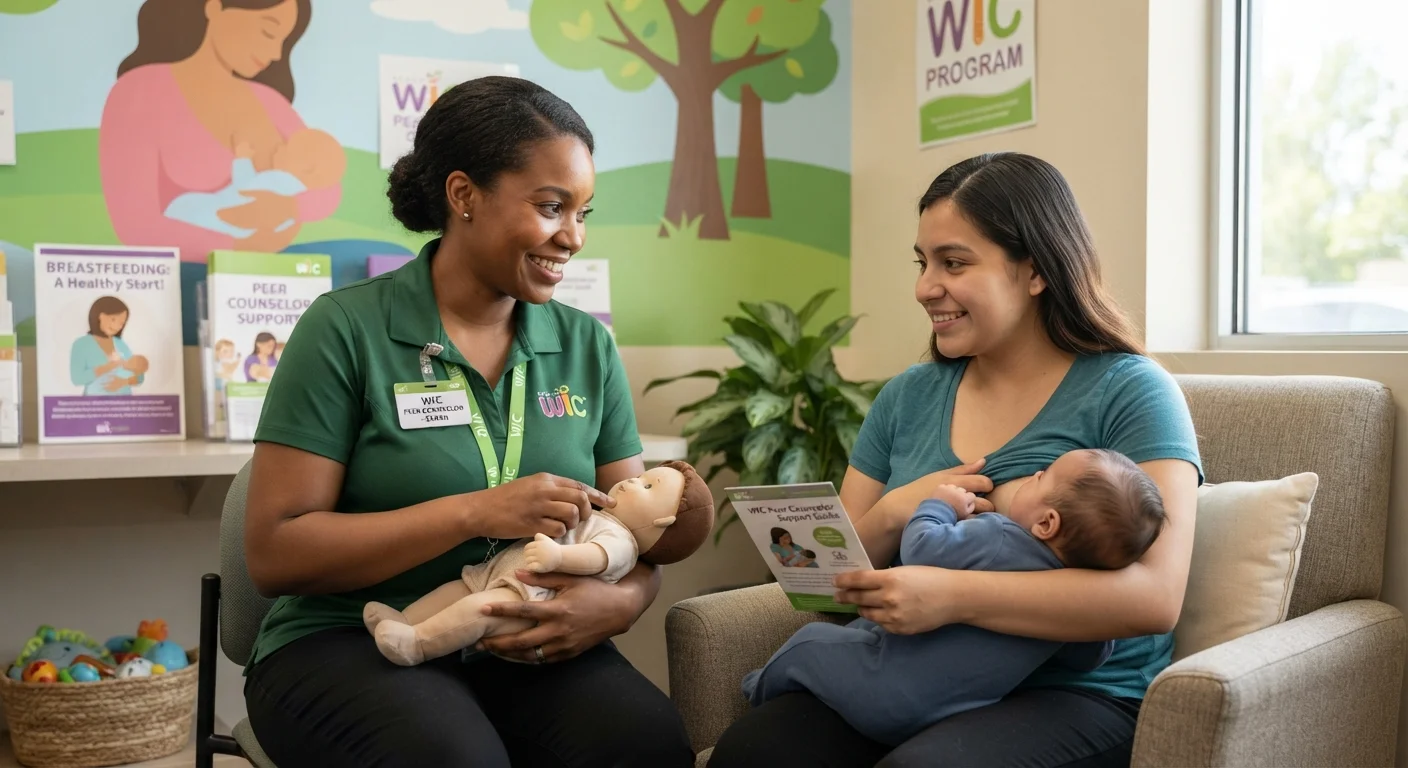
Many WIC agencies employ trained peer counselors, often mothers who have breastfed themselves, to provide phone and in person support for common challenges like latch difficulties, low milk supply concerns, or returning to work while breastfeeding. Some larger WIC agencies also have International Board Certified Lactation Consultants on staff or available by referral for more complex medical breastfeeding issues.
How Long Breastfeeding Benefits Last
Breastfeeding women remain eligible for WIC until their infant's first birthday, longer than the six month postpartum eligibility window for mothers who are not breastfeeding. This extended eligibility period is specifically designed to support breastfeeding through the full first year, when the American Academy of Pediatrics recommends continuing breastfeeding alongside solid foods.
Combining Breastfeeding Support With Other Resources
WIC breastfeeding support can be used alongside other resources, such as hospital based lactation consultants, La Leche League support groups, and employer provided lactation accommodations required under federal workplace law for many nursing mothers returning to work. Your WIC clinic can typically provide referrals to these additional resources if needed beyond what the WIC program itself offers directly.
Read more Articals
FAQ
Does WIC provide free breast pumps?
Yes, in most states. The type of pump provided, whether manual or electric, generally depends on individual need and state program resources.
How long can I stay on WIC while breastfeeding?
Breastfeeding mothers remain eligible until their infant's first birthday, compared to six months postpartum for mothers who are not breastfeeding.
Do breastfeeding mothers get more food through WIC?
Yes. Fully breastfeeding mothers receive an enhanced food package with larger quantities and additional items compared to the standard postpartum package.
Can WIC help if I'm having trouble breastfeeding?
Yes. Most WIC agencies offer peer counselors and, in many cases, access to lactation consultants who can help with common breastfeeding challenges.
Sources: USDA Food and Nutrition Administration WIC breastfeeding support guidance, American Academy of Pediatrics breastfeeding recommendations.