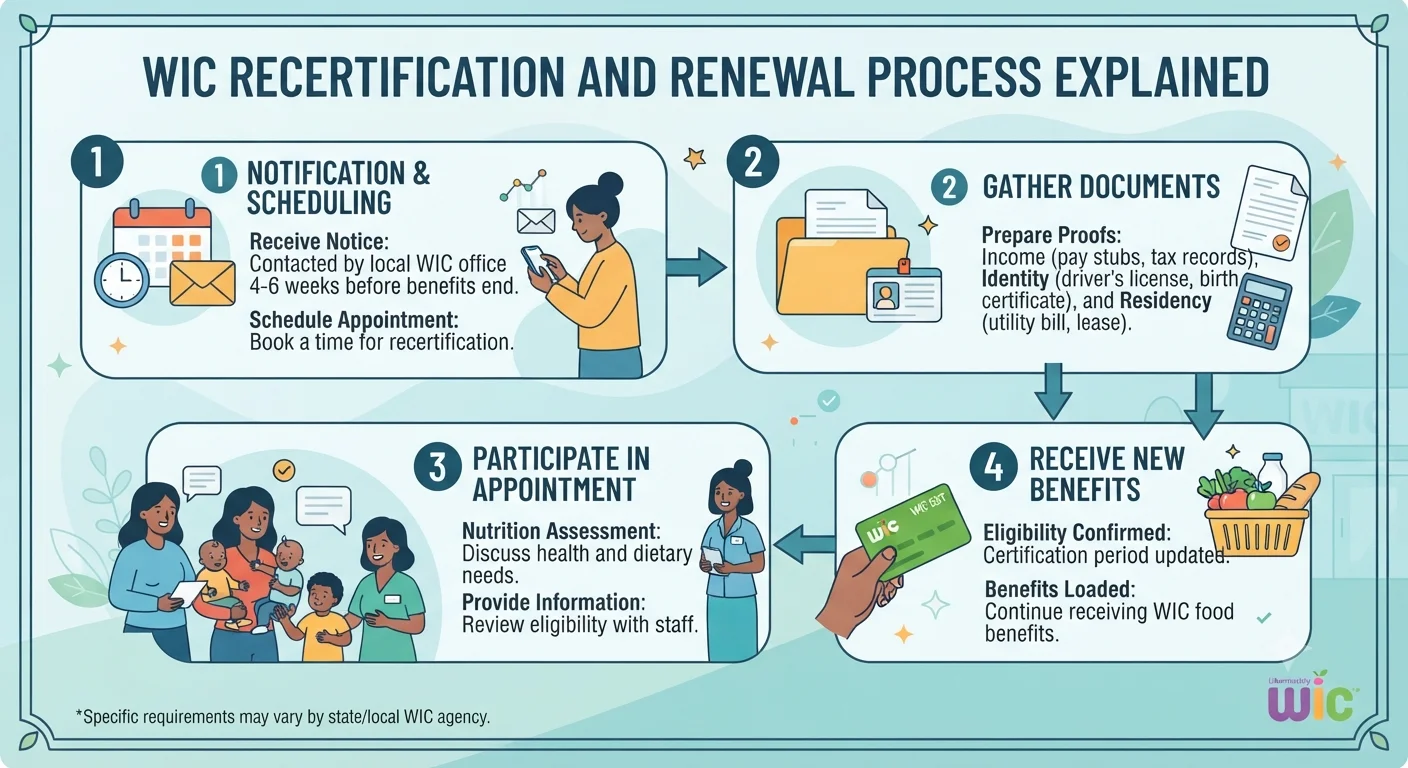
WIC benefits do not renew automatically. Each participant category has its own certification length, and continuing to receive benefits requires completing a recertification appointment before the current period ends, a process that reviews income, updates health measurements, and reissues the eWIC card for the next certification period.
This guide is independently written and is not affiliated with USDA, OPM, or the official federal Feds Feed Families campaign.
Why WIC Requires Regular Recertification
Unlike some benefit programs that continue indefinitely once approved, WIC is designed around a series of defined certification periods that reflect a participant's changing nutritional needs over time, particularly for infants and young children, whose needs shift rapidly as they grow. Recertification ensures the food package a family receives stays matched to current needs rather than being locked in at an outdated level.
How Often Recertification Happens
- Why WIC Requires Regular Recertification
- How Often Recertification Happens
- What Happens at a Recertification Appointment
- Scheduling Your Recertification
- What Happens If You Miss Your Appointment
- Recertifying Between Full Certification Periods
- Reporting Changes Between Recertification Dates
- FAQ
- Does WIC renew automatically?
- How often do I need to recertify for WIC?
- What happens if I miss my WIC recertification appointment?
- Should I contact WIC if my household's situation changes between appointments?
Certification lengths vary by category. Infants are certified until their first birthday, with a check-in typically around six months. Children are certified annually starting at age 1, continuing each year until aging out at 5. Pregnant, postpartum, and breastfeeding women each have certification windows tied to their specific pregnancy and postpartum timeline, generally running through the end of pregnancy plus a defined postpartum period.
What Happens at a Recertification Appointment
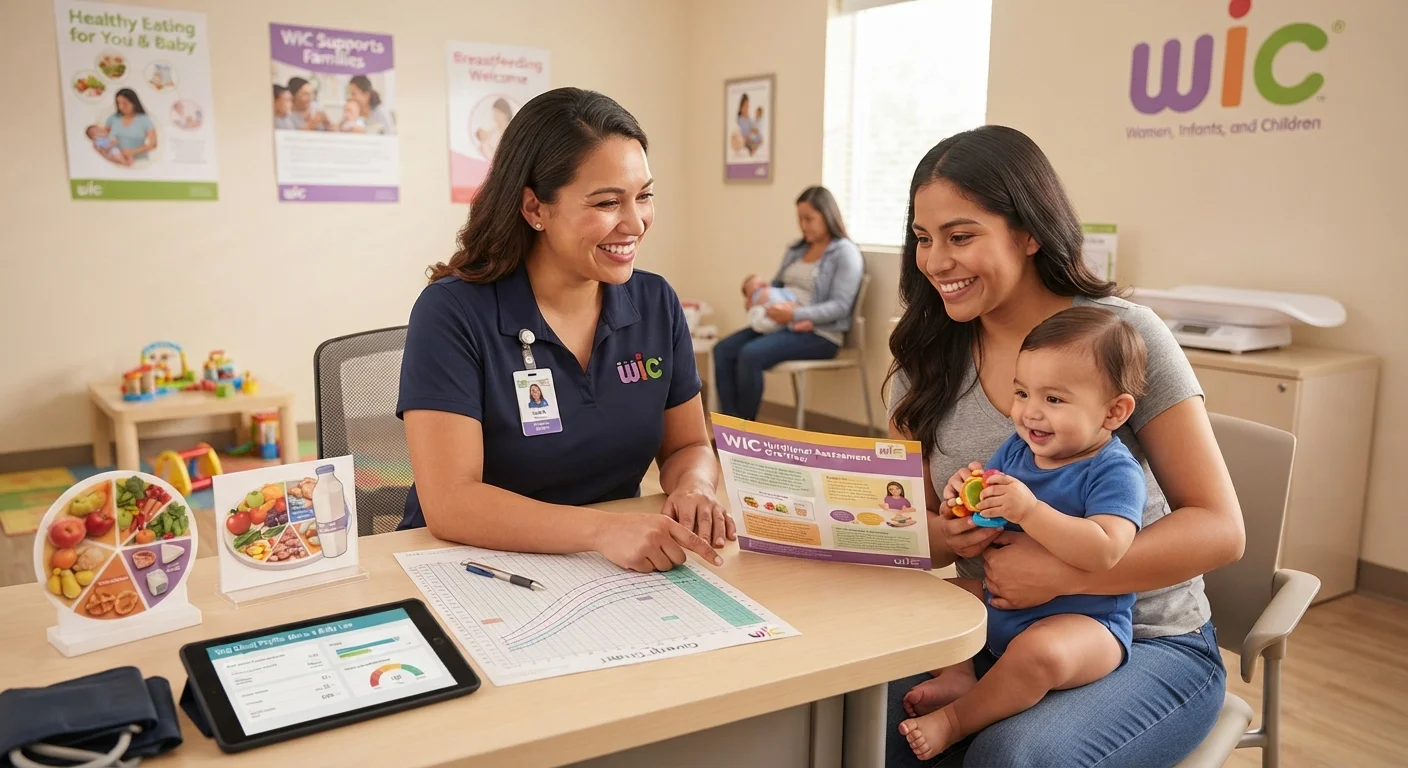
A recertification visit generally repeats several elements of the original certification appointment, including an updated income check or confirmation of continued SNAP, Medicaid, or TANF eligibility, updated height, weight, and iron measurements, and a nutrition consultation reflecting any changes since the last visit. Because much of your information is already on file, recertification appointments are often somewhat quicker than the original certification visit.
Scheduling Your Recertification
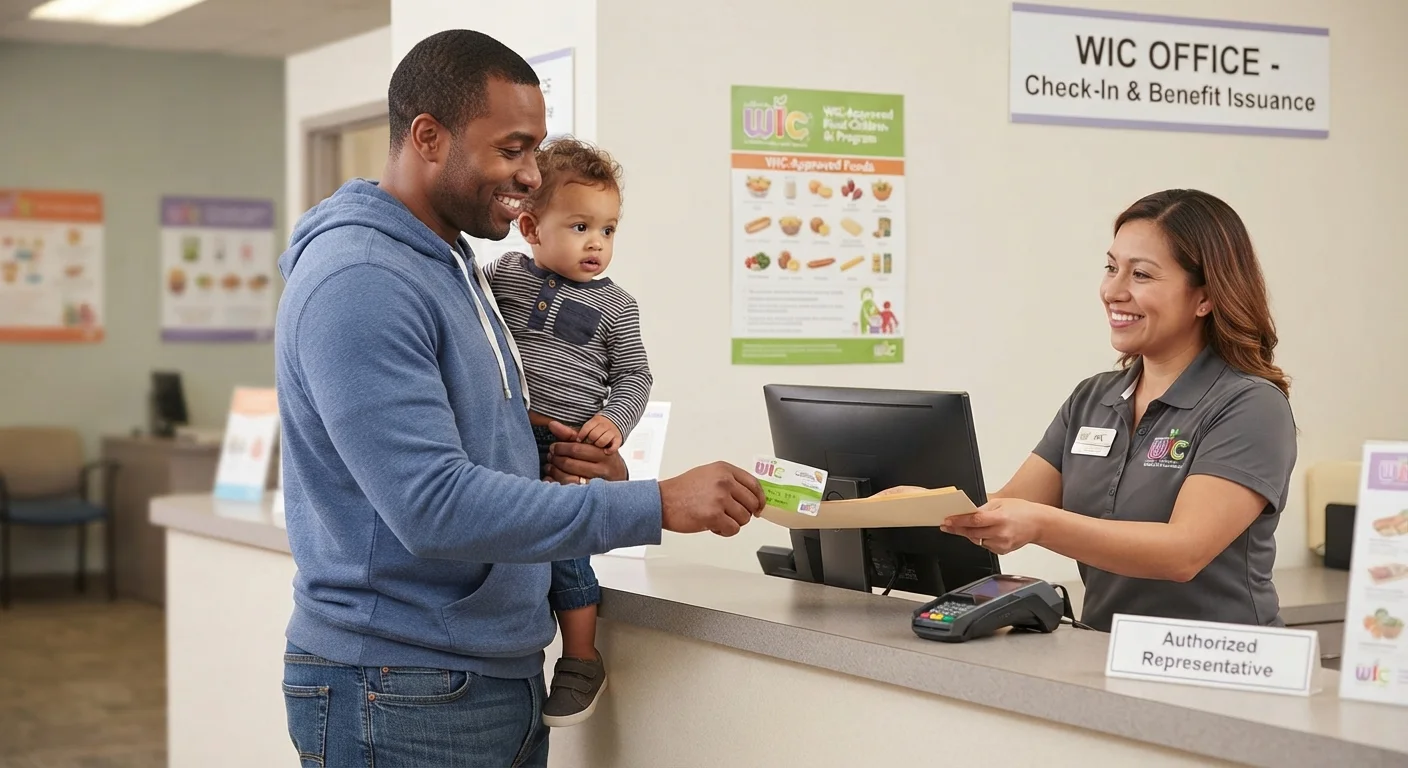
Most WIC clinics proactively schedule your next recertification appointment before your current certification period ends, often sending a reminder by mail, text, or phone call as the date approaches. It's worth confirming your contact information is current with your WIC clinic specifically so these reminders reach you reliably.
Recommended Articles
 WIC FAMILY NUTRITION
 WIC FAMILY NUTRITION
 WIC FAMILY NUTRITION
 WIC FAMILY NUTRITION
What Happens If You Miss Your Appointment
Missing a scheduled recertification appointment doesn't necessarily end your benefits immediately in most states, since many WIC agencies allow a grace period, commonly around 30 days, during which the appointment can still be completed without a lapse in benefits. This grace period is intended as a safety net rather than a routine option, so rescheduling as soon as possible after a missed appointment is the safer approach.
Recertifying Between Full Certification Periods
Beyond the full recertification described above, WIC also typically requires shorter, periodic nutrition education visits between certification periods, which can happen in person or remotely in many states. These check-ins are less involved than a full recertification but are still required to keep benefits active, so it's worth keeping track of both types of appointments on your household calendar.
Reporting Changes Between Recertification Dates
If your household's circumstances change significantly between scheduled recertification appointments, such as a new pregnancy, a household size change, or a significant income shift, it's generally worth contacting your WIC clinic directly rather than waiting for your next scheduled appointment, since some changes could affect your eligibility or benefit category sooner than your next recertification date.
Read More Articals
FAQ
Does WIC renew automatically?
No. Each participant category has a defined certification length, and continuing to receive benefits requires completing a recertification appointment before the current period ends.
How often do I need to recertify for WIC?
This depends on your category. Infants are certified until their first birthday, children recertify annually from age 1 to 5, and pregnant, postpartum, and breastfeeding women have their own windows tied to pregnancy timelines.
What happens if I miss my WIC recertification appointment?
Most states allow a grace period, often around 30 days, to complete a late recertification without losing benefits, though rescheduling promptly is the safer approach rather than relying on this routinely.
Should I contact WIC if my household's situation changes between appointments?
Yes, generally. Significant changes like a new pregnancy, household size change, or income shift are worth reporting directly to your WIC clinic rather than waiting for your next scheduled recertification.
Sources: USDA Food and Nutrition Administration WIC certification periods guidance, state WIC certification policy manuals.