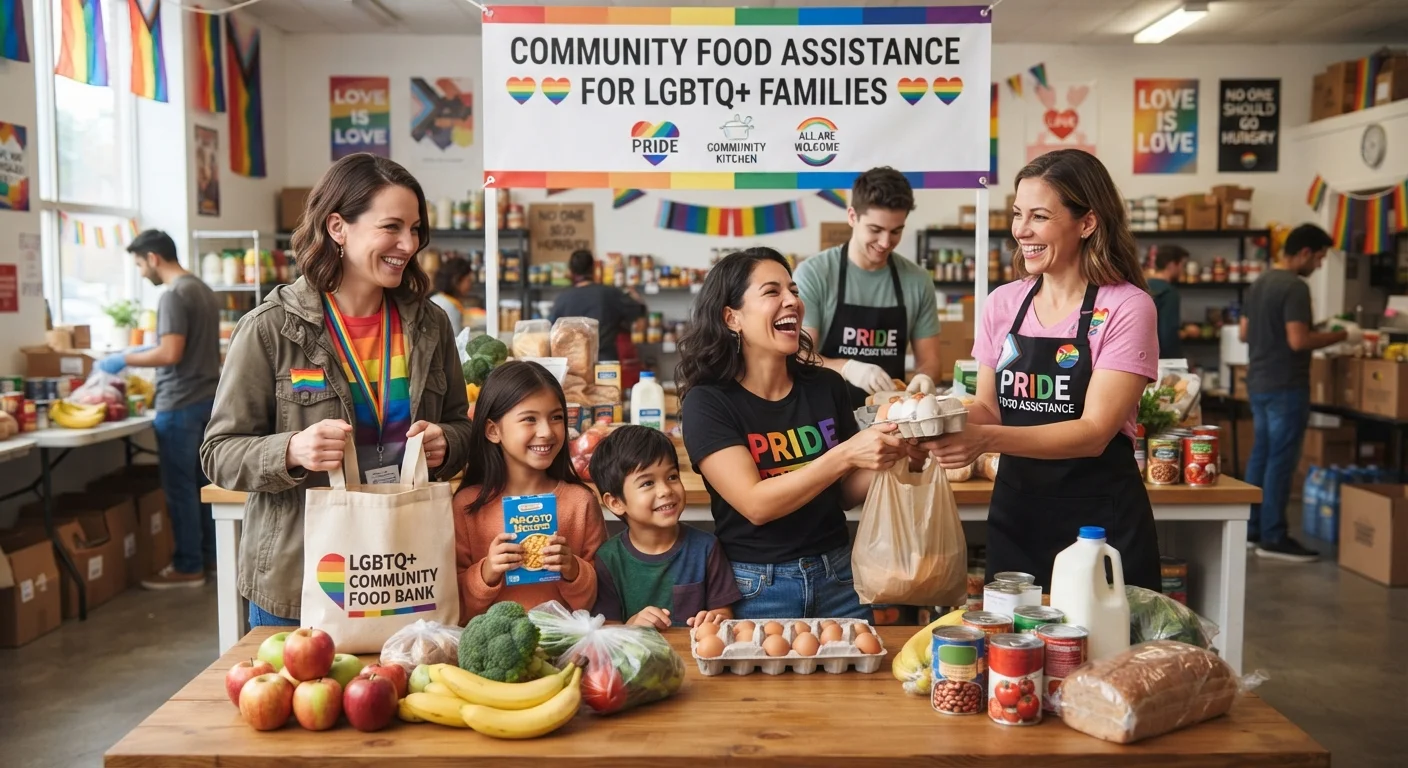
SNAP eligibility is determined by household income, size, and composition, with no requirement or restriction based on sexual orientation or gender identity. LGBTQ+ individuals and families apply through the exact same process as any other household, though it is worth being aware that federal nondiscrimination guidance in this area has genuinely shifted in recent years, which affects the specific protections currently in place.
This guide is independently written and is not affiliated with USDA, OPM, or the official federal Feds Feed Families campaign.
How LGBTQ+ Households Apply for SNAP
A same-sex couple, a household headed by a transgender or nonbinary individual, or a chosen family raising children together applies for SNAP the same way any household does: based on who lives together and purchases and prepares food together, regardless of the specific relationships involved. There is no separate application track or additional documentation requirement tied to sexual orientation or gender identity.
A History of Shifting Federal Guidance
- How LGBTQ+ Households Apply for SNAP
- A History of Shifting Federal Guidance
- Filing a Discrimination Complaint
- Identity Verification Concerns
- Why LGBTQ+ Households May Face Higher Food Insecurity
- Finding LGBTQ+-Affirming Food Resources
- Chosen Family and Household Composition
- FAQ
- Does sexual orientation or gender identity affect SNAP eligibility?
- Has federal LGBTQ+ nondiscrimination guidance for SNAP changed recently?
- What should I do if I experience discrimination while applying for SNAP?
- Can a chosen family apply together as one SNAP household?
In May 2022, USDA announced it would interpret the prohibition on sex discrimination in SNAP and related nutrition programs to include discrimination based on sexual orientation and gender identity, extending protections consistent with the Supreme Court's 2020 Bostock v. Clayton County decision. More recently, in 2025, USDA issued updated guidance that a group of U.S. senators, in a formal letter to the Secretary of Agriculture, described as narrowing these protections specifically within school nutrition programs, prompting public disagreement over whether the change appropriately rolled back or clarified the scope of the earlier policy. Because this is an actively contested and evolving area of federal policy, checking for the most current USDA civil rights guidance, or asking directly at your local SNAP office, is worth doing if you have specific concerns.
Filing a Discrimination Complaint
If you believe you experienced discrimination while applying for or using SNAP based on your sexual orientation or gender identity, you can file a formal complaint using USDA's Program Discrimination Complaint Form, known as Form AD-3027. Regardless of shifting guidance at the federal level, discrimination based on race, color, national origin, disability, age, religion, or political beliefs remains prohibited in all USDA nutrition programs, and many advocates continue to treat sexual orientation and gender identity as covered categories consistent with the broader legal framework established by Bostock.
Identity Verification Concerns
Some transgender and nonbinary applicants have raised concerns about identity verification processes that may not match a person's current gender identity, particularly when cross-referencing against older government records like Social Security. If your identification documents don't align with your current gender identity, explaining this directly to your caseworker, and asking how your specific state handles this situation, can help avoid unnecessary confusion or delay during the application process.
Recommended Articles
 LIFE SITUATIONS & SPECIAL CIRCUMSTANCES
 LIFE SITUATIONS & SPECIAL CIRCUMSTANCES
 LIFE SITUATIONS & SPECIAL CIRCUMSTANCES
 LIFE SITUATIONS & SPECIAL CIRCUMSTANCES
Why LGBTQ+ Households May Face Higher Food Insecurity
Research and advocacy organizations have documented that LGBTQ+ adults report workplace discrimination and unemployment at meaningfully higher rates than the general population, which can translate into higher rates of food insecurity for this community overall. Understanding this broader context is part of why many food banks and community organizations have specifically developed LGBTQ+-affirming outreach and services in recent years.
Finding LGBTQ+-Affirming Food Resources
Beyond standard SNAP application, many communities have LGBTQ+-affirming health centers, community organizations, and food pantries that provide food assistance alongside other supportive services, sometimes with staff specifically trained in serving this community with sensitivity. Searching for an LGBTQ+ community center or health organization in your area, in addition to a standard food bank locator, can surface these additional resources.
Chosen Family and Household Composition
SNAP household rules are based on who actually lives together and shares food preparation, not legal or biological family relationships, which can be genuinely helpful for LGBTQ+ individuals whose closest support network may be a chosen family rather than biological relatives. If you share a home and food preparation with people who aren't legally related to you, you can generally still apply together as a single SNAP household based on your actual living and eating arrangement.
Read More Articals
FAQ
Does sexual orientation or gender identity affect SNAP eligibility?
No. SNAP eligibility is based entirely on household income, size, and composition, with no requirement or restriction tied to sexual orientation or gender identity.
Has federal LGBTQ+ nondiscrimination guidance for SNAP changed recently?
Yes, this is an actively evolving area. USDA extended nondiscrimination protections in 2022, and updated 2025 guidance has been described by some senators as narrowing those protections specifically in school nutrition programs, so checking current USDA civil rights guidance is worth doing.
What should I do if I experience discrimination while applying for SNAP?
You can file a formal complaint using USDA's Program Discrimination Complaint Form, AD-3027.
Can a chosen family apply together as one SNAP household?
Generally yes, since SNAP household rules are based on who actually lives together and shares food preparation, not legal or biological family relationships.
Sources: Food Research and Action Center, U.S. Senate letter to USDA Secretary regarding LGBTQI+ nondiscrimination guidance, Move For Hunger.