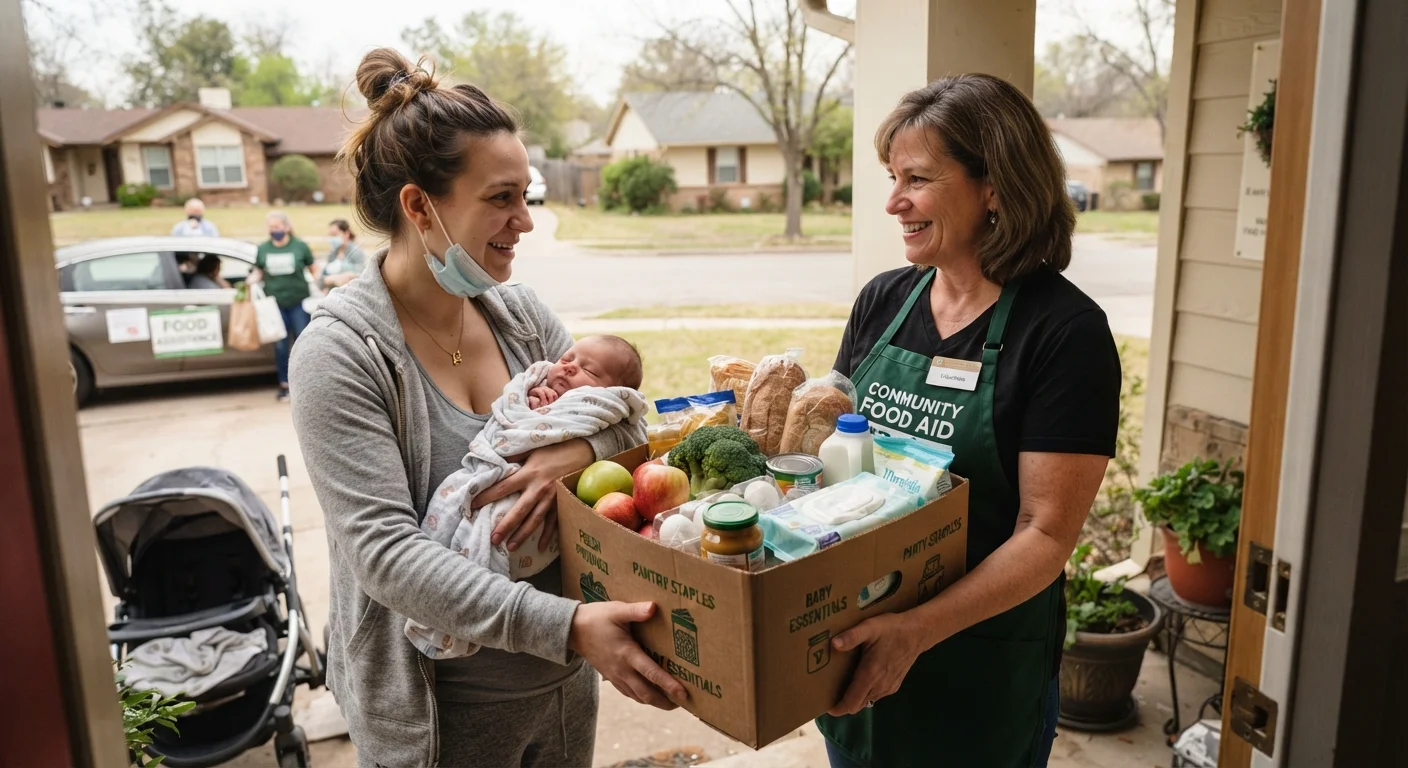
A new baby genuinely changes your household's eligibility picture, since it increases your SNAP household size and benefit calculation, opens the door to WIC from the moment pregnancy is confirmed through the child's fifth birthday, and can newly qualify a family for programs they weren't eligible for before. Working through a simple checklist during the first year helps ensure nothing is missed during an understandably overwhelming time.
This guide is independently written and is not affiliated with USDA, OPM, or the official federal Feds Feed Families campaign.
Apply for WIC as Early as Possible
WIC eligibility begins from the moment pregnancy is confirmed, not after birth, and pregnant applicants can count their unborn child as an additional household member when calculating income eligibility, which can help a family qualify even if their current household income would otherwise be borderline. If you or your child already receive Medicaid, SNAP, or TANF, you're generally already income-eligible for WIC without needing separate income documentation.
Update Your SNAP Household Size
- Apply for WIC as Early as Possible
- Update Your SNAP Household Size
- Set Up Your WIC Appointment
- Check Whether You Qualify for Medicaid or CHIP
- Look Into the Child Tax Credit and Earned Income Tax Credit
- Understand Recertification Timing for WIC
- Check for a Federal "Baby Bonus" Savings Account
- Look Into Paid Family Leave If Your State Offers It
- FAQ
- When can I apply for WIC after having a baby?
- Does having a baby increase my SNAP benefit?
- Can I count my pregnancy toward my household size before the baby is born?
- Are there tax credits specifically for new parents?
If you already receive SNAP, report your new baby to your caseworker, generally by providing the birth certificate or hospital discharge paperwork, so your household size and benefit amount can be recalculated. If you're not currently on SNAP, a new baby is a good moment to check eligibility freshly, since your household's income limit rises with each additional member, and a family that didn't qualify before the birth may well qualify afterward.
Set Up Your WIC Appointment
Your first WIC appointment includes a brief health screening, an income or automatic-eligibility check, and a nutrition consultation, after which you'll receive an eWIC card loaded with your family's specific food package. Breastfeeding mothers receive an enhanced food package and can access lactation support and, in most states, a free breast pump through the same WIC visit.
SNAP and Domestic Violence Shelters: How Residency Rules Work
Check Whether You Qualify for Medicaid or CHIP
Many states extend Medicaid eligibility more generously during pregnancy and shortly after birth than standard adult Medicaid rules allow, and a newborn is frequently automatically eligible for Medicaid or CHIP coverage for at least their first year regardless of the family's exact income level in some states. Confirming your baby's specific coverage status with your state's Medicaid agency shortly after birth is worth doing.
Look Into the Child Tax Credit and Earned Income Tax Credit
Having your first child may make your household newly eligible for the Earned Income Tax Credit, one of the more valuable tax credits available to working families, and the Child Tax Credit provides a meaningful per-child benefit claimed on your annual tax return. These aren't applied for the same way as SNAP or WIC, they're claimed when you file taxes, so keeping documentation of your child's birth and any income changes throughout the year helps at tax time.
Recommended Articles
 LIFE SITUATIONS & SPECIAL CIRCUMSTANCES
 LIFE SITUATIONS & SPECIAL CIRCUMSTANCES
 LIFE SITUATIONS & SPECIAL CIRCUMSTANCES
 LIFE SITUATIONS & SPECIAL CIRCUMSTANCES
Understand Recertification Timing for WIC
Infants are certified for WIC until their first birthday, with a check-in typically around six months, and this recertification cannot happen before the actual milestone, so your WIC clinic will generally schedule it within a couple weeks of your child's birthday to avoid a gap. Marking this on your calendar alongside other first-year milestones helps avoid a missed appointment.
Check for a Federal "Baby Bonus" Savings Account
Recent federal legislation created a new program contributing a Treasury-funded deposit to a savings account for children born within a specific eligible window, with the exact account setup details still being finalized by the Treasury Department as of this writing. Because the specific implementation details are still being worked out, checking directly with the Treasury Department or a trusted tax professional as this program rolls out further is worth doing rather than assuming a specific process is already in place.
Look Into Paid Family Leave If Your State Offers It
A meaningful number of states now offer paid family leave programs providing partial wage replacement during parental leave, separate from federal FMLA's unpaid, job-protection-only structure. Checking your specific state's labor department website for eligibility and how to apply, ideally before your baby arrives, helps ensure you don't miss an application window tied to your specific leave dates.
Read More Articals
FAQ
When can I apply for WIC after having a baby?
Immediately. WIC covers infants from birth through their first birthday, and applying as soon as possible after birth ensures your family starts receiving benefits without delay.
Does having a baby increase my SNAP benefit?
Generally yes, since your household size and benefit calculation update once you report the birth, typically using a birth certificate or hospital discharge paperwork as documentation.
Can I count my pregnancy toward my household size before the baby is born?
For WIC, yes. Pregnant applicants can count an unborn child as an additional household member when calculating income eligibility.
Are there tax credits specifically for new parents?
Yes. The Child Tax Credit and, for many working families, the Earned Income Tax Credit can provide meaningful support, claimed when filing your annual tax return rather than through a separate benefits application.
Sources: USDA Food and Nutrition Administration WIC Eligibility, USDA Food and Nutrition Administration WIC program overview, Florida Department of Health WIC program.