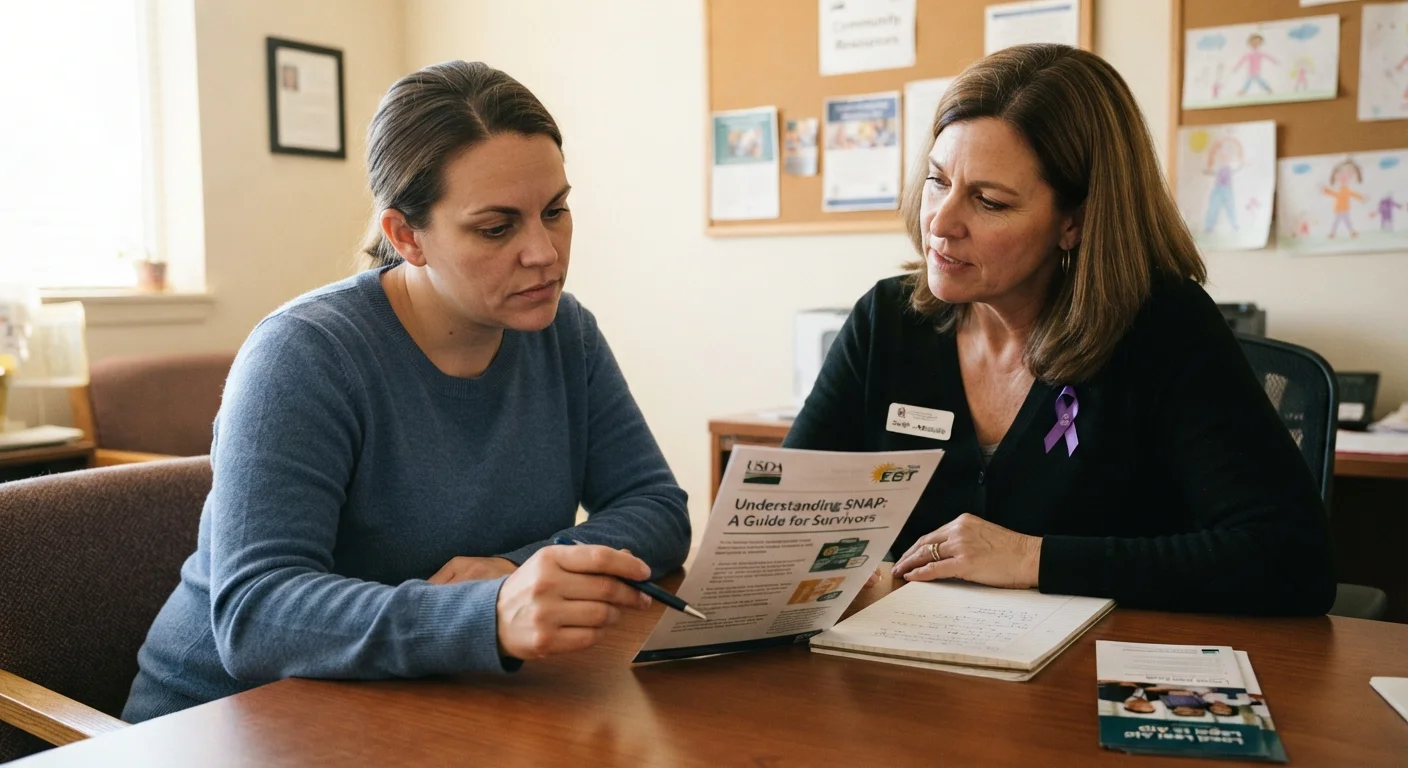
Living at a domestic violence shelter does not disqualify someone from SNAP, and residents in this situation can often be treated as a genuinely separate household from an abuser they previously shared a case with, apply using the shelter's address, and frequently qualify for expedited processing given the typically limited income and resources involved in a sudden shelter stay.
This guide is independently written and is not affiliated with USDA, OPM, or the official federal Feds Feed Families campaign. If you are in immediate danger, please call 911. The National Domestic Violence Hotline is available confidentially at 1-800-799-7233.
You Can Apply as a Separate Household
Federal SNAP rules specifically account for domestic violence victims applying separately from an abuser, even in the same month that the abuser's existing case might still show them as a household member. Some states have specific policy allowing a victim to receive their own SNAP allotment as a separate household in the same month the abuser's case is still active, recognizing the urgency of the situation.
Using a Shelter Address
- You Can Apply as a Separate Household
- Using a Shelter Address
- Confidentiality Restrictions
- Expedited SNAP for Shelter Residents
- Shelter Residency and SNAP's Institutional Meal Rule
- If You Have Children With You
- Transitioning Out of the Shelter
- Noncitizen Survivors
- FAQ
- Does living at a domestic violence shelter disqualify me from SNAP?
- Can I apply for SNAP as my own household while my abuser's case still shows me as a member?
- What address do I use to apply for SNAP if I'm staying at a shelter?
- Will shelter staff help me apply for SNAP?
You can generally use a domestic violence shelter's address, a P.O. box, or an Address Confidentiality Program address to apply for SNAP, since a fixed permanent address of your own isn't required. Shelter staff are frequently experienced in helping residents navigate this process and can often assist directly with the application or connect you with a benefits specialist familiar with shelter residency situations.
Confidentiality Restrictions
Many states apply confidentiality restrictions to a domestic violence survivor's case specifically for safety reasons, which can affect how the case can be accessed, sometimes limiting online self-service access to case information as an added security measure. This is intentional and protective, and shelter staff or your caseworker can explain exactly what this means for how you'll receive information about your specific case.
Expedited SNAP for Shelter Residents
Given that many people entering a domestic violence shelter arrive with very limited income and minimal cash resources, often having left suddenly, expedited SNAP processing, guaranteeing benefits within 7 days, frequently applies. Mentioning your circumstances explicitly, including that you're currently staying at a shelter, helps ensure you're properly screened for this faster processing track.
Recommended Articles
 LIFE SITUATIONS & SPECIAL CIRCUMSTANCES
 LIFE SITUATIONS & SPECIAL CIRCUMSTANCES
 LIFE SITUATIONS & SPECIAL CIRCUMSTANCES
 LIFE SITUATIONS & SPECIAL CIRCUMSTANCES
Shelter Residency and SNAP's Institutional Meal Rule
Normally, someone who receives most of their meals from an institution isn't eligible for SNAP, but domestic violence shelters are treated differently from other institutional settings under federal rules, meaning shelter residency itself does not create this kind of disqualification. This exists specifically because domestic violence shelters serve a fundamentally different purpose than the institutional settings the general rule was designed to address.
If You Have Children With You
Children who came to the shelter with you are generally included in your separate household application, and it's worth also checking eligibility for WIC if you have a child under 5, or free school meals if your children are school-aged, since both can provide additional support during this transition, separate from and in addition to SNAP.
Transitioning Out of the Shelter
As you move from shelter residency toward more permanent housing, whether transitional housing, a new independent residence, or staying with family or friends, your SNAP case will generally need to be updated to reflect your new address and living situation. Shelter staff or a domestic violence advocate can often help you navigate this transition smoothly, ensuring there's no gap in benefits as your housing situation changes.
Noncitizen Survivors
Noncitizen survivors who have filed for or received approval under a VAWA self-petition may qualify for SNAP as a "qualified battered noncitizen," even if they wouldn't otherwise meet standard noncitizen eligibility rules. A domestic violence legal advocate can help clarify how this specifically applies to your immigration situation.
Read More Articals
FAQ
Does living at a domestic violence shelter disqualify me from SNAP?
No. Shelter residents remain eligible for SNAP, and shelters are treated differently from other institutional settings under federal rules that might otherwise limit eligibility.
Can I apply for SNAP as my own household while my abuser's case still shows me as a member?
In many states, yes. Some states have specific policies allowing this kind of separate household determination given the urgency of a domestic violence situation.
What address do I use to apply for SNAP if I'm staying at a shelter?
The shelter's address, a P.O. box, or an Address Confidentiality Program address if your state offers one. A fixed permanent address of your own isn't required.
Will shelter staff help me apply for SNAP?
Often, yes. Domestic violence shelter staff frequently have experience helping residents navigate benefits applications and may be able to assist directly or connect you with a specialist.
Sources: Los Angeles County Department of Public Social Services, National Domestic Violence Hotline, U.S. Department of Housing and Urban Development VAWA guidance.