
Most financial guidance suggests spending 10 to 15 percent of take-home pay on groceries, though the USDA also publishes four official food plan benchmarks, thrifty, low-cost, moderate, and liberal, that families can use as a starting point based on household size. For a family of four in 2026, the thrifty plan runs about $1,013 a month, while the moderate plan runs closer to $1,250 to $1,400 a month, giving households a realistic range depending on their circumstances and goals.
This guide is independently written and is not affiliated with USDA, OPM, or the official federal Feds Feed Families campaign.
Start With Your Take-Home Pay
Building a grocery budget starts with knowing your actual take-home pay, meaning income after taxes and other deductions, not your gross salary. A commonly used framework, the 50/30/20 rule, suggests allocating 50 percent of take-home pay to needs, including groceries, housing, and utilities, 30 percent to discretionary wants, and 20 percent to savings and debt repayment. This rule is a helpful starting guideline rather than a strict formula, since many households, especially those with high housing costs, find that needs alone consume well over 50 percent of their income, in which case the percentages should be adjusted to reflect reality rather than forced to fit an idealized split.
Use the USDA Food Plans as a Benchmark
- Start With Your Take-Home Pay
- Use the USDA Food Plans as a Benchmark
- Separate Groceries From Restaurants and Delivery
- Track Before You Cut
- Build a Weekly, Not Just Monthly, Number
- Adjust for Your Real Circumstances
- FAQ
- How much should a family spend on groceries per month?
- What is the 50/30/20 rule and does it work for groceries?
- Should restaurant spending count as part of my grocery budget?
- What should I do if my grocery budget never seems to be enough?
The USDA publishes four monthly food cost benchmarks based on household composition:
- Thrifty Plan: The lowest cost tier, requiring cooking almost everything from scratch with minimal convenience foods, roughly $900 to $1,013 a month for a family of four
- Low-Cost Plan: A modest step up, allowing slightly more flexibility and variety
- Moderate-Cost Plan: A middle tier reflecting more typical grocery shopping habits, roughly $1,250 to $1,400 a month for a family of four
- Liberal Plan: The highest tier, allowing for more convenience foods, name brands, and less restrictive shopping
These figures also vary significantly by region. Households in Hawaii, for example, spend roughly 35 percent more than the national average due to higher local food costs, so it is worth treating the national figures as a starting reference point rather than an exact target for every location.
Separate Groceries From Restaurants and Delivery
A common budgeting mistake is lumping restaurant meals, coffee shop visits, and food delivery apps into the same category as grocery spending. These are genuinely different expenses with very different per-meal costs, and combining them makes it difficult to see whether your actual grocery spending is on track. Tracking groceries as their own line item, separate from dining out, gives a much clearer and more actionable picture of where adjustments are actually needed.
Recommended Articles
 BUDGETING MEAL PLANNING
 BUDGETING MEAL PLANNING
 BUDGETING MEAL PLANNING
 BUDGETING MEAL PLANNING
Track Before You Cut
Before making any changes, spend two to four weeks simply tracking what your household actually spends on groceries, using receipts, a spreadsheet, or a budgeting app. This step often reveals surprising patterns, such as how much is spent on snack foods, how often food goes to waste, or how much a few convenience purchases each week add up to over a month. Only after understanding your actual current spending does it make sense to set a specific target and identify where to trim.
Build a Weekly, Not Just Monthly, Number
Once you have a monthly grocery target, breaking it into a weekly number makes it far easier to stay on track day to day, rather than realizing at the end of the month that spending has run far over budget. A family targeting $1,000 a month, for example, has roughly $230 to work with each week, a number that is much easier to check against a single shopping trip's receipt than an abstract monthly total.
Adjust for Your Real Circumstances
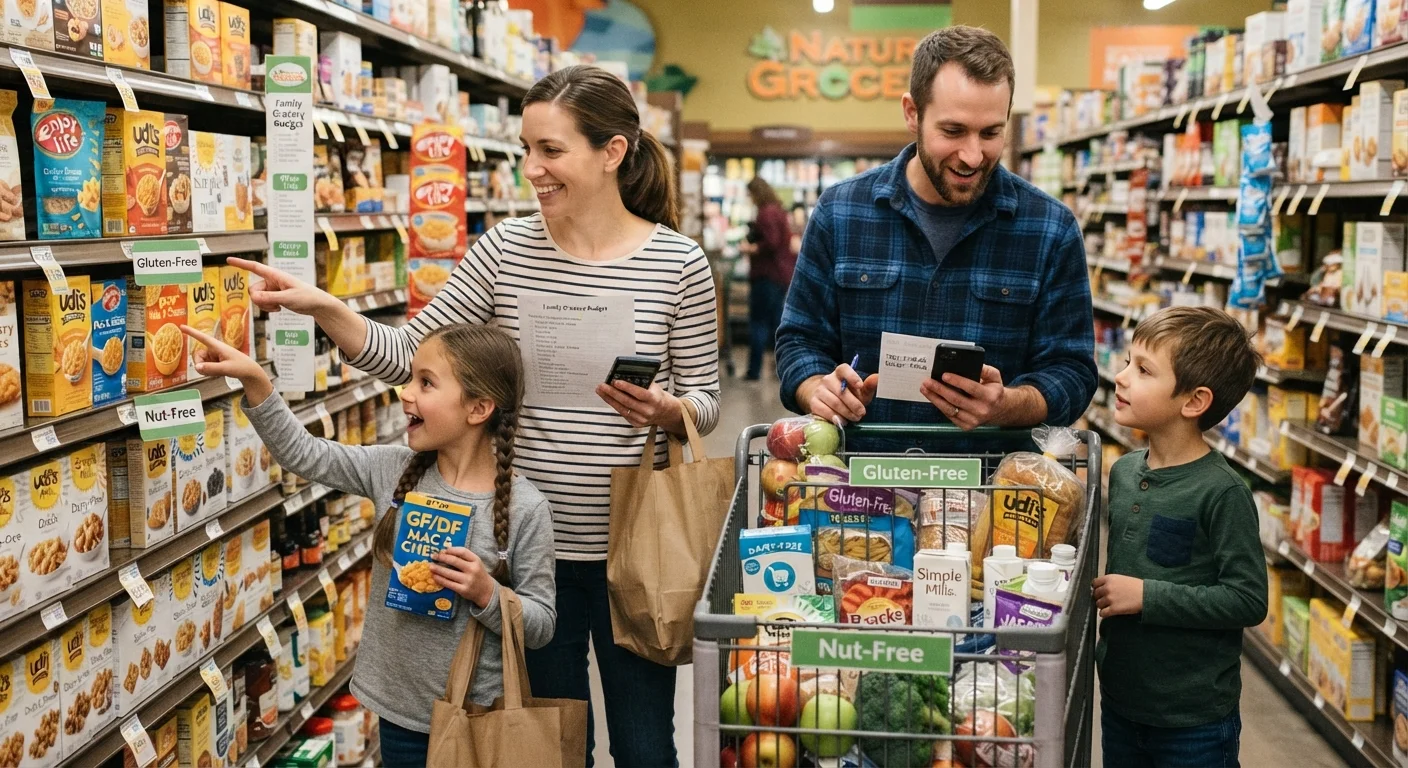
A grocery budget should reflect your household's actual situation, not a generic average. Families managing food allergies, a member with a medical diet, a large number of growing teenagers, or a rural location with fewer grocery store options may reasonably need a higher budget than the national average suggests. If your calculated budget consistently feels impossible to hit, it is worth revisiting whether the target itself needs adjustment, or whether a food assistance program like SNAP could help close the gap, rather than assuming the shortfall is simply a matter of willpower.
Read More Articals
FAQ
How much should a family spend on groceries per month?
Financial guidance generally suggests 10 to 15 percent of take-home pay. The USDA's food plans offer a more specific benchmark, ranging from about $900 to $1,013 a month for a family of four on the thrifty plan, up to $1,250 to $1,400 on the moderate plan.
What is the 50/30/20 rule and does it work for groceries?
It is a budgeting framework that allocates 50 percent of take-home pay to needs, including groceries, 30 percent to wants, and 20 percent to savings. It works as a general guideline, though many households need to adjust the percentages based on their actual housing and living costs.
Should restaurant spending count as part of my grocery budget?
No. Tracking restaurant and delivery spending separately from groceries gives a clearer, more accurate picture of actual food spending in each category.
What should I do if my grocery budget never seems to be enough?
Track your actual spending for a few weeks to identify specific patterns, consider whether your target reflects your household's real circumstances, and look into whether a program like SNAP could help close a genuine gap.
Sources: U.S. Bureau of Labor Statistics Consumer Price Index, USDA Food and Nutrition Administration Cost of Food Reports, NerdWallet grocery spending analysis.