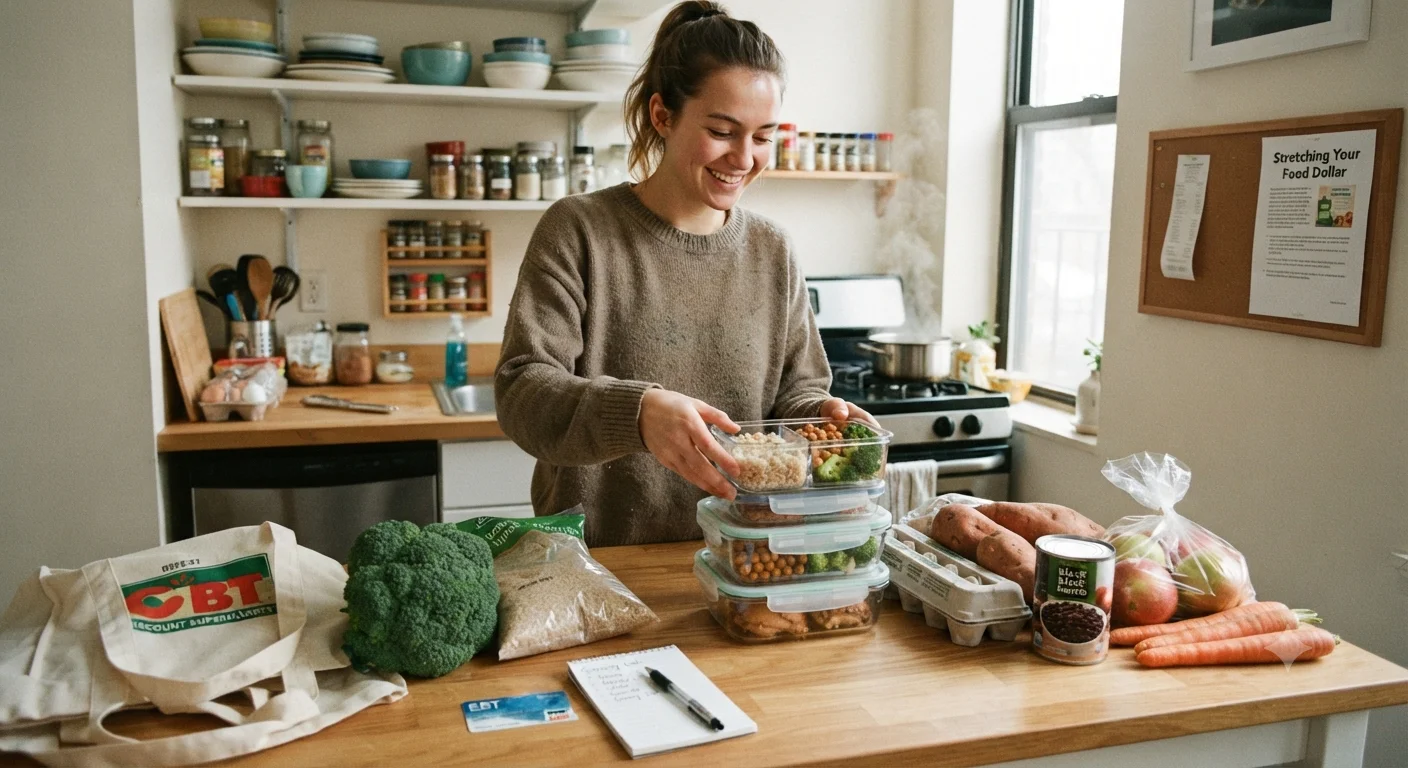
A structured weekly meal prep system, built around a short list of repeatable base ingredients like rice, beans, and roasted vegetables, generally saves both money and time compared to deciding what to cook meal by meal, since it reduces impulse purchases, minimizes food waste, and takes advantage of bulk cooking efficiency that a SNAP budget depends on to stretch further.
This guide is independently written and is not affiliated with USDA, OPM, or the official federal Feds Feed Families campaign.
Why Meal Prep Matters More on a Tight Budget
Cooking meal by meal throughout the week tends to lead to more frequent small purchases, more reliance on convenience food when time runs short, and more food waste from partially used ingredients. A weekly meal prep system addresses all three problems at once by concentrating shopping into a single planned trip, cooking in efficient batches, and using ingredients across multiple meals so nothing goes unused.
Step 1: Plan Around What's On Sale
- Why Meal Prep Matters More on a Tight Budget
- Step 1: Plan Around What's On Sale
- Step 2: Choose Two or Three Base Ingredients
- Step 3: Set Aside a Single Batch Cooking Session
- Step 4: Portion and Store Immediately
- Step 5: Rotate Flavors to Avoid Repetition Fatigue
- Sample Weekly Prep Session
- Making This Work With a Monthly SNAP Deposit
- FAQ
- How do I meal prep on a tight food budget?
- Does meal prepping actually save money?
- How do I keep batch-cooked meals from getting boring?
- Should I plan meal prep around my SNAP deposit date?
Before building a meal plan, check your grocery store's current sales flyer or app for discounted proteins, produce, and pantry staples. Building the week's meals around what is already discounted, rather than picking meals first and paying full price for every ingredient, is one of the most effective ways to stretch a fixed SNAP budget further without sacrificing variety.
Step 2: Choose Two or Three Base Ingredients
Pick two or three versatile bases for the week, such as rice, roasted vegetables, and a protein like chicken thighs or beans, and plan every meal around some combination of them. This approach means one larger shopping list and one round of batch cooking can produce five or more distinct meals throughout the week, rather than requiring a separate, unique ingredient list for each individual dinner.
Step 3: Set Aside a Single Batch Cooking Session
Dedicate two to three hours, often on a weekend, to cook the bulk of the week's food at once: a large pot of rice, a tray of roasted vegetables, and a batch of protein, whether that's baked chicken, a pot of beans, or browned ground meat. This single session typically takes far less total time than cooking every meal separately throughout the week, since ovens and large pots can cook big batches just as easily as small ones.
Step 4: Portion and Store Immediately
Right after cooking, divide the batch into individual meal-sized containers rather than storing everything in one large container. Pre-portioned meals are faster to grab on a busy weeknight, help prevent overeating from one container, and make it easier to freeze half the batch for use later in the month if the week's plan changes unexpectedly.
Recommended Articles
 BUDGETING MEAL PLANNING
 BUDGETING MEAL PLANNING
 BUDGETING MEAL PLANNING
 BUDGETING MEAL PLANNING
Step 5: Rotate Flavors to Avoid Repetition Fatigue
The same base ingredients can taste different across the week simply by changing the sauce or seasoning. Rice and chicken can become a stir fry one night, a burrito bowl the next, and a simple soup later in the week, using the same core batch-cooked ingredients but different spices, sauces, or a few added vegetables to keep meals from feeling repetitive.
Sample Weekly Prep Session
A single batch cooking session built around rice, roasted vegetables, and baked chicken thighs can typically produce:
- Chicken and rice bowls with roasted vegetables
- Chicken fried rice using leftover rice and vegetables
- Chicken tacos or burritos using shredded leftover chicken
- A simple chicken and vegetable soup using bones or scraps and broth
- Rice and beans as a meatless option later in the week if the chicken runs out first
Making This Work With a Monthly SNAP Deposit
Because SNAP deposits arrive once a month, a weekly meal prep system pairs naturally with dividing the total monthly benefit into four roughly equal weekly amounts. Doing a larger, more efficient shopping trip and prep session right after the deposit lands, then repeating a smaller version of the same system each following week, helps prevent the common pattern of spending unevenly and running short before the next deposit arrives.
Read More Articals
FAQ
How do I meal prep on a tight food budget?
Choose two or three versatile base ingredients, plan meals around what is on sale, batch cook once a week, and portion everything into individual containers immediately after cooking.
Does meal prepping actually save money?
Generally yes, since it reduces impulse purchases, minimizes food waste from unused ingredients, and takes advantage of the lower per-serving cost of cooking in bulk rather than preparing each meal separately.
How do I keep batch-cooked meals from getting boring?
Rotate sauces, spices, and preparation styles across the week using the same core ingredients, so a base like rice and chicken can become a stir fry, a burrito bowl, or a soup on different nights.
Should I plan meal prep around my SNAP deposit date?
Yes. Doing a larger shopping trip and prep session right after your deposit lands, then repeating smaller versions each following week, helps prevent running out of benefits before the next month's deposit.
Sources: USDA Food and Nutrition Administration Cost of Food Reports, U.S. Bureau of Labor Statistics Consumer Price Index.