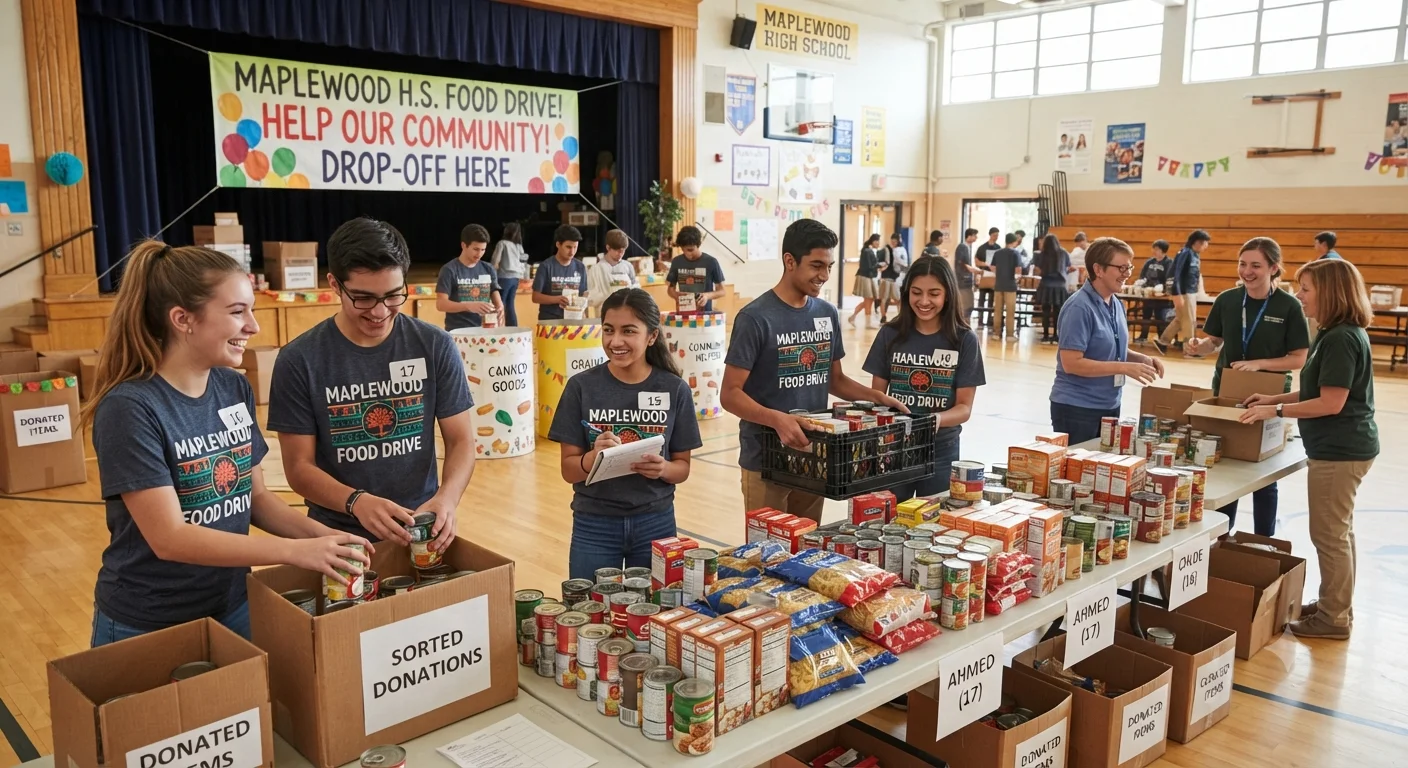
A school-based food drive gives students a concrete, hands-on way to understand and act on hunger in their own community, and it works best when it's paired with a classroom-versus-classroom competition, a clear partner food bank, and framing that emphasizes community care rather than singling out any specific need among the student body itself.
This guide is independently written and is not affiliated with USDA, OPM, or the official federal Feds Feed Families campaign.
Start With a Food Bank Partnership
Before launching a school-wide drive, reaching out to a local food bank or pantry directly to register the effort and understand current specific needs is worth doing, since many food banks provide free collection bins, promotional materials, and even a staff member willing to visit the school and speak to students about the impact of their donations.
Classroom-Versus-Classroom Competitions
- Start With a Food Bank Partnership
- Classroom-Versus-Classroom Competitions
- Being Careful About Framing and Privacy
- Age-Appropriate Ways to Involve Students
- Connecting to Curriculum
- Setting a Realistic, Motivating Goal
- Involving Families
- Wrapping Up the Drive
- FAQ
- Should a school partner with a food bank before starting a drive?
- How can teachers avoid singling out students who might need food assistance?
- What makes a school food drive more successful?
- Can a food drive be connected to classroom learning?
Structuring a school food drive as a friendly competition between classrooms or grade levels is one of the most reliably effective ways to boost participation and engagement, since it taps into a natural sense of teamwork and healthy rivalry among students. Tracking and visibly displaying each classroom's progress, whether through a hallway poster or daily announcement, keeps momentum building throughout the drive.
Being Careful About Framing and Privacy
Because a meaningful share of students in any school may themselves be experiencing food insecurity, it's important to frame a food drive around general community support rather than any language that could inadvertently single out or embarrass a specific student or family. Avoiding any classroom discussion that speculates about which specific families in the school might need the food being collected helps keep the effort focused and respectful.
Age-Appropriate Ways to Involve Students
Younger students can meaningfully participate through simple activities like decorating collection boxes, creating posters, or learning basic facts about food insecurity framed in an age-appropriate way. Older students can take on more active organizing roles, including running the classroom competition tracking, helping sort donations, or even leading a short presentation to younger grades about the school's giving goal.
Recommended Articles
 CHARITABLE GIVING VOLUNTEERING
 CHARITABLE GIVING VOLUNTEERING
 CHARITABLE GIVING VOLUNTEERING
 CHARITABLE GIVING VOLUNTEERING
Connecting to Curriculum
A food drive can be woven into existing classroom learning rather than treated as a separate, disconnected event, for example incorporating basic math through tracking and graphing donation totals, or a social studies or civics lesson exploring how food assistance programs and community organizations work more broadly.
Setting a Realistic, Motivating Goal
A specific, achievable target, whether measured in total items, pounds, or a symbolic number tied to the school's enrollment, gives students something concrete to work toward and makes the final results easier to celebrate. Overly ambitious goals can discourage participation partway through if the target starts to feel out of reach, so calibrating the goal to the school's size and any past drive history tends to work better than picking an arbitrary large number.
Involving Families
Sending information home about the drive, including what items are most needed and where to drop off donations, helps extend participation beyond what students alone can collect from their own resources, and gives parents a low-effort way to support the effort directly.
Wrapping Up the Drive
Sharing the final results with the entire school, ideally translated into a concrete impact figure like an estimated number of meals provided, and coordinating a scheduled delivery or pickup with the partner food bank, closes the loop meaningfully for students and helps build enthusiasm for participating again the following year.
Read More Articals
FAQ
Should a school partner with a food bank before starting a drive?
Yes. Registering with a local food bank first helps clarify current needs and often comes with free collection bins, promotional materials, and staff support for the drive.
How can teachers avoid singling out students who might need food assistance?
Frame the drive around general community support rather than speculating about which specific students or families might need help, and avoid classroom discussions that could inadvertently identify anyone.
What makes a school food drive more successful?
Structuring it as a classroom-versus-classroom competition, setting a clear and achievable goal, and involving students through age-appropriate tasks consistently boost participation and engagement.
Can a food drive be connected to classroom learning?
Yes. Tracking and graphing donation totals can incorporate basic math skills, while a broader discussion of food insecurity and community organizations can fit naturally into a social studies or civics lesson.
Sources: Feeding America school food drive guidance, general school-based community service program resources.