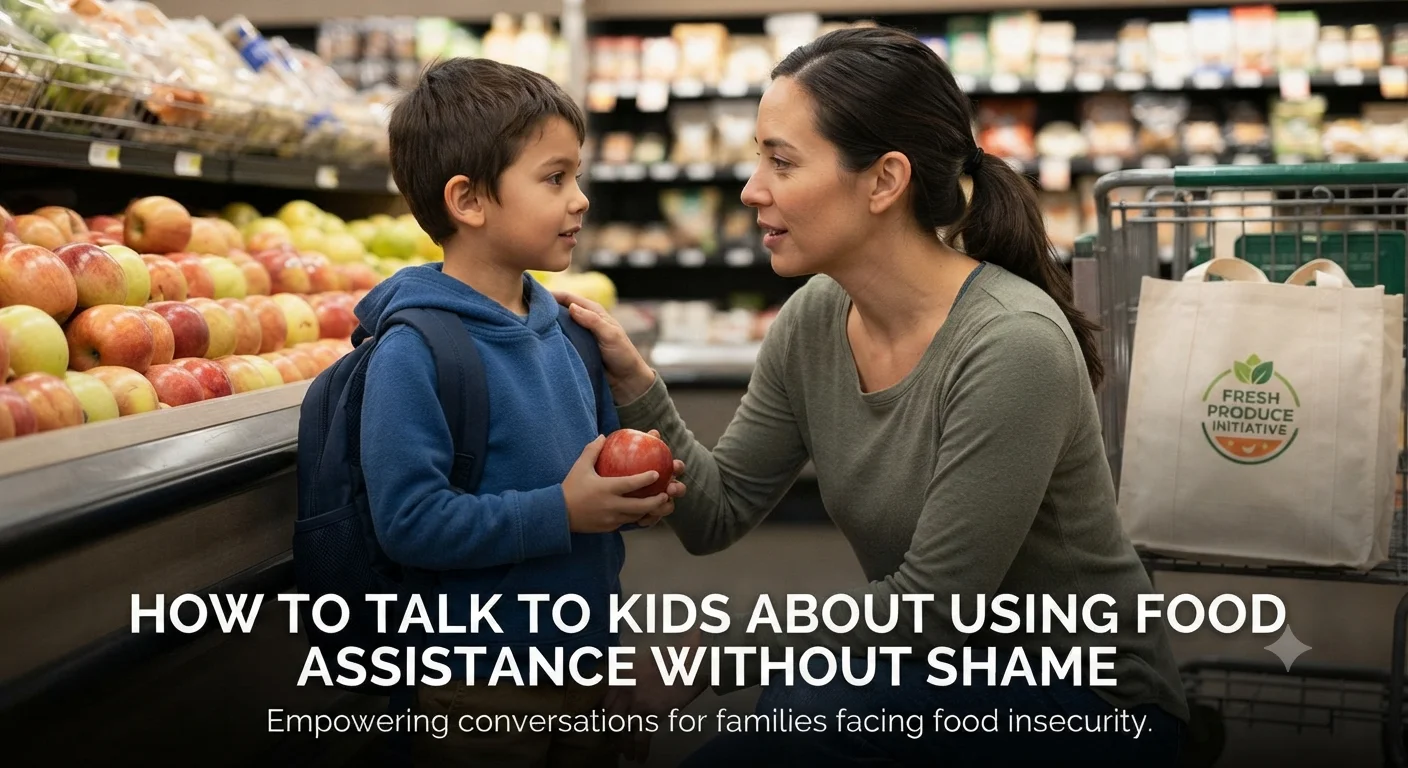
Talking with a child about a family's use of food assistance is genuinely one of the harder conversations a parent may face, and experts consistently emphasize the same core approach: keep the explanation simple and honest, remove shame proactively before it has a chance to settle in, and reassure the child clearly that the situation is not something they caused and not something to be embarrassed about.
This guide is independently written and is not affiliated with USDA, OPM, or the official federal Feds Feed Families campaign. If your family is navigating food insecurity, please know that support is available, and reaching out for help is never something to feel ashamed of.
You Don't Have to Bring It Up First
Experts who work directly with families on this topic note that it's completely okay if a parent prefers not to initiate the conversation proactively, and instead waits until a child begins asking direct questions themselves. There's no single right timeline, and following your own child's cues, rather than following a prescribed script, is a reasonable approach.
Keep the Explanation Simple and Age-Appropriate
- You Don't Have to Bring It Up First
- Keep the Explanation Simple and Age-Appropriate
- Be Honest That Circumstances Have Changed
- Remove Shame Before It Settles In
- Prepare Them for New Places to Get Food
- Focus on Empathy, Not Just Explanation
- Watch for Signs a Child Needs More Support
- You're Not Alone in This
- FAQ
- Should I bring up food assistance with my child, or wait for them to ask?
- What's a simple way to explain food insecurity to a young child?
- How do I keep my child from feeling ashamed about using food assistance?
- What if my child seems very worried after this conversation?
When a child does ask, using simple, honest, and direct language works better than avoiding the topic or offering an overly complicated explanation. Child development experts suggest language along these lines: there are some families that don't always have enough food, which means they eat less or sometimes don't get the food they need, and that can make it harder to focus at school or have energy to play. This kind of framing is honest without adding unnecessary anxiety or detail a child doesn't need.
Be Honest That Circumstances Have Changed
It's genuinely okay to tell a child that circumstances have changed and that mealtimes might look a little different for a while, without needing to share every financial detail behind that change. This honesty, paired with reassurance, helps a child understand what's happening without feeling like something is being hidden from them in a way that could feel more frightening than the truth itself.
Remove Shame Before It Settles In
Experts specifically emphasize that taking shame out of the conversation proactively, rather than waiting to address it after a child has already internalized embarrassment, is one of the most important things a parent can do. Clearly and directly telling a child that there is no shame in using community resources to get food, that many families go through this, and that it is absolutely not their fault, helps prevent a sense of guilt or embarrassment from forming in the first place.
Recommended Articles
 CHARITABLE GIVING VOLUNTEERING
 CHARITABLE GIVING VOLUNTEERING
 CHARITABLE GIVING VOLUNTEERING
 CHARITABLE GIVING VOLUNTEERING
Prepare Them for New Places to Get Food
If your family's routine is going to include a new resource, such as a community food bank, a school-based program, or help from a religious organization, preparing a child for this in advance, framed matter-of-factly rather than as a last resort, can make the actual experience feel less unfamiliar or unsettling when it happens.
Focus on Empathy, Not Just Explanation
Beyond explaining your own family's specific situation, using the conversation as an opportunity to build broader empathy, emphasizing that every family deserves to have enough food and that needing help sometimes doesn't reflect badly on anyone, helps a child develop compassion rather than judgment, both toward their own family's situation and toward others they may encounter facing something similar.
Watch for Signs a Child Needs More Support
If a child seems to be carrying significant worry, withdrawal, or distress around this topic beyond what feels like a typical adjustment, it's worth talking with a school counselor, pediatrician, or another trusted professional, who can help support your child through this transition alongside the practical steps your family is taking.
You're Not Alone in This
It's worth remembering, and worth saying to your child if it feels right, that a meaningful number of American families use food assistance at some point, and that reaching out for support during a hard stretch reflects resourcefulness and care for your family, not failure.
Read More Articals
FAQ
Should I bring up food assistance with my child, or wait for them to ask?
Either approach is reasonable. Experts note it's completely okay to wait until a child asks direct questions, rather than feeling obligated to initiate the conversation proactively.
What's a simple way to explain food insecurity to a young child?
Something like: some families don't always have enough food, which means eating less or not always having the healthy food they need, and that can make school and daily life harder, works well for younger children.
How do I keep my child from feeling ashamed about using food assistance?
Proactively and clearly telling them there's no shame in using community resources, that many families experience this, and that it's not their fault, helps prevent shame from settling in before it starts.
What if my child seems very worried after this conversation?
If a child's distress seems beyond a typical adjustment, talking with a school counselor, pediatrician, or another trusted professional can provide additional support alongside your family's practical steps.
Sources: ABC News and Good Morning America family reporting, Second Harvest Foodbank child hunger resources.