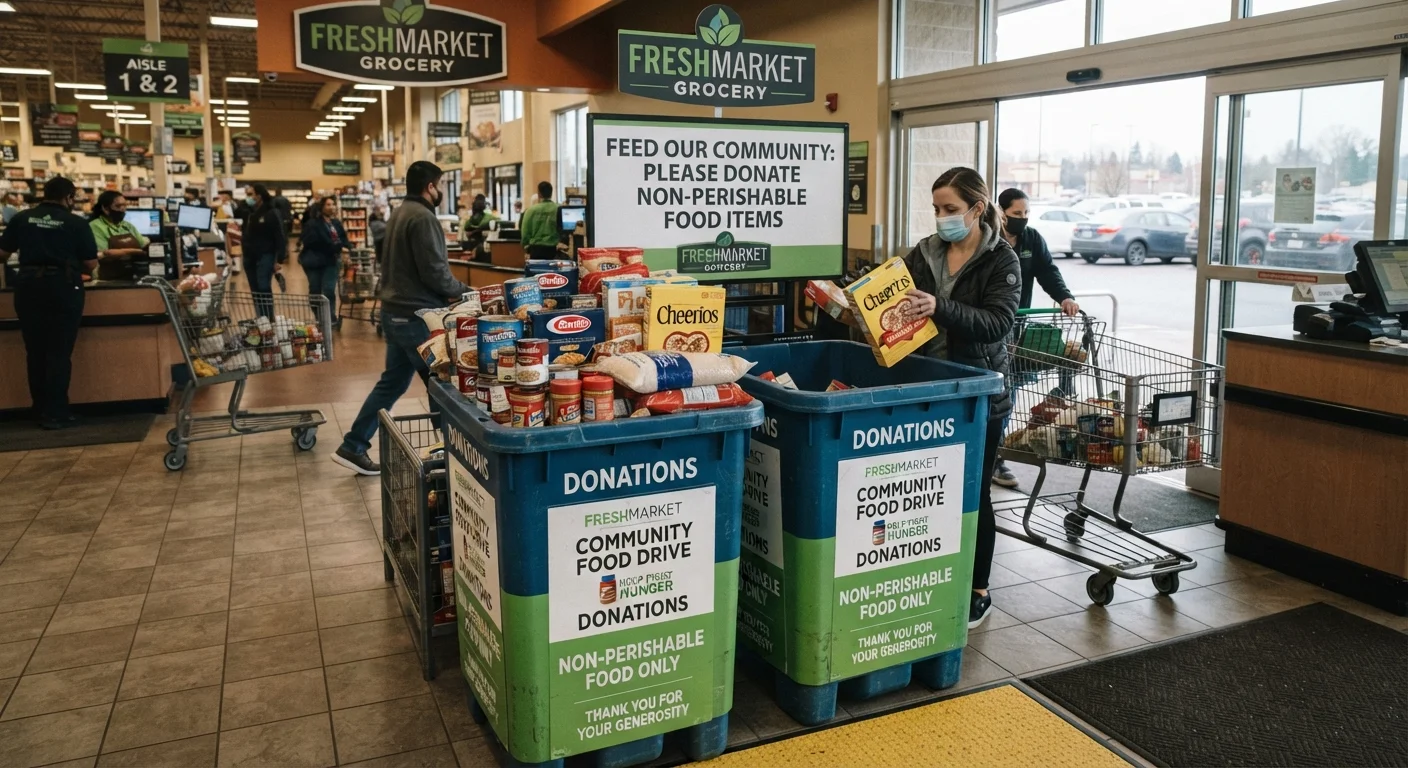
When a cashier or self-checkout screen asks whether you'd like to round your total up to the nearest dollar for a specific charity, that small difference, commonly just a few cents to less than a dollar, goes directly to the designated organization, and research from the nonprofit research group Candid has found this is genuinely popular, with 85 percent of people who give at checkout choosing the round-up option specifically over other donation amounts offered.
This guide is independently written and is not affiliated with USDA, OPM, or the official federal Feds Feed Families campaign.
How the Mechanism Actually Works
A purchase totaling $19.50, for example, becomes $20.00 if you opt in, with the extra 50 cents forwarded to the store's designated charity partner, often a food bank or hunger relief organization, rather than kept by the retailer. Retailers typically use dedicated software to track every individual round-up donation across every transaction and ensure the aggregated total is properly transferred to the charity.
Who Actually Gets the Tax Deduction
- How the Mechanism Actually Works
- Who Actually Gets the Tax Deduction
- Why Retailers Participate
- Legitimate Programs Are Regulated
- How to Verify a Specific Round-Up Campaign
- Impulse Giving Is a Real, Documented Behavior
- Does This Connect to Grocery Store Hunger Relief Specifically
- Is It Okay to Decline
- FAQ
- How does a register round-up donation actually work?
- Does the store get the tax deduction for a round-up donation?
- Are register round-up charity programs regulated?
- Is it okay to decline a register round-up request?
This is a genuinely underappreciated detail worth understanding clearly: the store functions only as a collection agent for your gift, meaning you, the customer, are the one making the charitable contribution, and the store does not claim your donation as its own tax deduction. If you itemize deductions on your tax return, this small round-up amount can technically be included as a charitable contribution, though the amount from a single transaction is typically small enough that most people don't separately track it for tax purposes.
Why Retailers Participate
Round-up donations are essentially cost-free for the retailer, since the entire donated amount comes from the customer, while the retailer benefits from the reputational goodwill of hosting a visible charitable partnership and, in many cases, meaningful marketing exposure at the register. This is part of why these programs have become so widespread, they're a low-cost, high-visibility way for a store to support a cause its customers care about.
Legitimate Programs Are Regulated
Retail round-up campaigns are generally regulated in several states as a form of "commercial co-venture," meaning a business soliciting donations on behalf of a specific charity often needs a formal written agreement with that organization. Legitimate programs typically display the charity's name clearly, are registered nonprofits with a documented track record, and the specific donation amount appears on your printed or digital receipt.
Recommended Articles
 CHARITABLE GIVING VOLUNTEERING
 CHARITABLE GIVING VOLUNTEERING
 CHARITABLE GIVING VOLUNTEERING
 CHARITABLE GIVING VOLUNTEERING
How to Verify a Specific Round-Up Campaign
Because the split-second decision to round up happens quickly at checkout, it's reasonable to do a bit of research afterward if you want to understand more about where your money actually went, checking the charity's name against a nonprofit database or the store's own website, which typically discloses details about its specific charity partnership.
Impulse Giving Is a Real, Documented Behavior
Candid's research specifically categorizes this kind of checkout donation as "impulse giving," a split-second, low-friction decision made with only a few seconds to consider, and found that over half of survey respondents reported having given this way at least once. Understanding this as a genuine, well-studied form of charitable behavior, rather than dismissing it as insignificant, helps explain why these small individual donations add up to meaningful totals for participating nonprofits.
Does This Connect to Grocery Store Hunger Relief Specifically
Many grocery chains specifically partner with a local or regional food bank for their register round-up campaigns, meaning this small, frictionless donation mechanism can be a genuine, if modest, contributor to the same food bank network covered elsewhere on this site, distinct from a formal food drive but functioning toward a similar goal.
Is It Okay to Decline
It's worth remembering that opting out of a register round-up request is completely reasonable and doesn't reflect poorly on you as a shopper, whether because you're managing a tight budget yourself, prefer to direct charitable giving to a cause you've researched more thoroughly, or simply don't want to make that decision in the checkout line that day.
Read More Articals
FAQ
How does a register round-up donation actually work?
Your total purchase amount is rounded up to the nearest dollar, and the small difference is forwarded to the store's designated charity, tracked and transferred through the retailer's point-of-sale software.
Does the store get the tax deduction for a round-up donation?
No. The store functions only as a collection agent, and the customer, as the one actually giving the money, is the party who can potentially claim the deduction if they itemize.
Are register round-up charity programs regulated?
Generally yes, in many states, as a form of "commercial co-venture," typically requiring a formal written agreement between the retailer and the designated charity.
Is it okay to decline a register round-up request?
Yes, entirely. Opting out is a reasonable choice for any reason and doesn't reflect poorly on the shopper.
Sources: Candid (nonprofit research organization), Tax Policy Center, DailyKarma, Yotpo.