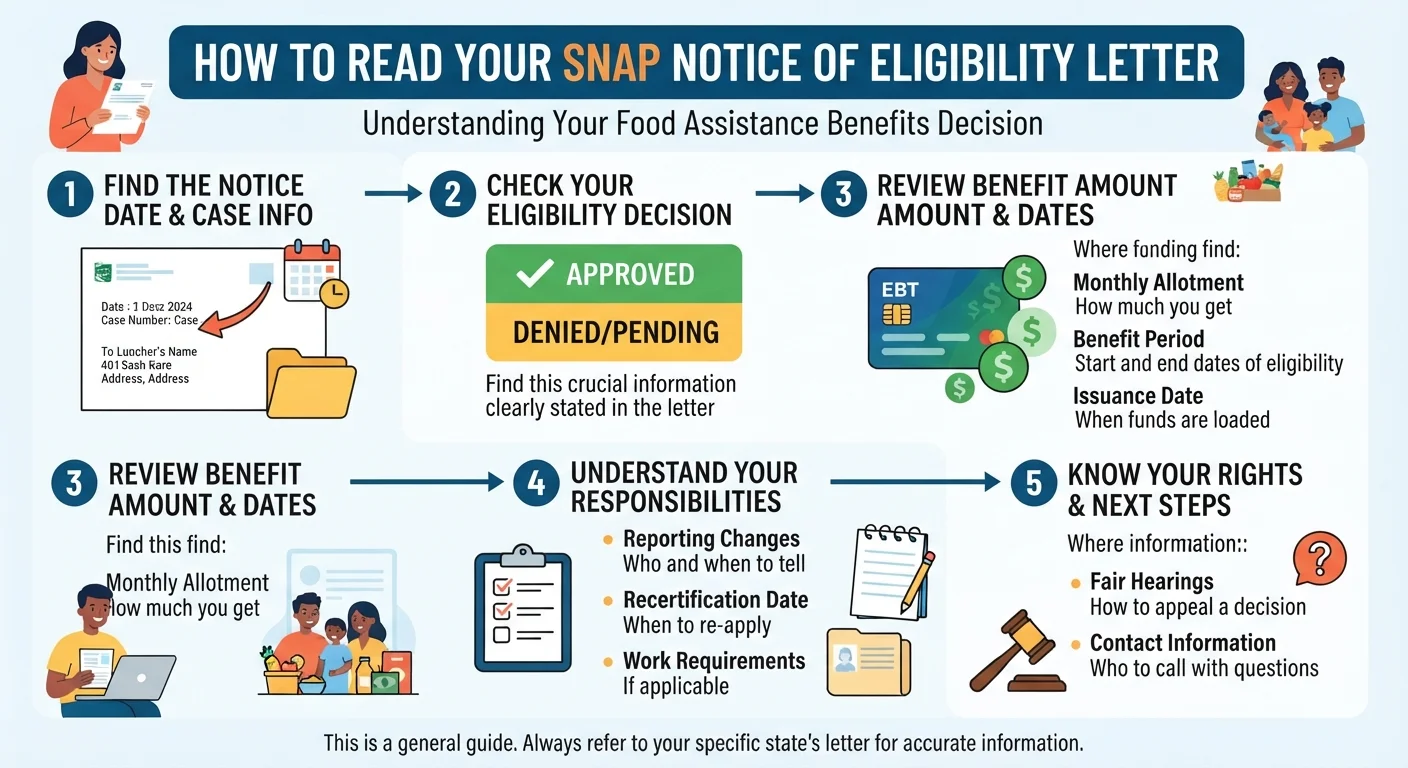
Every decision your state SNAP agency makes on your case, whether approval, denial, a benefit reduction, or a case closure, must be communicated through a written notice that explains the specific reason for the decision, includes information about how your benefit amount was calculated, and states your deadline and process for appealing if you disagree. Reading this notice carefully and completely, rather than only glancing at the bottom line, is often the fastest way to catch and correct a genuinely simple mistake.
This guide is independently written and is not affiliated with USDA, OPM, or the official federal Feds Feed Families campaign.
What Different Notice Types Actually Mean
SNAP paperwork uses fairly specific terminology, and understanding the difference matters for knowing what to do next. A denial means an application wasn't approved. A benefit reduction means you're still approved for SNAP, but your monthly amount has gone down. A termination or case closure means your case has ended entirely and you're not currently receiving benefits. Each of these situations has a different practical fix, so identifying which one you're actually looking at is the first real step.
Understanding an Approval Notice
- What Different Notice Types Actually Mean
- Understanding an Approval Notice
- What a Denial Notice Must Include
- The Most Common, Genuinely Fixable Reasons
- Your Right to a Fair Hearing
- Overpayment Notices Are Different From Denials
- Reapplying Is Always an Option
- Keeping Records as You Respond
- FAQ
- What's the difference between a SNAP denial and a benefit reduction?
- Does a SNAP denial notice have to explain the specific reason?
- Can I keep receiving benefits while I appeal a reduction or denial?
- Is a SNAP overpayment notice the same as a fraud accusation?
If your application is approved, your notice will state your monthly benefit amount, the date benefits will be loaded onto your card each month, and the date your current certification period ends, information worth marking on a calendar since you'll need to complete recertification before that date to avoid a gap in benefits.
What a Denial Notice Must Include
Under federal rules, a denial notice must explain the specific reason for the decision, not just state that the application was denied. Some states, including New York, use an automated notice system that shows how the household's budget was actually calculated, which lets an applicant identify a specific mistake in the math and raise it directly with the SNAP office rather than guessing at what went wrong.
-
SNAP Overpayment: What It Means and How to Handle It
The Most Common, Genuinely Fixable Reasons
Reviewing patterns across many denial cases shows the same handful of issues appear repeatedly: a missing or incomplete document, a missed interview, an income calculation error, particularly for self-employed applicants whose business expenses weren't properly documented, or a household member's status that needs clarification. Because so many denials come down to a specific, correctable procedural issue rather than a genuine ineligibility finding, the person is often still eligible once the specific problem is addressed.
Recommended Articles
 SNAP EBT
 SNAP EBT
 SNAP EBT
 SNAP EBT
Your Right to a Fair Hearing
If you disagree with any decision on your notice, you have the right to request a fair hearing, generally within 90 days of the decision. In many states, requesting a hearing promptly, sometimes specifically within 10 days of a benefit reduction or termination, can allow your current benefits to continue unchanged while the appeal is being decided, though the exact timeline for continued benefits varies by state, so checking your specific notice's stated deadline is essential rather than assuming a single universal number applies everywhere.
Overpayment Notices Are Different From Denials
Sometimes a notice isn't a denial at all, it's a statement that you were overpaid and must repay a specific amount. This can feel alarming, but overpayments are frequently caused by an agency calculation error just as often as anything the recipient did, and you have the right to ask for the calculation in writing, appeal the overpayment determination itself, and negotiate a reasonable repayment arrangement rather than assuming the stated amount is automatically correct and final.
Reapplying Is Always an Option
Regardless of the specific reason for a denial or closure, you can reapply at any time with no waiting period and no penalty. If your circumstances have genuinely changed since the original decision, or if the original decision was based on incorrect information that's now been corrected, a fresh application can sometimes be approved more quickly and straightforwardly than pursuing a formal appeal of the original decision.
Keeping Records as You Respond
Whether you're requesting a hearing, submitting missing documentation, or reapplying, keeping a copy of every notice, form, and piece of correspondence, along with the date you submitted anything, creates a paper trail that protects you if there's a dispute later about what was submitted and when.
Read More Articals
FAQ
What's the difference between a SNAP denial and a benefit reduction?
A denial means an application wasn't approved at all, while a benefit reduction means you're still approved for SNAP but your monthly amount has decreased. A termination or closure means your case ended entirely.
Does a SNAP denial notice have to explain the specific reason?
Yes, federal rules require this, and some states go further, showing the actual calculation used, which can help you identify a specific mistake to raise with your SNAP office.
Can I keep receiving benefits while I appeal a reduction or denial?
In many states, yes, if you request a fair hearing promptly, though the exact deadline for continued benefits varies by state, so checking your specific notice is essential.
Is a SNAP overpayment notice the same as a fraud accusation?
No. Overpayments are frequently caused by an agency calculation error just as often as a recipient mistake, and you have the right to see the calculation in writing and appeal it.
Sources: USDA Food and Nutrition Administration, New York State SNAP Eligibility Prescreening Guide, Montana Department of Public Health and Human Services SNAP Manual.