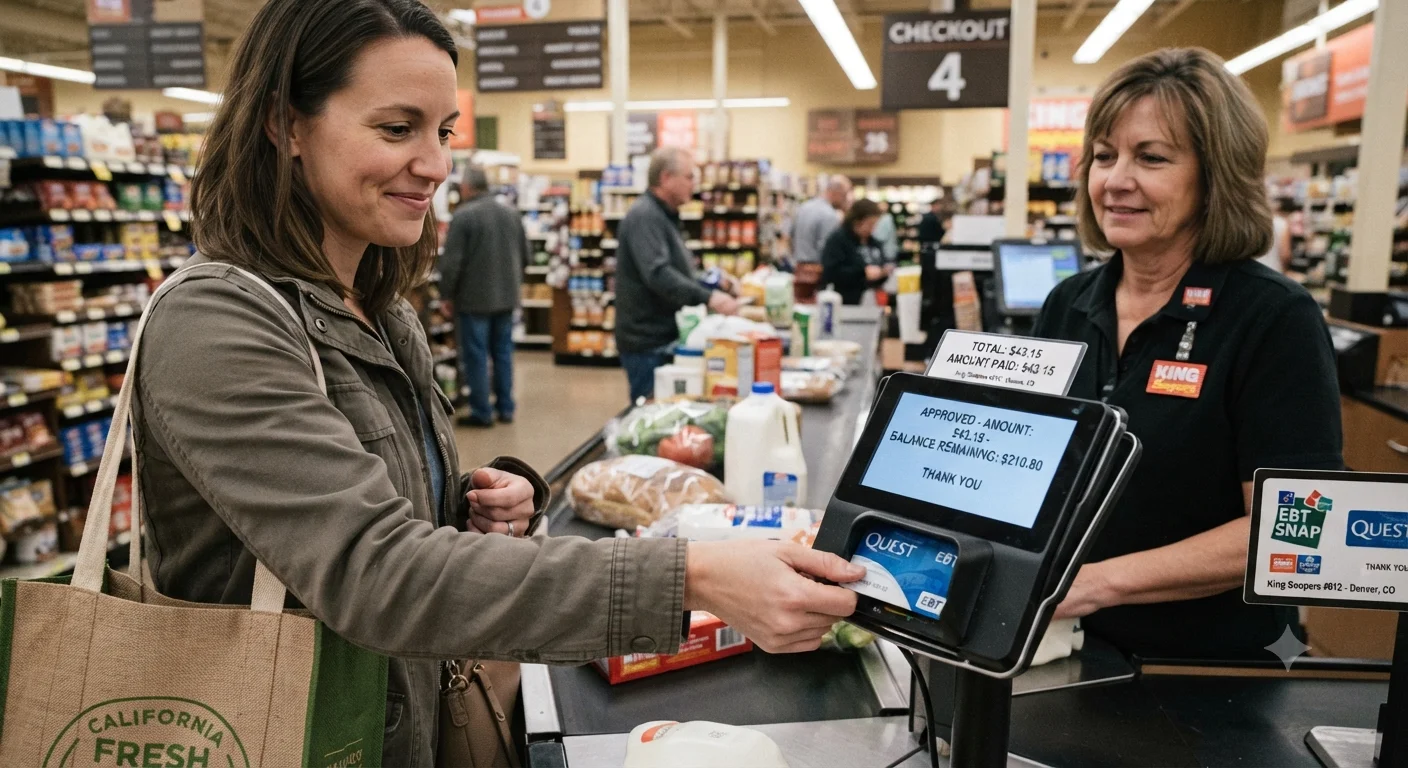
SNAP is a federally funded program, so an EBT card generally continues working at authorized retailers in any state, Washington D.C., Guam, Puerto Rico, or the U.S. Virgin Islands, without needing to notify your home state or activate anything special. However, a small but growing number of states, including Louisiana and Alabama in 2026, have begun automatically blocking out-of-state transactions by default as a fraud prevention measure, requiring cardholders to actively unlock their card before shopping outside their home state.
This guide is independently written and is not affiliated with USDA, OPM, or the official federal Feds Feed Families campaign.
Why SNAP Generally Works Nationwide
Federal regulation requires that SNAP benefits issued on an EBT card be redeemable in any state, which exists in part because many people live near a state border, commute across state lines for work, or simply travel. The Quest network, a national payment infrastructure connecting every state's EBT system, is what makes this interoperability possible, and stores displaying the Quest logo can generally process any state's SNAP EBT card.
New State-Level Blocking Policies in 2026
- Why SNAP Generally Works Nationwide
- New State-Level Blocking Policies in 2026
- Why This Change Is Happening
- What This Means If You're Traveling
- Purchase Rules Can Differ by State
- Moving to a Different State Permanently
- FAQ
- Can I use my EBT card in another state?
- Which states currently block out-of-state EBT transactions by default?
- Can I buy items in another state that are restricted in my home state?
- What should I do if I've permanently moved to a new state?
In 2026, some states began proactively defaulting EBT cards to block out-of-state and online transactions as a security measure against benefit theft. Louisiana implemented this policy in May 2026, restricting standard use to in-state purchases and ZIP codes adjacent to its borders, while Alabama implemented a similar automatic block on out-of-state and online transactions in January 2026. In both cases, cardholders can still make out-of-state purchases, but must first actively unlock their card through their state's EBT mobile app, website, or customer service line before the transaction will succeed.
Why This Change Is Happening
EBT card theft, largely through skimming and card cloning, disproportionately shows up as out-of-state transactions, since stolen card information is often used far from where the actual cardholder lives. Some estimates suggest a majority of EBT theft transactions occur out of state specifically because criminals use cloned card data far from the legitimate account holder's location, which is the primary rationale states have given for defaulting to a blocked status.
What This Means If You're Traveling
If your home state has not implemented an out-of-state blocking policy, you can generally shop normally while traveling with no advance notice required. If your state has implemented blocking, such as Louisiana or Alabama, you'll need to unlock your card in advance of your trip through your state's EBT app or customer service line, and it's worth doing this before you actually need to make a purchase rather than discovering the block at checkout.
Recommended Articles
 SNAP EBT
 SNAP EBT
 SNAP EBT
 SNAP EBT
Purchase Rules Can Differ by State
While SNAP eligibility rules are largely federal, some states have begun restricting specific item categories, such as candy, soda, or energy drinks, under new state-specific waivers. Because these restrictions apply based on where the purchase happens rather than which state issued your card, you can generally still buy a restricted item while shopping in a state that has not adopted the same restriction, even if your home state has banned it.
Moving to a Different State Permanently
Traveling or temporarily staying in another state is treated very differently from permanently moving. If you've relocated for good, you're required to notify your previous state's SNAP agency and apply for benefits in your new state, since receiving SNAP from two states simultaneously is not permitted. Consistent, long-term use of your card exclusively in a different state can flag your case for review even without an explicit move notification, so proactively updating your information after a genuine move is the safer approach.
Read More Articals
FAQ
Can I use my EBT card in another state?
Generally yes, for short trips or temporary travel, since SNAP is federally funded and works nationwide through the Quest network. Some states now block out-of-state transactions by default as a security measure, requiring you to unlock your card before traveling.
Which states currently block out-of-state EBT transactions by default?
As of 2026, Louisiana and Alabama have implemented automatic out-of-state transaction blocking, requiring cardholders to unlock their card through an app, website, or customer service line before shopping outside their home state.
Can I buy items in another state that are restricted in my home state?
Generally yes, since purchase restrictions apply based on where you're shopping rather than which state issued your card, so an item banned under your home state's SNAP rules may still be purchasable in a state without that same restriction.
What should I do if I've permanently moved to a new state?
Notify your previous state's SNAP agency and apply for benefits in your new state, since you cannot receive SNAP from two states at the same time, and consistent long-term out-of-state card use can otherwise flag your case for review.
Sources: Louisiana Department of Health, Alabama Department of Human Resources, USDA Food and Nutrition Administration, Propel SNAP interstate benefits guidance.