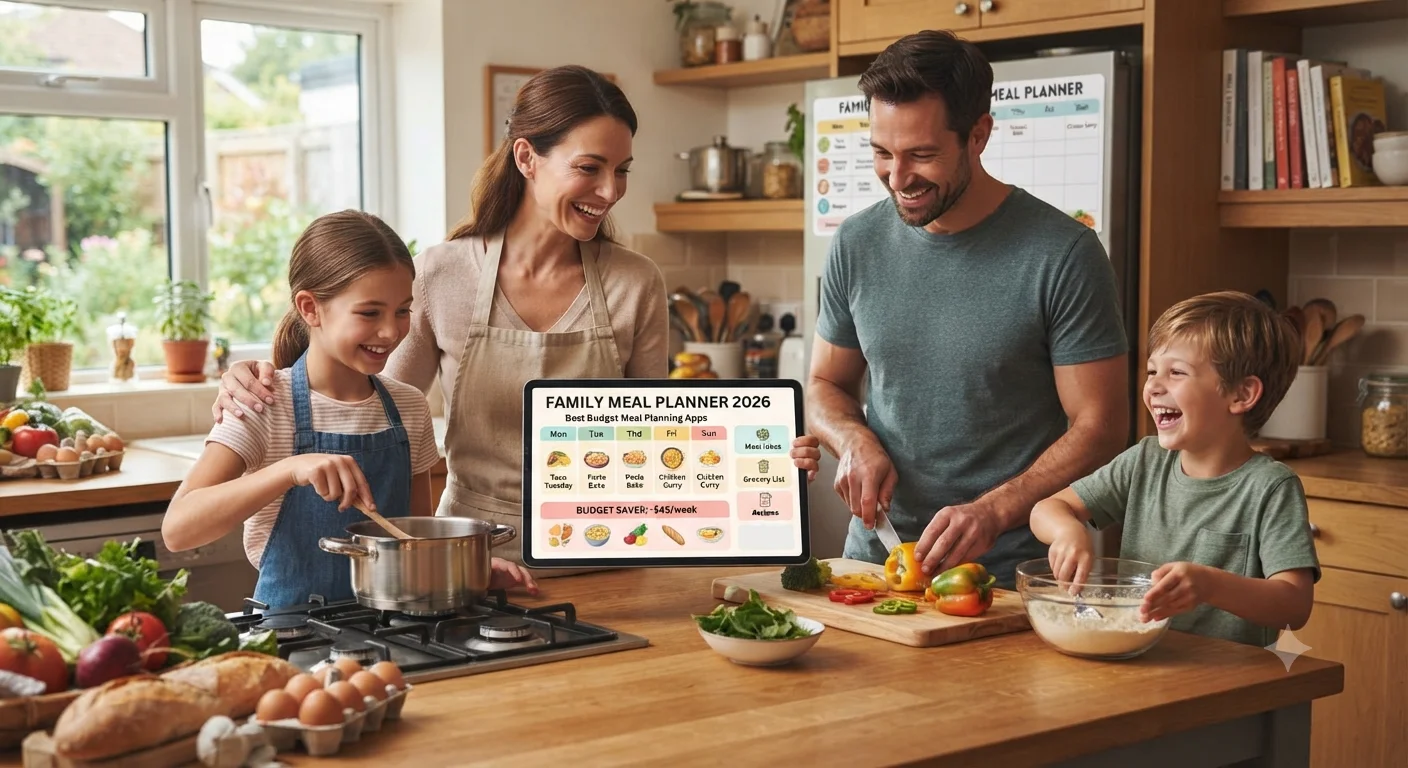
Several meal planning apps offer a genuinely usable free tier in 2026, with Mealime and Samsung Food, formerly known as Whisk, most consistently cited as strong no-cost options for families who want a weekly plan and an auto-generated grocery list without committing to a subscription right away.
This guide is independently written and is not affiliated with USDA, OPM, or the official federal Feds Feed Families campaign. It is not sponsored by or affiliated with any app mentioned.
What Actually Matters in a Budget Meal Planning App
Before comparing specific apps, it helps to know what separates a genuinely useful free tool from one designed mainly to push a paid upgrade. A practical meal planning app for a tight budget should offer a full weekly view, an automatically generated shopping list built from the planned meals, and the ability to adjust for household size and dietary restrictions, all without requiring payment just to see a basic plan.
Mealime
- What Actually Matters in a Budget Meal Planning App
- Mealime
- Samsung Food
- Paprika
- Plan to Eat
- AnyList
- Free Tools Beyond Dedicated Apps
- What to Watch For
- FAQ
- What is the best free meal planning app for families?
- Is it worth paying for a meal planning app?
- Are there meal planning apps with no subscription fee at all?
- Can I meal plan on a budget without using an app at all?
Mealime is frequently cited as the most usable free option for families eating primarily Western-style meals, offering a recipe library filtered by dietary preference, portion adjustment up to six servings, and shopping list sharing so multiple household members can coordinate a grocery trip. Its paid tier adds features like macro or calorie-goal filtering and the ability to swap individual meals within a generated plan, but the core weekly planning and list function remains usable without upgrading.
Samsung Food
Samsung Food, the rebranded version of the earlier app Whisk, is regularly highlighted as one of the more flexible free-entry meal planning tools, since it combines recipe saving from around the web, manual meal planning, and grocery list generation without requiring a subscription to access those core features. A browser extension lets users clip recipes directly from other websites into the app, which is particularly useful for households that already have a rotation of favorite recipes scattered across different sources.
Paprika
Paprika takes a different approach from most competitors by charging a one-time purchase price, commonly cited around five dollars for the mobile app, rather than an ongoing subscription. For households that specifically want to avoid recurring charges, this pay-once model for recipe organizing, meal calendars, and shopping lists can work out to be more affordable over time than a monthly subscription service, provided the household is comfortable with the app's more manual, less AI-driven approach to planning.
Recommended Articles
 BUDGETING MEAL PLANNING
 BUDGETING MEAL PLANNING
 BUDGETING MEAL PLANNING
 BUDGETING MEAL PLANNING
Plan to Eat
Plan to Eat is consistently recommended for households where more than one person cooks, since its shared calendar and auto-generated shopping list update in real time across family members. It operates on a paid subscription model, commonly cited around six dollars a month or roughly fifty dollars a year, with a free trial period, making it worth testing before committing if a shared family calendar is the main feature a household needs.
AnyList
AnyList is frequently mentioned for its strength in collaborative grocery lists paired with simpler meal planning, making it a solid fit for households that primarily want an easy way to build and share a shopping list rather than a more elaborate AI-generated weekly menu system.
Free Tools Beyond Dedicated Apps
For households that want maximum flexibility without any app subscription at all, a simple shared spreadsheet, such as a free Google Sheet, remains a genuinely viable option, particularly for families with very specific dietary needs, cultural cuisine preferences, or an established recipe rotation that doesn't map neatly onto a pre-built app's recipe database.
What to Watch For
Given how crowded and heavily marketed this app category has become, it's worth being cautious of "best of" rankings, including comparisons on this topic, since many are published by companies with a direct financial interest in a specific app's ranking. Testing a free tier directly for a week or two, using your household's actual typical meals, is a more reliable way to judge fit than any single ranked list, including this one.
Read More Articals
FAQ
What is the best free meal planning app for families?
Mealime and Samsung Food are among the most consistently recommended free options, offering a usable weekly plan and shopping list without requiring a paid subscription for core features.
Is it worth paying for a meal planning app?
It depends on the household's needs. A paid app like Plan to Eat can be worthwhile for families needing a shared, real-time calendar, while a free tier from Mealime or Samsung Food may be entirely sufficient for simpler planning needs.
Are there meal planning apps with no subscription fee at all?
Paprika uses a one-time purchase model rather than a subscription, and Samsung Food's core features are free without a required upgrade, making both worth considering for households that want to avoid recurring charges.
Can I meal plan on a budget without using an app at all?
Yes. A simple shared spreadsheet remains a fully viable, no-cost option, particularly for households with specific dietary needs or an established recipe rotation that doesn't fit neatly into a pre-built app database.
Sources: Independent app comparison reporting, individual app publisher pricing pages current as of 2026.