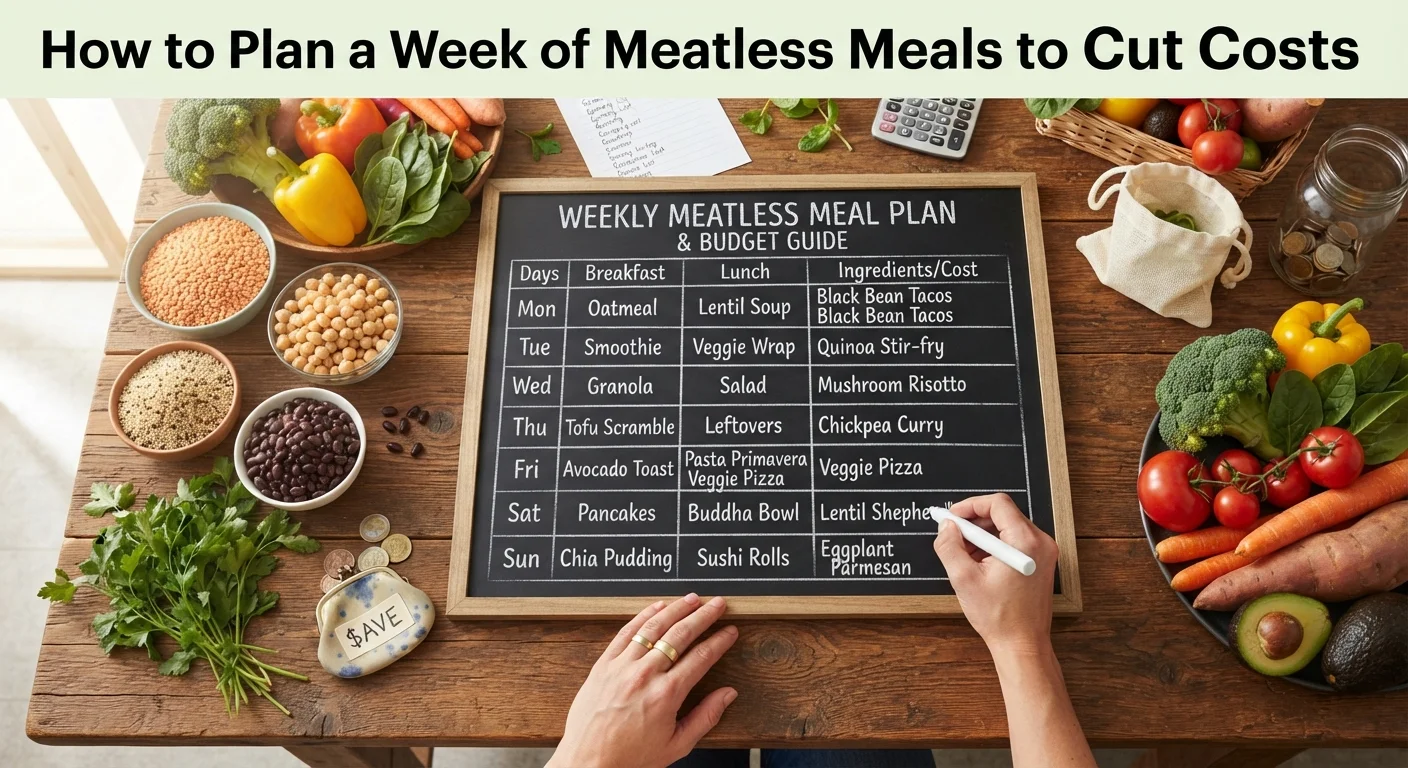
According to USDA's Economic Research Service, beef and veal prices were running 15 percent higher in early 2026 than a year prior, with a further increase forecast for the rest of the year, driven by a multi-year contraction of the national cattle herd, which makes replacing some meat-centered meals with whole plant proteins one of the more meaningful cost levers available in a household grocery budget right now.
This guide is independently written and is not affiliated with USDA, OPM, or the official federal Feds Feed Families campaign.
A Genuinely Important Distinction: What Replaces the Meat Matters
An honest, data-based analysis of this topic makes a distinction that's often missed: raw whole plant proteins, dried beans, lentils, chickpeas, are genuinely and consistently cheaper than beef, but processed plant-based meat substitutes, the kind designed to closely mimic burger patties or ground beef, require expensive manufacturing processes that can make the finished product cost more than the meat it's replacing. A household that swaps a $5 package of ground beef for a $7 plant-based burger has not saved money; a household that builds the meal around dried beans or lentils almost certainly has.
Starting Simple: One or Two Meatless Meals a Week
- A Genuinely Important Distinction: What Replaces the Meat Matters
- Starting Simple: One or Two Meatless Meals a Week
- Simple Substitutions Within Existing Favorite Recipes
- A Simple 5-Day Meatless Rotation
- Food Waste Adds a Second, Often-Overlooked Layer of Savings
- Balancing the Plate
- You Don't Need a Full Day Meat-Free to See Savings
- FAQ
- Do meatless meals actually save money?
- How many meatless meals should a household start with per week?
- Why have beef prices risen so much recently?
- Does reducing food waste play a role in meatless meal savings?
Mayo Clinic guidance specifically recommends starting with one or two meatless dinners a week rather than attempting a full meatless commitment right away, building meals around favorite recipes that are naturally meatless, like a vegetable soup, pasta with tomato sauce, or a hearty vegetable salad with beans added for protein.
Simple Substitutions Within Existing Favorite Recipes
Rather than reinventing an entire meal, swapping the protein within a recipe a household already enjoys is a low-effort way to start: vegetarian refried beans in place of meat for tacos or burritos, beans or lentils added to a casserole or soup that already has other ingredients, or tofu added to a stir fry in place of chicken or beef.
A Simple 5-Day Meatless Rotation
- Monday: Bean and rice bowls with salsa and any available vegetables
- Tuesday: Lentil soup with bread
- Wednesday: Pasta with tomato sauce and canned chickpeas stirred in
- Thursday: Vegetarian bean burritos or tacos
- Friday: A stir fry built around tofu or extra beans with whatever vegetables are on hand
Food Waste Adds a Second, Often-Overlooked Layer of Savings
Beyond the sticker price comparison, dried and canned whole plant proteins genuinely last longer and get thrown away less often than fresh meat, which spoils quickly if not used promptly. Given that federal data suggests the average household wastes a meaningful share of its total food spending each year, largely from items that spoil before use, staples that simply last longer on the shelf carry a real, if less visible, second layer of savings beyond their sticker price alone.
Recommended Articles
 BUDGETING MEAL PLANNING
 BUDGETING MEAL PLANNING
 BUDGETING MEAL PLANNING
 BUDGETING MEAL PLANNING
Balancing the Plate
Mayo Clinic's general guidance on portioning suggests protein foods should take up no more than about a quarter of a plate, with vegetables and fruits covering roughly half, a framework that applies just as well to a meatless meal built around beans or lentils as it does to a meal centered on meat.
You Don't Need a Full Day Meat-Free to See Savings
It's worth being clear that a genuine cost benefit doesn't require eliminating meat entirely, even a single weekly meatless meal, repeated consistently over a month, adds up to a meaningful reduction in the household's overall protein spending, particularly given how significantly beef prices specifically have risen.
Read More articals
FAQ
Do meatless meals actually save money?
It depends entirely on what replaces the meat: whole plant proteins like dried beans and lentils are genuinely cheaper than beef, while processed plant-based meat substitutes designed to mimic meat texture often cost more due to their manufacturing process.
How many meatless meals should a household start with per week?
Mayo Clinic guidance recommends starting with just one or two meatless dinners a week rather than a full commitment, building around naturally meatless favorite recipes.
Why have beef prices risen so much recently?
According to USDA's Economic Research Service, a multi-year contraction of the national cattle herd has driven beef and veal prices up significantly, with further increases forecast.
Does reducing food waste play a role in meatless meal savings?
Yes. Dried and canned plant proteins last considerably longer than fresh meat, reducing the risk of spoilage-related waste, which represents a meaningful, if less visible, second layer of savings.
Sources: USDA Economic Research Service beef and veal price data, Mayo Clinic meatless meal guidance, Everblog cost analysis citing U.S. EPA and NielsenIQ food waste data.