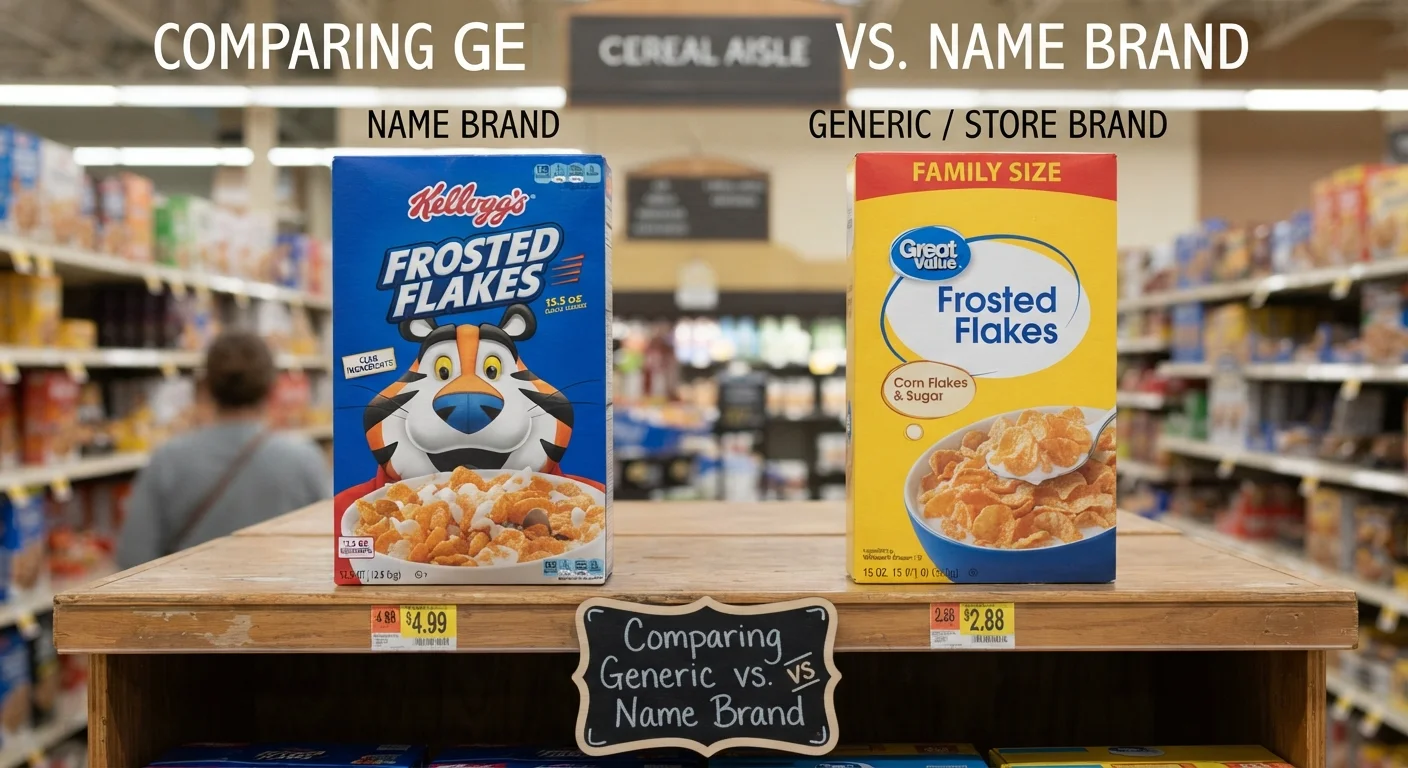
Consumer Reports' own taste-testing has found that a meaningful number of store-brand products tie or beat their name-brand rivals, and separately, NBC News took the question to Ohio State University's Sensory Lab, where trained taste testers were often unable to reliably detect a difference between name-brand and generic versions of the same product. That said, the honest picture isn't uniform, a small number of genuine categories, most notably gluten-free baking flour, show a real, measurable quality gap worth paying for.
This guide is independently written and is not affiliated with USDA, OPM, or the official federal Feds Feed Families campaign.
Categories Where Store Brand Is Reliably the Same
Across multiple taste tests, certain categories consistently show no meaningful difference between store brand and name brand: sugar, flour, and other basic baking staples are processed and stored the same way regardless of label, spices are frequently sourced from the same suppliers under different packaging, and store-brand milk often comes from the exact same dairy as a recognized name-brand carton.
The Manufacturer Overlap Explains a Lot
- Categories Where Store Brand Is Reliably the Same
- The Manufacturer Overlap Explains a Lot
- Where Store Brands Have Actually Won Taste Tests
- The Genuine Exception: Gluten-Free Specialty Products
- Categories Where the Answer Genuinely Varies by Store
- A Practical Way to Test This Yourself
- Why This Matters for a Tight Budget
- FAQ
- Can people actually tell the difference between store brand and name brand food?
- Why do store brands often taste identical to name brands?
- Is there any grocery category where name brand is genuinely worth paying more for?
- Should I assume every store's generic version of a product tastes the same?
A significant reason store brands often taste identical to name brands is that many are manufactured by the very same companies that produce the national brand, simply packaged differently for a retailer's private label. This isn't universal across every product, but it's common enough that a blind taste test genuinely struggles to tell the two apart in many everyday grocery categories.
Where Store Brands Have Actually Won Taste Tests
Store brands don't just tie name brands in some categories, they occasionally beat them outright: Consumer Reports' own testing has found instances where a store-brand ranch dressing was actually preferred over its well-known national-brand equivalent, and warehouse club private labels like Kirkland Signature have built a genuine reputation for meeting or exceeding national brand quality in categories like ice cream.
The Genuine Exception: Gluten-Free Specialty Products
This is a category worth flagging specifically, since it cuts against the general "store brand is just as good" pattern. Side-by-side baking tests comparing a premium gluten-free flour blend against a store-brand equivalent found the name-brand version produced noticeably better rise, a more tender texture, and less of a gritty, rice-flour aftertaste in finished baked goods, meaning gluten-free flour is genuinely a category where the formulation differences between brands matter enough to justify spending more.
Recommended Articles
 BUDGETING MEAL PLANNING
 BUDGETING MEAL PLANNING
 BUDGETING MEAL PLANNING
 BUDGETING MEAL PLANNING
Categories Where the Answer Genuinely Varies by Store
It's worth understanding that not every product category has a single, universal answer. A store-brand tomato sauce might taste noticeably worse at one specific retailer while being genuinely delicious at another, meaning buying private-label items involves some legitimate trial and error rather than a blanket rule that applies identically across every grocery chain.
A Practical Way to Test This Yourself
Buying a small quantity of a store-brand version of something regularly purchased, then doing a direct, side-by-side comparison against the name-brand version in an actual recipe, is a low-risk way to find out whether the switch genuinely works for your household's taste, rather than relying entirely on someone else's testing.
Why This Matters for a Tight Budget
Given how consistently taste tests find no meaningful difference across broad categories like baking staples, spices, dairy, and many condiments, defaulting to store brand for these specific items and reserving name-brand spending selectively for a genuinely tested exception, like gluten-free specialty flour, is a research-backed way to save meaningfully on groceries without a real sacrifice in quality for most of the cart.
Read More Articals
FAQ
Can people actually tell the difference between store brand and name brand food?
Often not, according to formal sensory testing, including work done at Ohio State University's Sensory Lab, where trained taste testers frequently couldn't reliably distinguish between the two in a blind test.
Why do store brands often taste identical to name brands?
Many store brands are manufactured by the same companies that produce the national brand, simply packaged differently for the retailer's own private label.
Is there any grocery category where name brand is genuinely worth paying more for?
Gluten-free baking flour stands out as a genuine exception, with side-by-side testing finding a real, measurable quality difference in the finished baked product.
Should I assume every store's generic version of a product tastes the same?
No. Quality can vary by retailer for the same type of item, so some trial and error across different stores is genuinely part of finding which store-brand products work best for your household.
Sources: Consumer Reports store-brand taste testing, NBC News reporting on Ohio State University's Sensory Lab, Taste of Home, BakingSubs baking ingredient comparison.