
Most grocery budgeting advice is written with a family of four in mind, which leaves larger households doing awkward mental math to scale it up. Using USDA's February 2026 food plan benchmarks as a starting point, a household of five or more generally needs a proportionally larger, though not perfectly linear, budget, with the thrifty plan running well above $1,000 a month even before accounting for teenagers, who eat noticeably more than younger children.
This guide is independently written and is not affiliated with USDA, OPM, or the official federal Feds Feed Families campaign.
Why Standard Budget Advice Falls Short for Large Families
A budget built around "$250 to $350 a week for a family of four" simply does not scale cleanly to a household of six, eight, or ten, since per-person costs shift with age, appetite, and how efficiently a household can batch cook and shop in bulk. Families feeding five or more people consistently report that generic online calculators underestimate their real costs, particularly once children reach the teenage years, when appetite and portion sizes increase substantially.
Using USDA Benchmarks as a Starting Point, Not a Target
- Why Standard Budget Advice Falls Short for Large Families
- Using USDA Benchmarks as a Starting Point, Not a Target
- Economies of Scale Actually Do Help
- Warehouse Clubs Make More Sense at Scale
- Meal Planning Becomes Non-Negotiable
- Watch for Special Dietary Needs
- SNAP for Large Households
- FAQ
- How much should a family of six spend on groceries per month?
- Does a larger family actually save money per person on groceries?
- Is a warehouse club membership worth it for a large family?
- How does SNAP work for a household with more than eight people?
USDA's food plans are built around specific age and sex combinations rather than a flat per-person rate, so the most accurate way to estimate a large family's budget is to add up the individual benchmark for each household member's specific age group, rather than simply multiplying a family-of-four figure by a larger number. A household with several teenagers will land meaningfully higher than a household with the same number of younger children, since USDA's own age-based benchmarks reflect that real difference in caloric need.
Economies of Scale Actually Do Help
One genuine advantage large families have is economy of scale in both shopping and cooking. Buying a 10-pound bag of rice or a large cut of meat costs less per pound than smaller packages, and batch cooking a large pot of anything, from soup to a casserole, takes roughly the same active time whether it feeds four or ten, meaning the per-person time and often per-person cost actually goes down as household size increases, provided the family has adequate storage space to take advantage of it.
Warehouse Clubs Make More Sense at Scale
The math on warehouse club memberships, which can be a questionable value for a smaller household, shifts meaningfully favorable for a large family, since the annual membership fee gets spread across far more grocery spending and the bulk package sizes are far less likely to go to waste before being used. Many large-family households specifically cite Costco or Sam's Club as a core part of their grocery strategy for exactly this reason.
Recommended Articles
 BUDGETING MEAL PLANNING
 BUDGETING MEAL PLANNING
 BUDGETING MEAL PLANNING
 BUDGETING MEAL PLANNING
Meal Planning Becomes Non-Negotiable
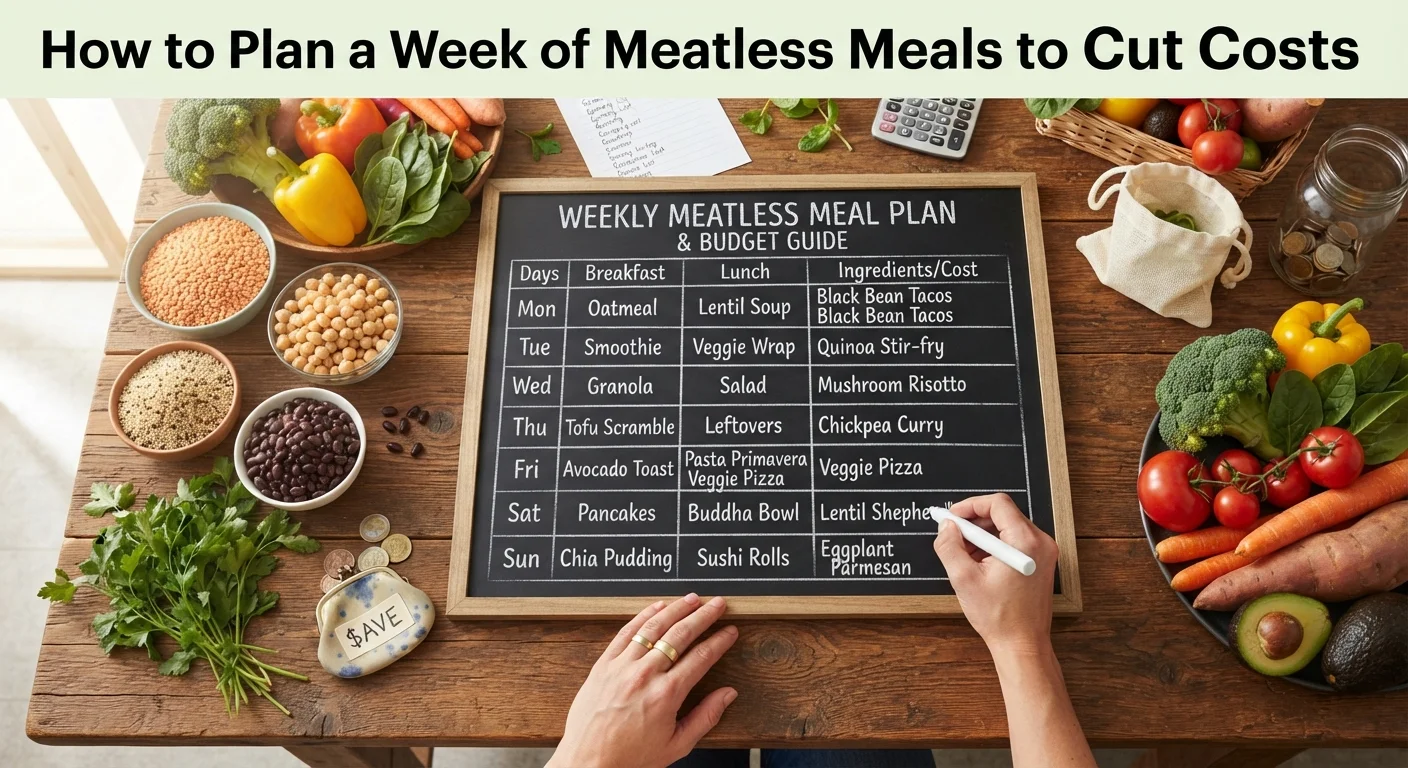
While a smaller household can sometimes get away with loose, improvised weekly shopping, families with five or more people consistently report that detailed meal planning, often including a written weekly menu and corresponding shopping list, is what actually keeps a large grocery budget under control. Without a plan, the sheer volume of food moving through a large household's kitchen each week makes it far easier for spending to drift upward without anyone noticing until the credit card statement arrives.
-
How to Use Coupons and SNAP Together to Maximize Savings
Watch for Special Dietary Needs
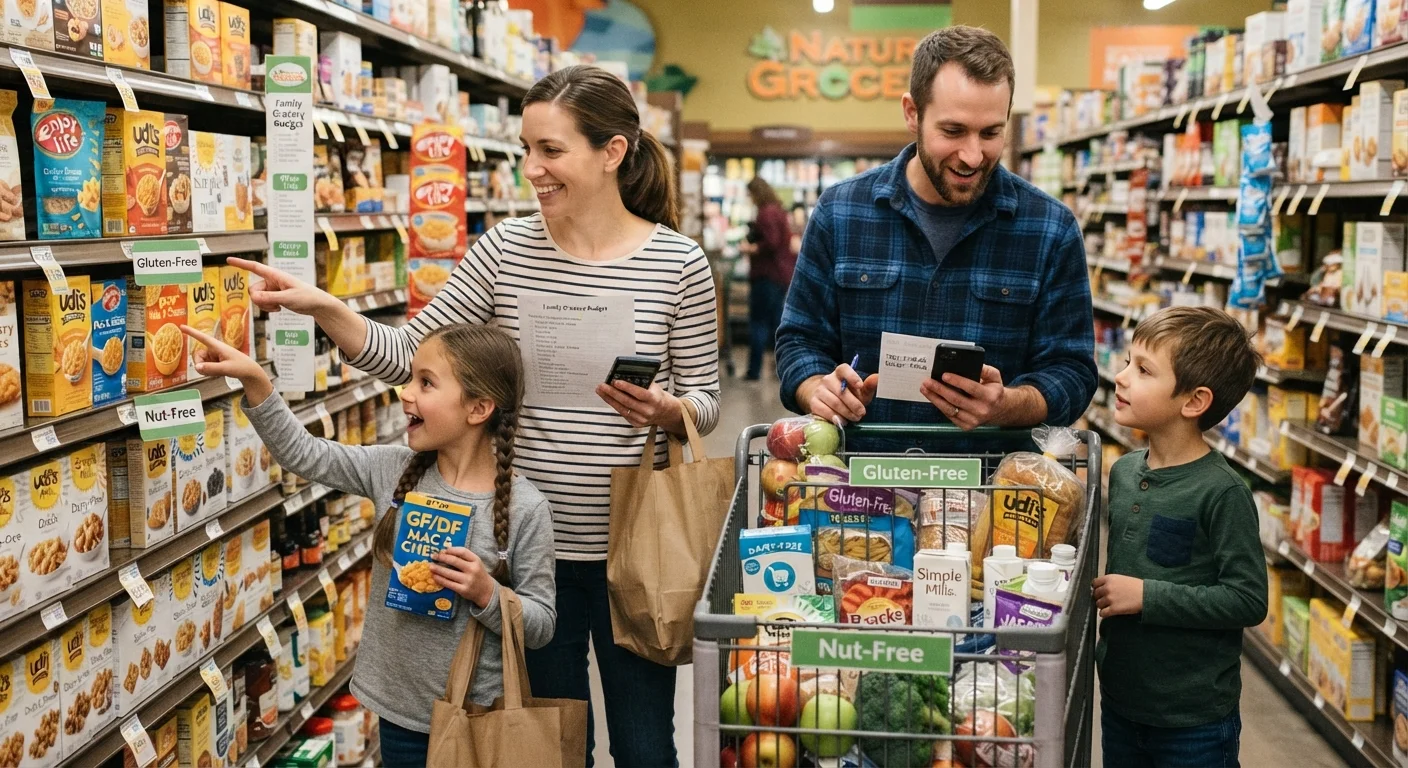
Large families managing a child with a specific dietary restriction, such as a gluten-free, dairy-free, or allergen-free diet, often find that one child's specialized groceries can add a meaningfully disproportionate amount to the overall family budget, sometimes hundreds of dollars a month on their own. If this applies to your household, it's worth tracking that child's specific grocery costs separately from the general family budget, both to understand the real total and to identify whether SNAP or another assistance program could help offset it.
SNAP for Large Households
SNAP's maximum allotment increases with each additional household member, adding $218 per person beyond a household of eight in the 48 contiguous states for fiscal year 2026, which can provide meaningful support for large, income-eligible families. Because SNAP's income limits also rise with household size, it's worth checking eligibility specifically for your actual household size rather than assuming a large family automatically falls outside the limits.
Read More Articals
FAQ
How much should a family of six spend on groceries per month?
This varies significantly based on the ages of household members, but using USDA's food plan benchmarks and adding each member's specific age-based figure, rather than a flat multiplier, gives the most accurate estimate for a specific household.
Does a larger family actually save money per person on groceries?
Often yes, through economies of scale in bulk buying and batch cooking, though this advantage depends on having adequate storage space and a consistent meal planning system to avoid waste.
Is a warehouse club membership worth it for a large family?
Generally more so than for a smaller household, since the membership fee is spread across more total grocery spending and bulk package sizes are less likely to go to waste before being used.
How does SNAP work for a household with more than eight people?
The maximum monthly SNAP allotment increases by $218 for each household member beyond eight, in addition to the base amounts set for households of one through eight.
Sources: USDA Food and Nutrition Administration food plan benchmarks, USDA Economic Research Service Food Price Outlook.