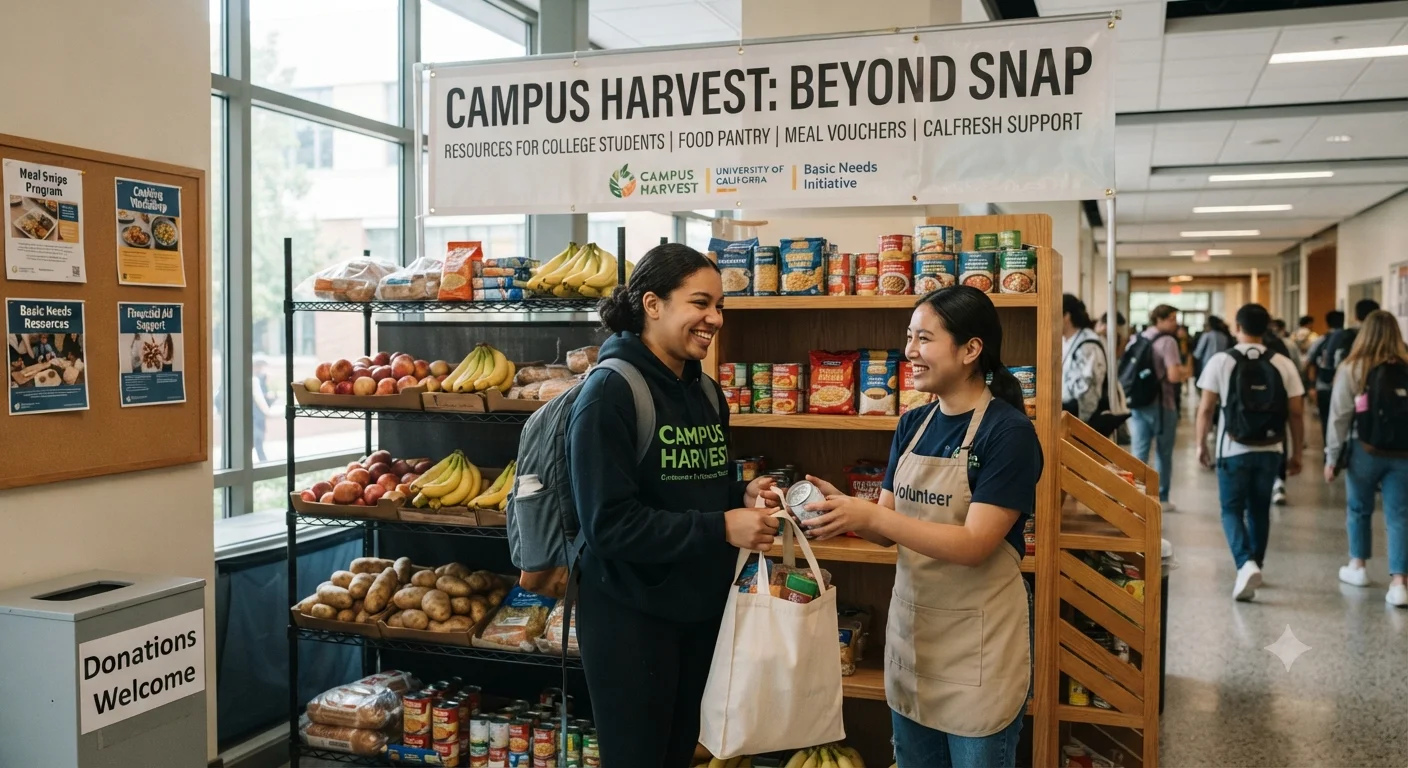
Over 700 colleges and universities in the United States now operate an on-campus food pantry, and hundreds more participate in meal swipe donation programs that let students with unused dining plan credits share them with classmates facing food insecurity, giving students meaningful options even when they don't qualify for SNAP under its student-specific exemptions.
This guide is independently written and is not affiliated with USDA, OPM, or the official federal Feds Feed Families campaign.
On-Campus Food Pantries
Over the past decade, more than 350 on-campus food pantries have been established nationwide, and that number has continued growing, with some estimates now placing the total above 700. These are typically run through a student government office, dean of students' office, or a dedicated basic needs center, and most operate with no formal eligibility screening, meaning any enrolled student can generally access them without proving financial need. The College and University Food Bank Alliance, now operating under Swipe Out Hunger, maintains a directory that can help locate a specific campus's pantry program.
Meal Swipe Donation Programs
- On-Campus Food Pantries
- Meal Swipe Donation Programs
- Mobile Food Pantries on Campus
- Emergency Meal Vouchers and Financial Aid Resources
- State-Level Student Food Programs
- How to Find What Your Specific Campus Offers
- Community Resources Beyond Campus
- FAQ
- Do most colleges have food pantries?
- What is a meal swipe donation program?
- Can financial aid help cover food costs?
- How do I find out what food resources my specific college offers?
Programs like Swipe Out Hunger's Swipe Drive let students with unused meal plan credits voluntarily donate them to a shared pool, which is then distributed to classmates experiencing food insecurity. This model is now active at more than 100 colleges nationwide, and several state legislatures have introduced or passed bills specifically requiring or encouraging universities with meal plan systems to formalize a swipe donation option alongside their existing food pantry programs.
Mobile Food Pantries on Campus
Some universities partner directly with a regional food bank to host a mobile food pantry on campus on a recurring schedule, bringing free groceries directly to students without requiring a trip off campus. These are generally open to any enrolled student and operate similarly to a community mobile pantry, just located within walking distance of campus housing and academic buildings.
Emergency Meal Vouchers and Financial Aid Resources
Many campuses offer emergency meal vouchers through student services or the dean of students' office for a student facing a short-term crisis, distinct from the ongoing support a food pantry provides. It's also worth understanding that under federal financial aid rules, a student's total cost of attendance, which determines Pell Grant and other aid eligibility, includes an allowance for food alongside housing, meaning financial aid can indirectly help cover food costs even though it isn't marketed as a food assistance program specifically.
Recommended Articles
 GOVERNMENT ASSISTANCE GUIDES
 GOVERNMENT ASSISTANCE GUIDES
 GOVERNMENT ASSISTANCE GUIDES
 GOVERNMENT ASSISTANCE GUIDES
State-Level Student Food Programs
A small number of states have passed their own legislation specifically addressing student food insecurity. California, for example, has combined state-level CalFresh, its version of SNAP, outreach requirements with university meal plan policy changes aimed at reducing food insecurity among low-income students. It's worth checking whether your specific state has passed similar legislation, since state-level programs can offer support beyond what's available federally.
How to Find What Your Specific Campus Offers
Because these programs are run individually by each college rather than through a single national system, the most reliable way to find out what's available is to check your school's student services office, dean of students' website, or search your university's name alongside "food pantry" or "basic needs" directly. Many schools have consolidated these resources under a single "Basic Needs" office or webpage in recent years specifically to make them easier for students to find.
Community Resources Beyond Campus
Students aren't limited to campus-specific resources. Any community food pantry near campus is generally open to students the same way it would be to any other resident, and it's worth using a food bank locator or calling 211 to identify additional options beyond what your specific college offers.
Read More Articals
FAQ
Do most colleges have food pantries?
Yes. Over 700 colleges and universities nationwide now operate an on-campus food pantry, and most don't require students to prove financial need to use them.
What is a meal swipe donation program?
A program where students with unused meal plan credits voluntarily donate them to a shared pool distributed to classmates facing food insecurity, active at more than 100 colleges through organizations like Swipe Out Hunger.
Can financial aid help cover food costs?
Indirectly, yes. A student's cost of attendance, which determines Pell Grant and other federal aid amounts, includes an allowance for food alongside housing expenses.
How do I find out what food resources my specific college offers?
Check your school's student services office or dean of students' website, search your university's name with "food pantry" or "basic needs," or check the Swipe Out Hunger campus directory.
Sources: Swipe Out Hunger, Hope Center for Student Basic Needs, Community Commons campus food insecurity research.