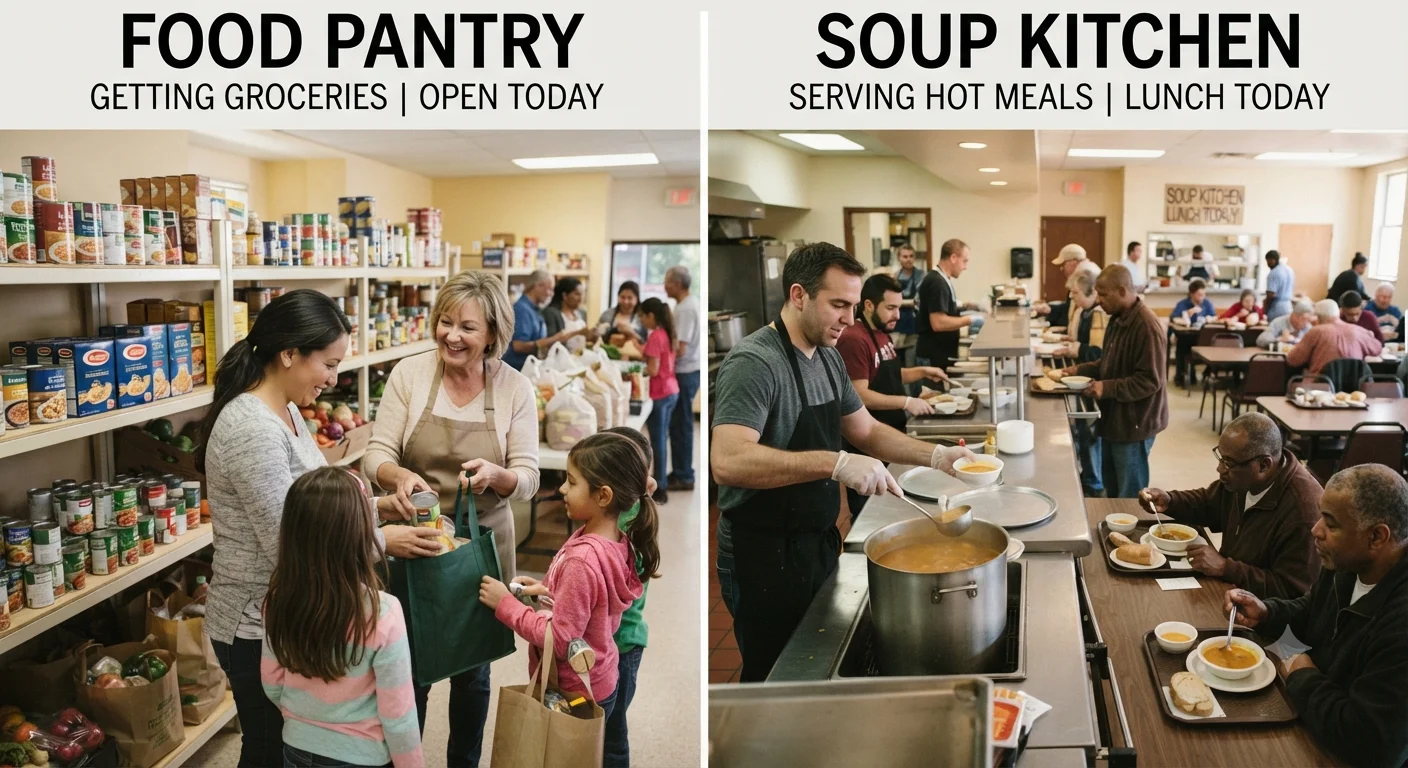
A food pantry provides groceries you take home and prepare yourself, typically enough to last several days to a month, while a soup kitchen serves a prepared, ready-to-eat meal on-site, usually the same day you visit. Both are generally free and open to anyone who needs them, and there's no rule against using both, depending on your household's specific situation.
This guide is independently written and is not affiliated with USDA, OPM, or the official federal Feds Feed Families campaign.
What a Food Pantry Provides
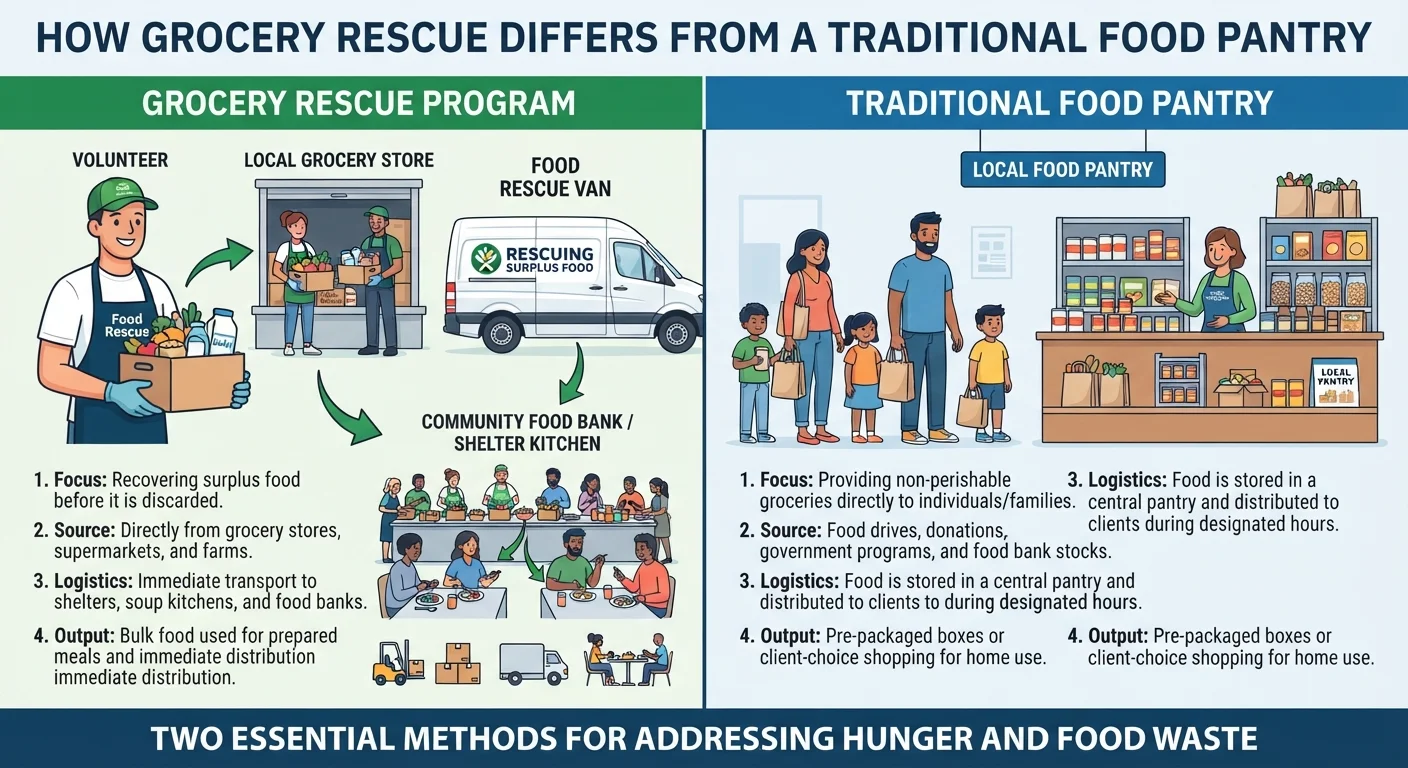
A food pantry, sometimes called a food cupboard, food closet, or food shelf, gives out raw groceries, including fresh produce, canned goods, and pantry staples, for you to take home and cook yourself. Pantries are typically run by smaller community organizations like churches, schools, or community centers, and most operate on a weekly, biweekly, or monthly schedule rather than being open every single day.
What a Soup Kitchen Provides
- What a Food Pantry Provides
- What a Soup Kitchen Provides
- When Each One Makes the Most Sense
- Do You Need to Prove Eligibility
- How Often You Can Visit
- Federal Oversight for Both
- How to Find Either One Near You
- FAQ
- What is the difference between a food pantry and a soup kitchen?
- Do I need to prove I qualify to use a soup kitchen?
- How often can I visit a food pantry?
- Can I use both a food pantry and a soup kitchen?
A soup kitchen, sometimes called a community kitchen or meal center, serves a hot, ready-to-eat meal directly at the location, meant to be consumed on-site rather than taken home. This makes a soup kitchen a more immediate option for someone who needs to eat right away, doesn't have access to a kitchen to cook with, or is currently experiencing homelessness.
When Each One Makes the Most Sense
- Choose a food pantry if you have a working kitchen and want to stock up on groceries to prepare meals over the coming days or weeks
- Choose a soup kitchen if you need to eat something today, don't currently have reliable access to a kitchen, or want a meal along with a place to sit and eat it
- Consider using both if your situation calls for it, since there's generally no rule preventing someone from using a soup kitchen for an immediate meal while also picking up groceries from a nearby pantry for the rest of the week
Do You Need to Prove Eligibility
Most soup kitchens operate on the assumption that anyone who shows up is eligible for a meal, with no formal application or proof of income required. Food pantries vary somewhat more, since some require basic registration or ID, particularly if the food they distribute comes through a federally funded program like TEFAP, but the bar for eligibility at most pantries remains low and largely self-attested.
Recommended Articles
 FOOD BANKS PANTRIES
 FOOD BANKS PANTRIES
 FOOD BANKS PANTRIES
 FOOD BANKS PANTRIES
How Often You Can Visit
Visit frequency depends entirely on the individual organization rather than a single national rule. Many food pantries allow weekly or biweekly visits, with a smaller number limiting visits to once a month, while most soup kitchens place no meaningful limit on how often someone can come for a meal, since the format doesn't lend itself to the same kind of household-level rationing a pantry uses for groceries.
Federal Oversight for Both
Pantries, soup kitchens, and shelters that receive food through a federally funded program, such as TEFAP distributed through a local food bank, are subject to specific USDA and state health and human services regulations, including requirements around food storage, meal reporting, and posted meal schedules for community-facing soup kitchens. This federal oversight exists to ensure the food is handled safely and distributed fairly, regardless of which specific type of site you visit.
How to Find Either One Near You
Feeding America's Food Finder tool, searchable by zip code, lists both pantries and meal programs, including soup kitchens, in a given area, and calling 211 remains a reliable way to get connected with a local resource specialist who can point you toward whichever option best fits your immediate situation.
Read More Articals
FAQ
What is the difference between a food pantry and a soup kitchen?
A food pantry gives out raw groceries to take home and prepare, while a soup kitchen serves a prepared, ready-to-eat meal on-site, typically the same day.
Do I need to prove I qualify to use a soup kitchen?
Generally no. Most soup kitchens assume anyone who shows up is eligible for a meal, with no formal application or income documentation required.
How often can I visit a food pantry?
This varies by organization. Many pantries allow weekly or biweekly visits, while a smaller number limit visits to once a month, so it's worth checking with your specific local pantry.
Can I use both a food pantry and a soup kitchen?
Yes, generally. There's no rule preventing someone from using a soup kitchen for an immediate meal while also visiting a nearby pantry for groceries to prepare later.
Sources: Feeding America, Illinois Department of Human Services food pantry and soup kitchen standards, community food assistance program guidance.