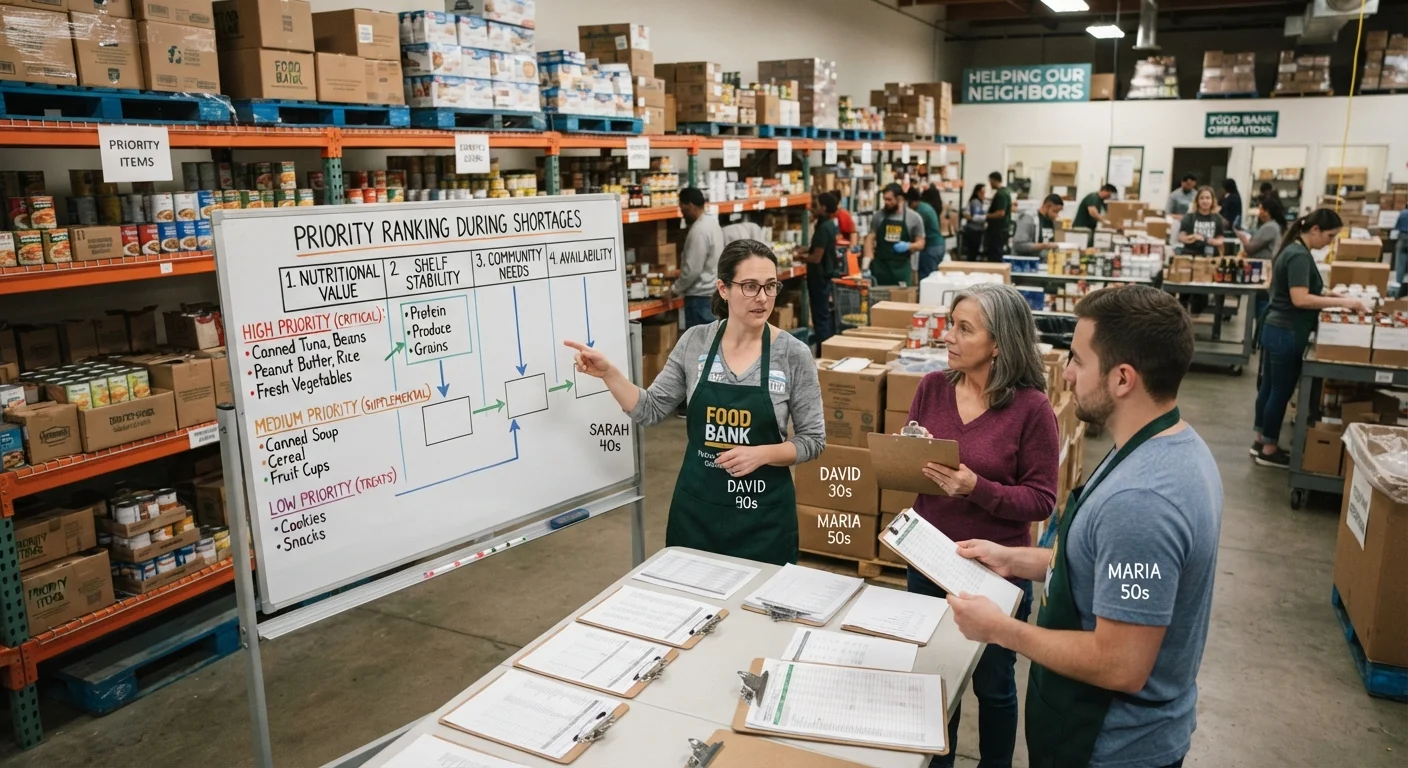
When a genuine supply disruption hits the federal commodity pipeline that supplies food banks, USDA has a documented, specific set of response tools it activates, including temporarily expanding a different existing federal program to cover the gap, and formally approving individual states to redirect food between programs under a defined "situations of distress" authority, rather than food banks simply improvising on their own without coordinated federal support.
This guide is independently written and is not affiliated with USDA, OPM, or the official federal Feds Feed Families campaign.
Why Coordinated Shortage Response Exists
Federal nutrition programs like TEFAP, FDPIR, and CSFP rely on the same underlying USDA commodity ordering and distribution pipeline, meaning a disruption affecting one part of that pipeline, whether from a supplier issue, transportation bottleneck, or funding gap, can ripple across multiple programs simultaneously. Because of this shared infrastructure, USDA maintains specific, named tools it can activate when a real shortage occurs, rather than leaving individual food banks to manage a disruption entirely on their own.
Temporarily Expanding a Different Program to Cover the Gap
- Why Coordinated Shortage Response Exists
- Temporarily Expanding a Different Program to Cover the Gap
- Activating the "Situations of Distress" Authority
- Using Regional Food Purchase Programs to Fill Specific Gaps
- How Ordering Windows Affect Availability
- Why Individual Food Banks Still Make Local Choices
- Why Protein and Fresh Items Are Often the Hardest to Replace
- What This Means If You're Visiting a Food Pantry During a Shortage
- FAQ
- Does USDA have a formal response plan when a food bank supply shortage happens?
- Which states have been approved for cross-program food redistribution during a shortage?
- Why are protein and fresh items often the hardest for food banks to replace during a shortage?
- Do all food banks respond to a shortage the same way?
During a real, documented 2025-2026 supply chain disruption affecting FDPIR and CSFP specifically, USDA temporarily expanded the Department of Defense Fresh Fruit and Vegetable Program, normally used for a different purpose, to include additional food items like meats, grains, and dairy, specifically for distribution to a limited number of FDPIR sites experiencing severe inventory shortages. This illustrates a genuine, documented federal response pattern: repurposing an existing program's supply chain temporarily to cover a gap in a different program rather than leaving the shortage entirely unaddressed.
Activating the "Situations of Distress" Authority
USDA has also formally approved a specific list of 20 state agencies operating TEFAP to work with local partners, including food banks, to distribute food to FDPIR and CSFP sites facing genuine distress. As of the most recent documented activation, the approved states included Alaska, Alabama, Arizona, California, Colorado, Florida, Georgia, Illinois, Kentucky, Massachusetts, Maine, North Carolina, Nebraska, New Mexico, Oklahoma, Oregon, Rhode Island, Tennessee, Virginia, and Wisconsin, reflecting a real, coordinated cross-program response rather than each state figuring out its own solution independently.
Using Regional Food Purchase Programs to Fill Specific Gaps
Beyond reallocating existing federal commodities, USDA also leverages the Local Food Purchase Assistance Cooperative Agreement Program, which allows individual state and tribal governments to directly procure and distribute regionally specific foods that match their area's particular dietary needs and preferences, adding a locally responsive layer on top of the broader national commodity system during a shortage.
Recommended Articles
 FOOD BANKS PANTRIES
 FOOD BANKS PANTRIES
 FOOD BANKS PANTRIES
 FOOD BANKS PANTRIES
How Ordering Windows Affect Availability
Program operators at individual FDPIR or CSFP sites generally place orders within a defined window, beginning 31 business days before a requested delivery date and closing 10 business days before, with a longer window for offshore locations like Alaska, Hawaii, and Puerto Rico given their more complex logistics. USDA specifically encourages operators to order based on actual current inventory needs, a practice that becomes especially important during a period of tighter-than-normal supply.
Why Individual Food Banks Still Make Local Choices
Even with this coordinated federal response infrastructure, individual food banks still make real-time, local decisions about which specific items to prioritize for their own community based on what's actually available to them that week, their storage capacity, particularly for items requiring refrigeration, and the specific dietary needs of the population they serve, meaning two food banks can genuinely have a different day-to-day experience even during the same broader national shortage.
Why Protein and Fresh Items Are Often the Hardest to Replace
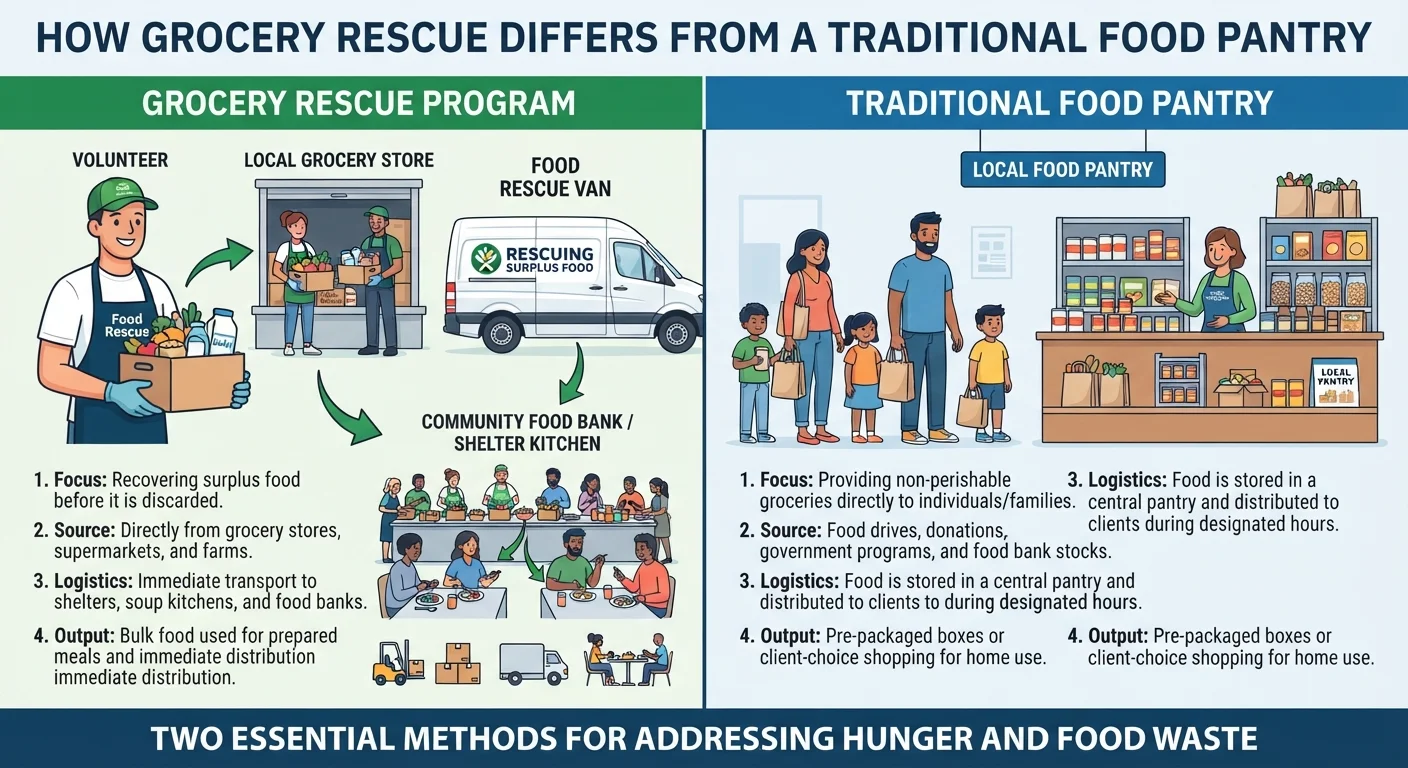
Given the multi-year contraction in the national cattle herd affecting beef supply broadly, and the general difficulty of sourcing fresh, refrigerated items compared to shelf-stable donations, protein and fresh perishable categories are consistently the hardest for food banks to reliably replace during any kind of supply disruption, which is part of why programs like grocery rescue, sourcing directly from grocery stores and farms, have become an increasingly important complement to the traditional federal commodity pipeline.
What This Means If You're Visiting a Food Pantry During a Shortage
If you notice a specific item consistently missing or limited at your local pantry during a broader reported shortage, it's worth understanding this often reflects a genuine, documented supply disruption further up the chain rather than anything specific to your local pantry's management, and asking staff directly what alternatives are currently available can help you understand what's being substituted and why.
Read More Articals
FAQ
Does USDA have a formal response plan when a food bank supply shortage happens?
Yes. Documented tools include temporarily expanding a different existing program's supply chain to cover a gap, and formally activating "situations of distress" authority allowing states to redirect food between programs.
Which states have been approved for cross-program food redistribution during a shortage?
As of the most recent documented activation, 20 states were approved, including Alaska, California, Florida, Georgia, Massachusetts, and North Carolina, among others, to support tribal and CSFP sites facing distress.
Why are protein and fresh items often the hardest for food banks to replace during a shortage?
A multi-year contraction in the national cattle herd has tightened beef supply broadly, and fresh, refrigerated items are generally harder to source through shelf-stable donation channels than through direct grocery rescue partnerships.
Do all food banks respond to a shortage the same way?
No. Even with coordinated federal tools in place, individual food banks still make local, real-time decisions based on their own available supply, storage capacity, and their community's specific needs.
Sources: USDA Food and Nutrition Administration FDPIR and CSFP Supply Chain Disruptions page, USDA Food and Nutrition Administration TEFAP program page, Congressional Research Service TEFAP background report.