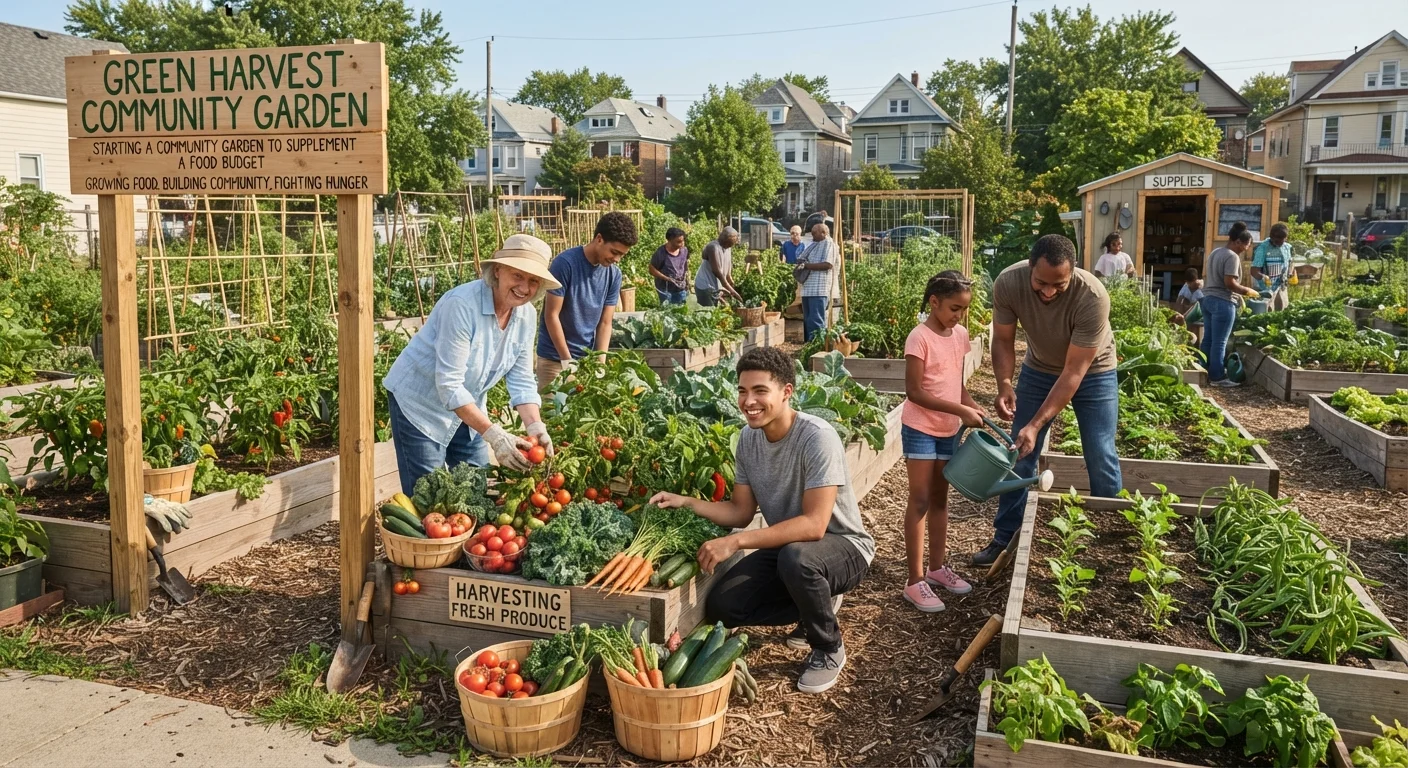
According to North Carolina State Extension, a basic startup budget for a community food garden on a quarter-acre lot generally runs $1,000 to $5,000, not counting paid staff, with fencing and water hookup typically representing the largest single costs, while ongoing annual maintenance for an established garden is often well under $1,000. Donated materials and volunteer labor can meaningfully reduce both figures.
This guide is independently written and is not affiliated with USDA, OPM, or the official federal Feds Feed Families campaign.
Start With Your Why
Before finding land or writing a budget, clarifying the specific purpose behind the garden, whether supplementing meals for participating families, donating produce to a local food bank, or building a shared community space, shapes nearly every decision that follows, from how plots are structured to how the project gets marketed to potential funders and volunteers.
Finding a Site
- Start With Your Why
- Finding a Site
- Securing the Land
- Building Support Among Neighbors
- Making It Accessible to Everyone in the Community
- Federal Support Through USDA's People's Garden Program
- Reducing Costs With Donations and Sweat Equity
- Connecting the Garden to a Local Food Bank
- FAQ
- How much does it cost to start a community food garden?
- Does USDA offer funding for community gardens?
- How can a community garden stay accessible to lower-income families?
- Should a community garden partner with a local food bank?
A workable garden site generally needs at least 6 to 8 hours of direct sunlight, reasonable proximity to a water source, ideally within 200 feet of an existing water meter to avoid the cost of installing a new tap, and no history of contamination from a previous industrial or commercial use like a gas station or dry cleaner. Walking a prospective site at different times of day before committing helps confirm sunlight patterns and reveals any unexpected issues, like an area used informally as a neighborhood dog walking spot.
Securing the Land
Vacant lots, underused park space, and land owned by a school or local government are all common starting points, typically located through a county's public parcel viewer or by directly approaching a landowner about a lease or donation arrangement. Partnering with a school, church, or existing nonprofit that can serve as a fiscal sponsor is a common and practical way to formalize a garden project without needing to establish an entirely new legal entity from scratch.
Building Support Among Neighbors
A genuine community garden needs more than land, it needs people committed to maintaining it, so talking with neighbors early, gathering interested participants, and crafting a shared mission statement together builds the kind of buy-in that keeps a garden functioning well past its first exciting season.
Making It Accessible to Everyone in the Community
To genuinely function as a community resource rather than an amenity for those who can already afford a garden plot fee, structuring the project so that fees from larger plots subsidize free or reduced-cost smaller plots, or setting aside a dedicated shared section specifically for donation to food-insecure neighbors, keeps the garden aligned with its actual purpose of improving food access.
Recommended Articles
 FOOD BANKS PANTRIES
 FOOD BANKS PANTRIES
 FOOD BANKS PANTRIES
 FOOD BANKS PANTRIES
Federal Support Through USDA's People's Garden Program
USDA runs its own People's Garden program, providing grant funding specifically for community garden and urban farming projects that demonstrate a genuine educational component and community engagement, with applications typically opening through grants.gov in winter or early spring. This is worth exploring as one funding avenue among several, alongside local and regional grant programs many communities also offer.
Reducing Costs With Donations and Sweat Equity
Seeds and seedlings are frequently available as donations from local nurseries, garden centers, or seed libraries many towns now maintain, and volunteer labor for the physical work of building beds, installing irrigation, and ongoing maintenance can substantially reduce a project's overall budget compared to relying on paid labor for every task.
Connecting the Garden to a Local Food Bank
A garden specifically intended to supplement a food bank's fresh produce offerings is a genuinely valuable model, since fresh produce is consistently one of the harder categories for food banks to source reliably compared to shelf-stable donations. Reaching out to a local food bank early in the planning process, rather than after the garden is already producing, helps establish a clear donation arrangement from the start.
Read More Articals
FAQ
How much does it cost to start a community food garden?
A basic quarter-acre garden generally requires $1,000 to $5,000 in startup costs, with fencing and water hookup typically the largest expenses, though donated materials and volunteer labor can meaningfully reduce this figure.
Does USDA offer funding for community gardens?
Yes, through the People's Garden program, which supports projects demonstrating genuine educational components and community engagement, with applications typically opening in winter or early spring through grants.gov.
How can a community garden stay accessible to lower-income families?
By structuring fees from larger plots to subsidize free or reduced-cost smaller plots, or by setting aside a dedicated section grown specifically for donation to food-insecure neighbors or a local food bank.
Should a community garden partner with a local food bank?
It's worth considering, since fresh produce is one of the harder categories for food banks to reliably source, and establishing this partnership early in the planning process helps set clear expectations for both sides.
Sources: NC State Extension "Collard Greens and Common Ground" community food gardening handbook, USDA People's Garden program, Food Gardening Network.