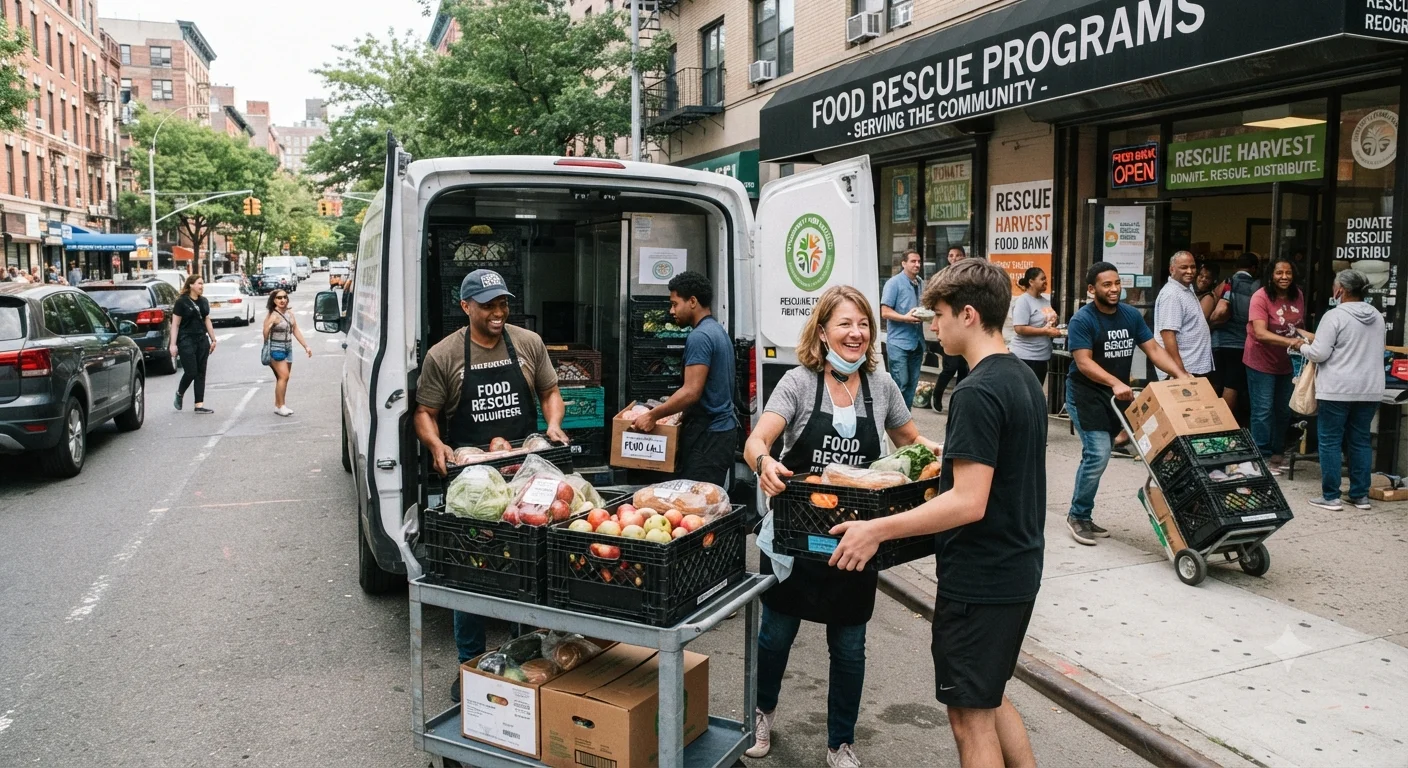
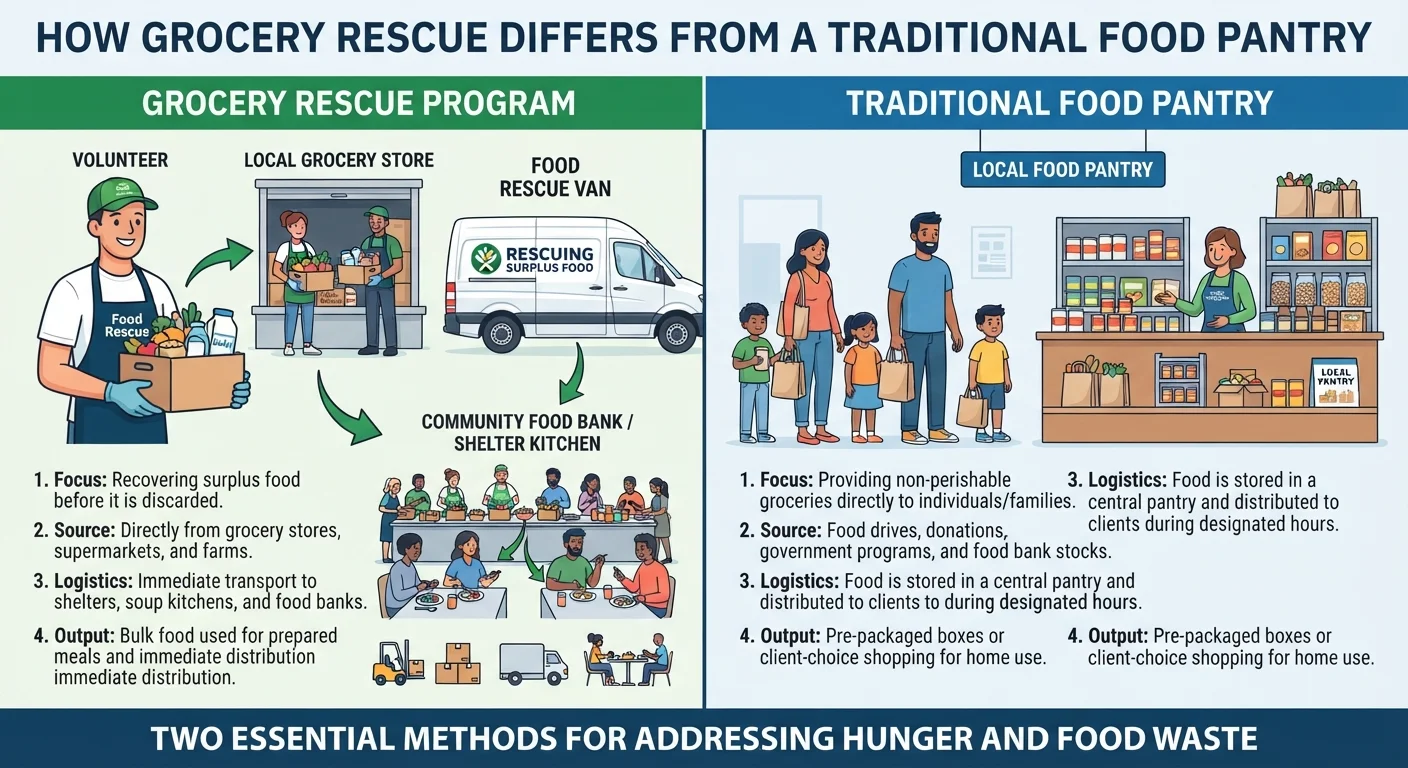
Food rescue organizations use volunteer drivers, app-based logistics, and direct partnerships with grocery stores, restaurants, and event venues to move surplus, edible food to local food banks and pantries, often within 90 minutes of pickup, before it would otherwise be thrown away. National networks like Food Rescue US and Sharing Excess move millions of pounds of food this way every year.
This guide is independently written and is not affiliated with USDA, OPM, or the official federal Feds Feed Families campaign.
Why Food Rescue Exists as Its Own System
Food rescue, sometimes called food recovery or surplus food redistribution, addresses a specific, solvable gap: businesses regularly have edible surplus, from a grocery store's daily unsold perishables to a caterer's leftover event food, that would otherwise go straight to a dumpster, even though it's still perfectly safe to eat. Rather than treating this as unavoidable waste, food rescue organizations built dedicated logistics specifically to move that food to people who need it while it's still fresh.
How the Logistics Actually Work
- Why Food Rescue Exists as Its Own System
- How the Logistics Actually Work
- Major National and Regional Food Rescue Organizations
- Consumer-Facing Food Rescue Apps
- Legal Protection for Food Donors
- How Food Banks Benefit From This Model
- How Businesses Can Get Involved
- FAQ
- What is food rescue?
- Are businesses legally protected when they donate surplus food?
- What's the difference between a food rescue nonprofit and an app like Too Good To Go?
- How can a business donate surplus food?
Most modern food rescue organizations operate through an app-based system: a business with surplus food, a grocery store, restaurant, or event venue, posts an available pickup, and the app alerts nearby volunteer drivers or paid logistics staff, who transport the food directly to a partner food bank, pantry, or shelter. Because much of this food is fresh or perishable, speed matters, and many organizations specifically aim to complete pickup and delivery within about 90 minutes to ensure the food remains genuinely usable.
Major National and Regional Food Rescue Organizations
- Food Rescue US operates in 51 locations across 25 states and Washington D.C., using a web-based app to connect volunteer drivers with local businesses and social service agencies
- Sharing Excess partners with grocers, wholesalers, and farmers, distributing more than 2 million pounds of rescued food weekly nationwide
- 412 Food Rescue's Food Rescue Hero app has redirected more than 77 million pounds of food from landfills since its 2016 launch, using a volunteer-driver model similar to a ride-share app
- Food Donation Connection has coordinated the donation of over a billion pounds of surplus prepared food from more than 14,000 restaurant and food service locations since 1992
-
Faith-Based Food Assistance Programs Near You
Consumer-Facing Food Rescue Apps
Beyond the business-to-nonprofit model, some apps let individual consumers directly purchase discounted surplus food. Too Good To Go partners with grocery stores, restaurants, bakeries, and cafés to sell "Surprise Bags" of unsold items nearing expiration, typically at roughly a third of the original price, while Flashfood lets shoppers buy discounted, near-date food directly through participating traditional grocers like Giant and Meijer. These are distinct from the nonprofit rescue model, since the food goes to any paying customer rather than specifically to a hunger relief organization.
Recommended Articles
 FOOD BANKS PANTRIES
 FOOD BANKS PANTRIES
 FOOD BANKS PANTRIES
 FOOD BANKS PANTRIES
Legal Protection for Food Donors
A common misconception is that businesses avoid donating surplus food out of fear of legal liability if someone gets sick. In reality, the federal Bill Emerson Good Samaritan Food Donation Act, along with state-level protections, generally shields a person or organization from civil or criminal liability when they donate food in good faith to a nonprofit for distribution to people in need, as long as the donation wasn't made with actual knowledge the food was unsafe. This legal protection is a major reason food rescue organizations can operate at scale, since it removes a significant barrier that might otherwise discourage donation.
How Food Banks Benefit From This Model
Food rescue specifically supplies food banks and pantries with fresh, perishable items, produce, dairy, meat, and prepared food, that traditional non-perishable food drives simply can't provide. This fresh food category is often harder for food banks to source consistently than shelf-stable donations, making rescue programs a genuinely complementary piece of the broader food bank supply system rather than a duplicate of what canned food drives already accomplish.
How Businesses Can Get Involved
A grocery store, restaurant, caterer, or event venue with regular or occasional surplus food can typically contact a local or national food rescue organization directly to become a registered donor, after which pickups can often be scheduled on a recurring basis or requested as needed for larger one-time surpluses, such as after a major event.
Read More Articals
FAQ
What is food rescue?
The practice of collecting edible surplus food from businesses like grocery stores, restaurants, and event venues, and redistributing it to food banks, pantries, and shelters before it would otherwise be discarded.
Are businesses legally protected when they donate surplus food?
Yes. The federal Good Samaritan Food Donation Act, along with state protections, generally shields businesses from liability when they donate food in good faith, as long as they didn't know the food was unsafe.
What's the difference between a food rescue nonprofit and an app like Too Good To Go?
Food rescue nonprofits like Food Rescue US move surplus food directly to hunger relief organizations for free, while consumer apps like Too Good To Go let any paying customer purchase discounted surplus food directly from a business.
How can a business donate surplus food?
Contact a local or national food rescue organization directly to register as a donor, after which pickups can typically be scheduled on a recurring or as-needed basis.
Sources: Food Rescue US, Sharing Excess, 412 Food Rescue, Bill Emerson Good Samaritan Food Donation Act.