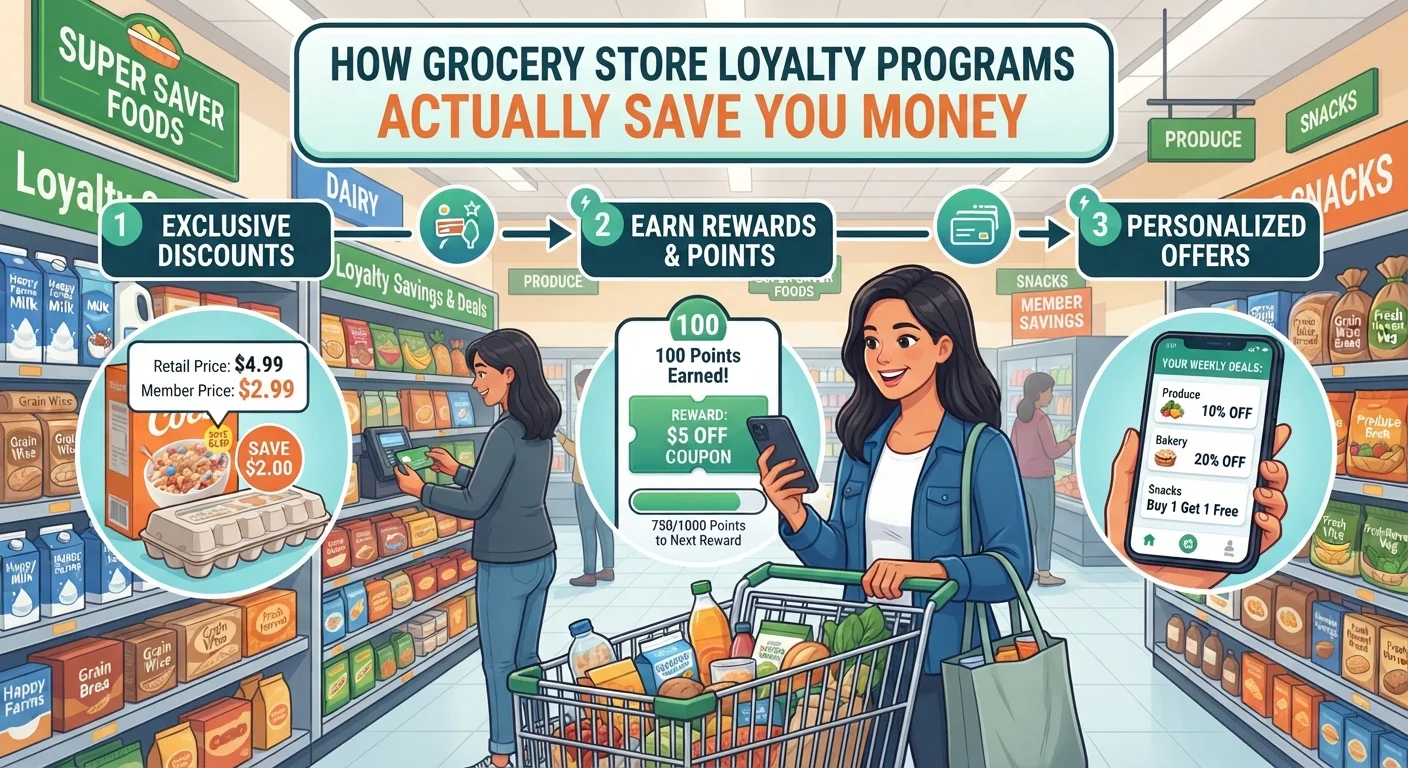
Many grocery stores now require signing in to a free loyalty program to unlock their lowest advertised prices, meaning skipping this step can mean paying more at checkout for the exact same items a signed-in shopper gets discounted, even without clipping a single coupon.
This guide is independently written and is not affiliated with USDA, OPM, or the official federal Feds Feed Families campaign.
Why Loyalty Programs Exist
Grocery loyalty programs give a store detailed data about individual shopping habits in exchange for offering that shopper personalized discounts, which is a genuinely fair trade for the shopper as long as the discounts offered are real. Understanding this basic exchange, your data for their discount, helps frame what's actually happening when you sign up, rather than treating it as a purely one-sided gift from the store.
Digital Coupons vs. Automatic Discounts
- Why Loyalty Programs Exist
- Digital Coupons vs. Automatic Discounts
- Checking That Digital Discounts Actually Applied
- Combining Loyalty Discounts With Other Savings
- Being Skeptical of "You Saved" Totals
- Multiple Loyalty Programs vs. One Primary Store
- What to Know About Your Data
- Loyalty Programs and SNAP Purchases
- FAQ
- Do I need to sign up for a store's loyalty program to get its lowest prices?
- What's the difference between a digital coupon and automatic member pricing?
- Should I trust the "you saved" total a store's app shows after checkout?
- Can I use a store loyalty program with my SNAP EBT card?
Most loyalty programs offer two distinct types of savings: digital coupons that need to be actively "clipped" in the app before shopping to apply at checkout, and automatic member pricing that applies to any signed-in shopper without needing to select anything in advance. It's worth understanding which type a specific deal is, since a coupon you forget to clip simply won't apply, while member pricing applies automatically as long as your loyalty account is linked at checkout.
Checking That Digital Discounts Actually Applied
Because a loyalty account that doesn't sync properly, or a coupon with fine-print criteria you didn't quite meet, can cause an expected discount to simply not show up, reviewing your receipt for the specific discount line before leaving the store is worth the extra minute, since most stores can correct a failed digital discount on the spot if you catch it before you've left.
-
Grocery Shopping for One: Avoiding Waste on a Single-Person Budget
Combining Loyalty Discounts With Other Savings
Many stores allow a loyalty-program digital coupon to be combined, or "stacked," with a separate paper manufacturer coupon on the same item, effectively doubling the discount, though stacking rules vary by individual store rather than being standardized nationally. Checking your specific store's stacking policy is worth doing if you're regularly using both types of coupons together.
Being Skeptical of "You Saved" Totals
A splash screen after checkout claiming a large total in savings is genuinely exciting to see, but this figure is typically calculated using the store's own method comparing your purchase against a full, undiscounted price, not against what you would have reasonably spent shopping elsewhere or with a different strategy. A more accurate measure of real savings is comparing your total spent against your planned budget for that trip, not the app's own summary screen.
Recommended Articles
 BUDGETING MEAL PLANNING
 BUDGETING MEAL PLANNING
 BUDGETING MEAL PLANNING
 BUDGETING MEAL PLANNING
Multiple Loyalty Programs vs. One Primary Store
If your household regularly shops at more than one grocery chain, signing up for the loyalty program at each store you actually frequent is worth doing, since the small effort of joining is free and the missed discounts otherwise add up. That said, most households find genuine value in identifying one or two primary stores to build shopping habits and loyalty benefits around, rather than trying to actively track deals across many different programs simultaneously.
What to Know About Your Data
Signing up for a loyalty program typically means providing your name, contact information, and agreeing to have your specific purchase history tracked over time, which the store may use to personalize future offers or, in some cases, share with third parties as outlined in the program's privacy policy. Reviewing a store's privacy policy before signing up is a reasonable step if this is a genuine concern, though the practical trade-off for most shoppers is real, ongoing grocery savings in exchange for this data sharing.
Loyalty Programs and SNAP Purchases
Loyalty program discounts, whether automatic member pricing or a clipped digital coupon, apply the same way regardless of payment method, meaning a SNAP EBT purchase benefits from a loyalty discount exactly as a cash or credit purchase would. There's no separate rule preventing a SNAP shopper from using a store loyalty program, and doing so is one of the more straightforward ways to stretch a fixed monthly benefit further at no additional cost.
Read More Articals
FAQ
Do I need to sign up for a store's loyalty program to get its lowest prices?
Often yes. Many stores now require being signed in to a free loyalty account to unlock their lowest advertised prices, meaning skipping this step can mean paying more for the exact same items.
What's the difference between a digital coupon and automatic member pricing?
A digital coupon must be actively selected or "clipped" in the app before shopping to apply, while automatic member pricing applies to any signed-in shopper without needing to select anything in advance.
Should I trust the "you saved" total a store's app shows after checkout?
Be cautious. This figure is typically calculated against a full undiscounted price using the store's own method, so comparing your actual spending against your planned budget is a more reliable measure of real savings.
Can I use a store loyalty program with my SNAP EBT card?
Yes. Loyalty discounts apply the same way regardless of payment method, so a SNAP purchase benefits from a loyalty discount exactly as a cash or credit purchase would.
Sources: General grocery loyalty program and digital coupon guidance, consistent with common store loyalty program structures.