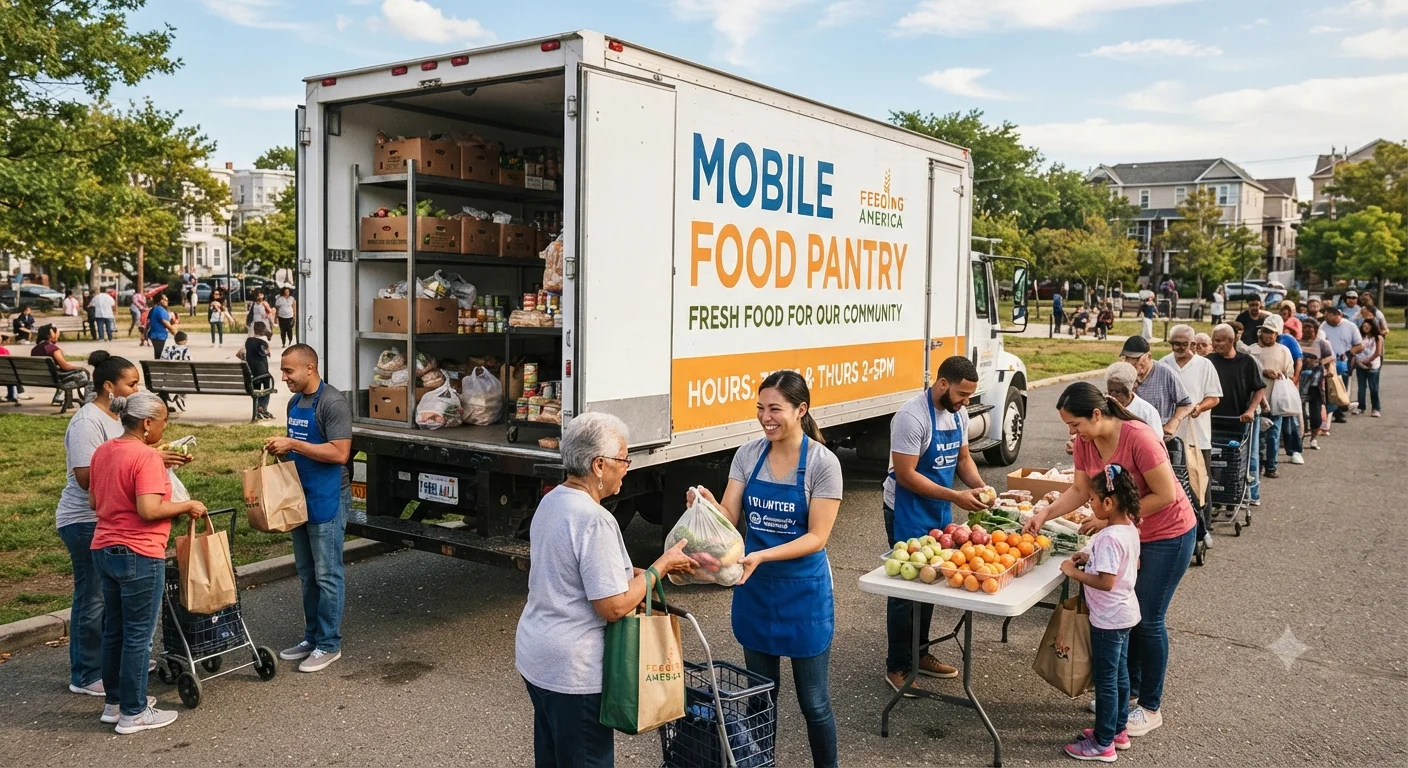
A mobile food pantry is a truck or van, typically operated by a local food bank, that travels on a set schedule to bring free groceries directly to communities with limited access to a fixed pantry location, such as rural areas, senior housing complexes, and neighborhoods without reliable transportation to a traditional food bank site.
This guide is independently written and is not affiliated with USDA, OPM, or the official federal Feds Feed Families campaign.
Why Mobile Pantries Exist
Not every community has a fixed food pantry within reasonable traveling distance, particularly in rural areas where the nearest pantry might be a long drive away for someone without reliable transportation. Mobile pantries solve this problem by bringing the food distribution directly to a community on a recurring schedule, often set up in a church parking lot, community center, or school, rather than requiring people to travel to a central location.
How a Mobile Pantry Distribution Works
- Why Mobile Pantries Exist
- How a Mobile Pantry Distribution Works
- Who Mobile Pantries Serve
- How to Find a Mobile Pantry Near You
- What to Bring
- Weather and Schedule Changes
- FAQ
- What is a mobile food pantry?
- Do I need to prove my income to use a mobile food pantry?
- How do I find a mobile food pantry near me?
- What should I bring to a mobile food pantry distribution?
On distribution day, a truck loaded with food arrives at the scheduled location, and volunteers set up a distribution line, sometimes drive-through and sometimes walk-up, depending on the site. Food is typically pre-packed into boxes or bags, or in some cases set up farmers-market style so people can select specific items they need. Distributions are generally first-come, first-served, and some locations experience long lines, so arriving close to the announced start time is usually a good idea if you want to ensure you receive food before supplies run out.
Who Mobile Pantries Serve
Mobile pantries typically do not require proof of income or a formal application, similar to most fixed food pantries, though some ask for basic information like household size or zip code for reporting purposes, particularly if the food distributed comes through a federal program like TEFAP. Priority populations often include rural residents, seniors in independent or assisted living, and families in neighborhoods identified as food deserts, meaning areas with limited access to affordable, healthy food through a traditional grocery store.
How to Find a Mobile Pantry Near You
The most direct way to find a mobile pantry schedule is to contact your regional Feeding America member food bank directly and ask about mobile distribution sites and dates in your area, since these schedules are typically published on the food bank's own website or social media rather than through a single national database. Calling 211 is another reliable option, since local resource specialists often know about mobile distributions that may not be listed prominently online. Many mobile pantries also post their monthly schedule at local libraries, churches, and community centers, so checking a community bulletin board can sometimes turn up a distribution that isn't easy to find through an online search.
Recommended Articles
 FOOD BANKS PANTRIES
 FOOD BANKS PANTRIES
 FOOD BANKS PANTRIES
 FOOD BANKS PANTRIES
What to Bring
Bring a bag, box, or reusable totes to carry food home, since many mobile distributions hand out loose or boxed food rather than providing bags. It is also worth bringing a general sense of your household size, since some distributions adjust the amount of food based on how many people you are feeding, and, similar to a fixed pantry, some locations request basic information like zip code for federal reporting purposes if the food comes through TEFAP.
Weather and Schedule Changes
Because mobile pantries operate outdoors in many cases, severe weather can occasionally cause a cancellation or rescheduling. Confirming a distribution is still happening as planned, especially during winter storms or extreme heat, by checking the food bank's website or social media the morning of the event, can save a wasted trip if conditions have forced a change.
Read More Articals
FAQ
What is a mobile food pantry?
A truck or van operated by a food bank that travels on a set schedule to bring free groceries directly to communities with limited access to a fixed pantry, such as rural areas or senior housing complexes.
Do I need to prove my income to use a mobile food pantry?
Usually not. Most mobile pantries do not require income verification, though some ask for basic information like household size or zip code for federal reporting purposes.
How do I find a mobile food pantry near me?
Contact your regional Feeding America member food bank directly, call 211, or check community bulletin boards at local libraries and churches for posted mobile pantry schedules.
What should I bring to a mobile food pantry distribution?
Bring bags, boxes, or reusable totes to carry food home, and be prepared to share your general household size if asked, since some distributions adjust food amounts accordingly.
Sources: Feeding America, 211.org, USDA Food and Nutrition Administration TEFAP program guidance.