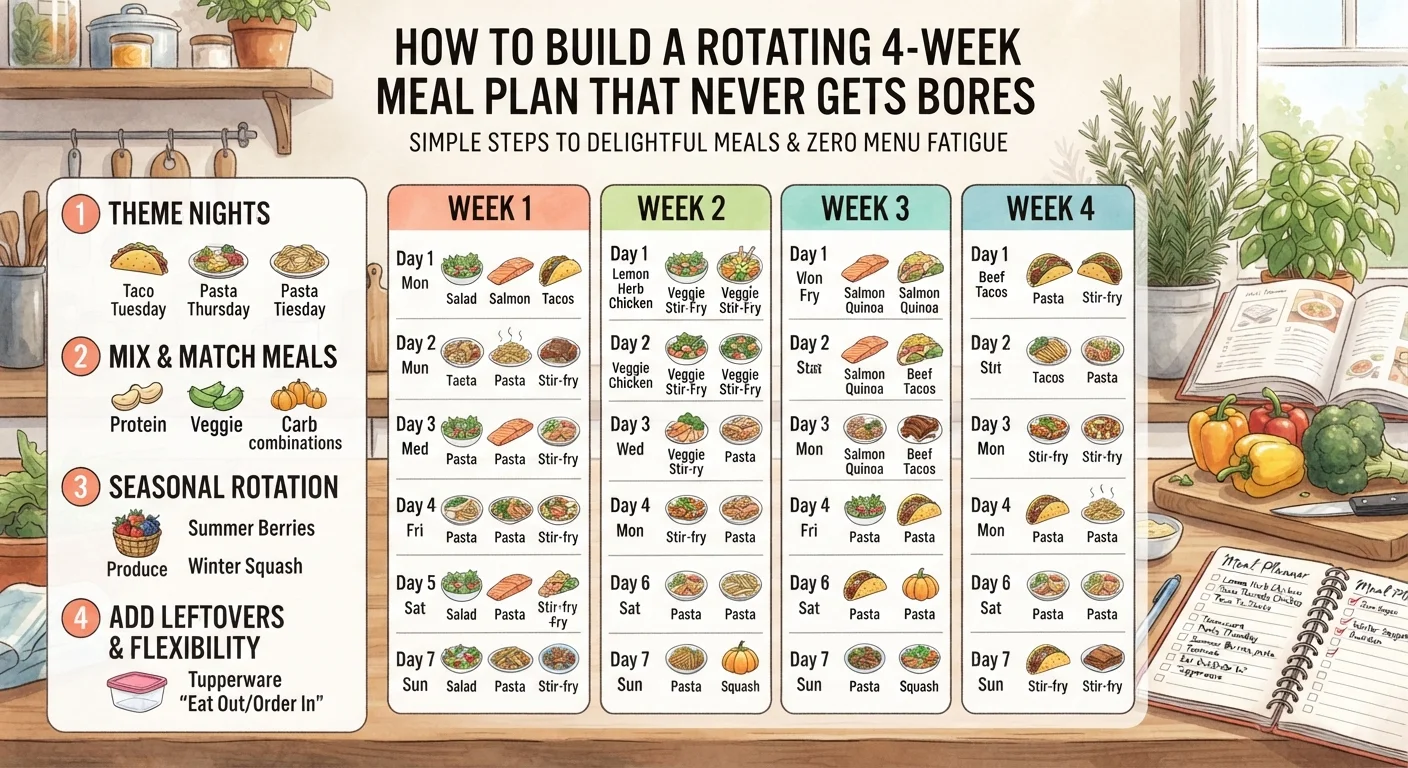
A rotating meal plan is simply a set list of meals repeated on a regular schedule, and the reason it works for a tight budget is that it turns grocery shopping predictable, meaning you buy roughly the same core ingredients week after week, which makes it far easier to track spending and take advantage of sales on items you know you'll actually use.
This guide is independently written and is not affiliated with USDA, OPM, or the official federal Feds Feed Families campaign.
Why Repetition Doesn't Have to Mean Boredom
The key insight behind a successful rotating meal plan is rotating the flavor, not the entire meal. A base of chicken thighs and rice can become a stir fry one week, a taco bowl the next, and a simple soup the week after, using the same core anchor ingredients but a different sauce, spice blend, or preparation method each time. This means the grocery list barely changes from week to week, even though the actual meals on the table feel genuinely different.
Choosing a Rotation Length That Fits Your Life
- Why Repetition Doesn't Have to Mean Boredom
- Choosing a Rotation Length That Fits Your Life
- Building Your Anchor Ingredients First
- Varying One Element at a Time
- Writing the Rotation Down Once
- Adjusting for What's On Sale
- Letting the System Evolve Over Time
- How This Pairs With a SNAP Budget
- FAQ
- What is a rotating meal plan?
- How do you keep a rotating meal plan from feeling repetitive?
- How long should a meal rotation be?
- Does a rotating meal plan actually help stick to a grocery budget?
A 4-week rotation is a common sweet spot, long enough that meals don't feel repeated too soon, but short enough that the plan stays manageable to build in the first place. Some households find a shorter 2-week rotation works better if they prefer more predictability, while others prefer a full seasonal rotation, changing the meal set every 3 months to align with what's fresh and on sale at different times of year. There's no single correct length, the right one is whichever you'll actually stick with.
Building Your Anchor Ingredients First
Start by choosing two or three inexpensive protein anchors, chicken thighs, ground beef, eggs, canned beans, and canned tuna are all commonly used, along with two or three cheap carbohydrate bases, rice, pasta, and potatoes work well. These anchors form the backbone of most meals in your rotation, and because they're purchased repeatedly, you'll get more comfortable buying them in cost-effective quantities and recognizing a genuinely good sale price when you see one.
Varying One Element at a Time
Once your anchors are set, change just one variable per meal, the sauce, the spice blend, or a specific vegetable, rather than swapping out the entire dish. Chicken thighs with soy sauce and garlic one week can become chicken thighs with smoked paprika and lemon the next, using the same core ingredients and cooking method but a genuinely different final flavor. This approach keeps the shopping list essentially unchanged while the actual eating experience stays varied.
Recommended Articles
 BUDGETING MEAL PLANNING
 BUDGETING MEAL PLANNING
 BUDGETING MEAL PLANNING
 BUDGETING MEAL PLANNING
Writing the Rotation Down Once
Creating a simple written or digital list of your rotation, whether a spreadsheet, a note on your phone, or a printed sheet on the fridge, means you only have to do the mental work of planning once, rather than deciding from scratch every single week what to cook. Keeping the grocery list attached to the same document makes shopping trips faster too, since you're not reconstructing a list from memory each time.
Adjusting for What's On Sale
A rotating plan doesn't need to be rigid. If ground beef is on sale one week and chicken isn't, swapping the week's protein anchor while keeping the same sauce and side is a simple substitution that still fits within the overall system, letting you take advantage of sales without abandoning the structure that makes shopping and cooking predictable.
Letting the System Evolve Over Time
A rotating meal plan isn't meant to be permanent and unchanging. Swapping out one or two meals every few months, once you notice a specific dish getting genuinely tiresome or a specific ingredient's price consistently rising, keeps the system fresh without requiring you to rebuild the entire plan from scratch each time something needs adjusting.
How This Pairs With a SNAP Budget
Because a rotating meal plan produces a highly predictable grocery list, it pairs naturally with a fixed monthly SNAP benefit, since you'll have a clear, repeatable sense of roughly what a week's worth of groceries actually costs, making it considerably easier to divide a monthly benefit into consistent weekly amounts rather than guessing anew each time.
Read More Articals
FAQ
What is a rotating meal plan?
A set list of meals that repeats on a regular schedule, commonly every 2 to 4 weeks, designed to reduce weekly planning effort and make grocery shopping more predictable.
How do you keep a rotating meal plan from feeling repetitive?
By rotating the sauce, spice blend, or preparation method around the same core anchor ingredients, rather than changing the entire meal each time, so the flavor varies even though the grocery list barely changes.
How long should a meal rotation be?
There's no single correct length. A 4-week rotation is common, though some households prefer a shorter 2-week cycle or a longer seasonal rotation changed every few months.
Does a rotating meal plan actually help stick to a grocery budget?
Generally yes, since the predictable, repeated grocery list makes it easier to track spending and dividing a fixed monthly benefit into consistent weekly amounts.
Sources: General meal-rotation planning guidance consistent with common budget meal-planning practice.