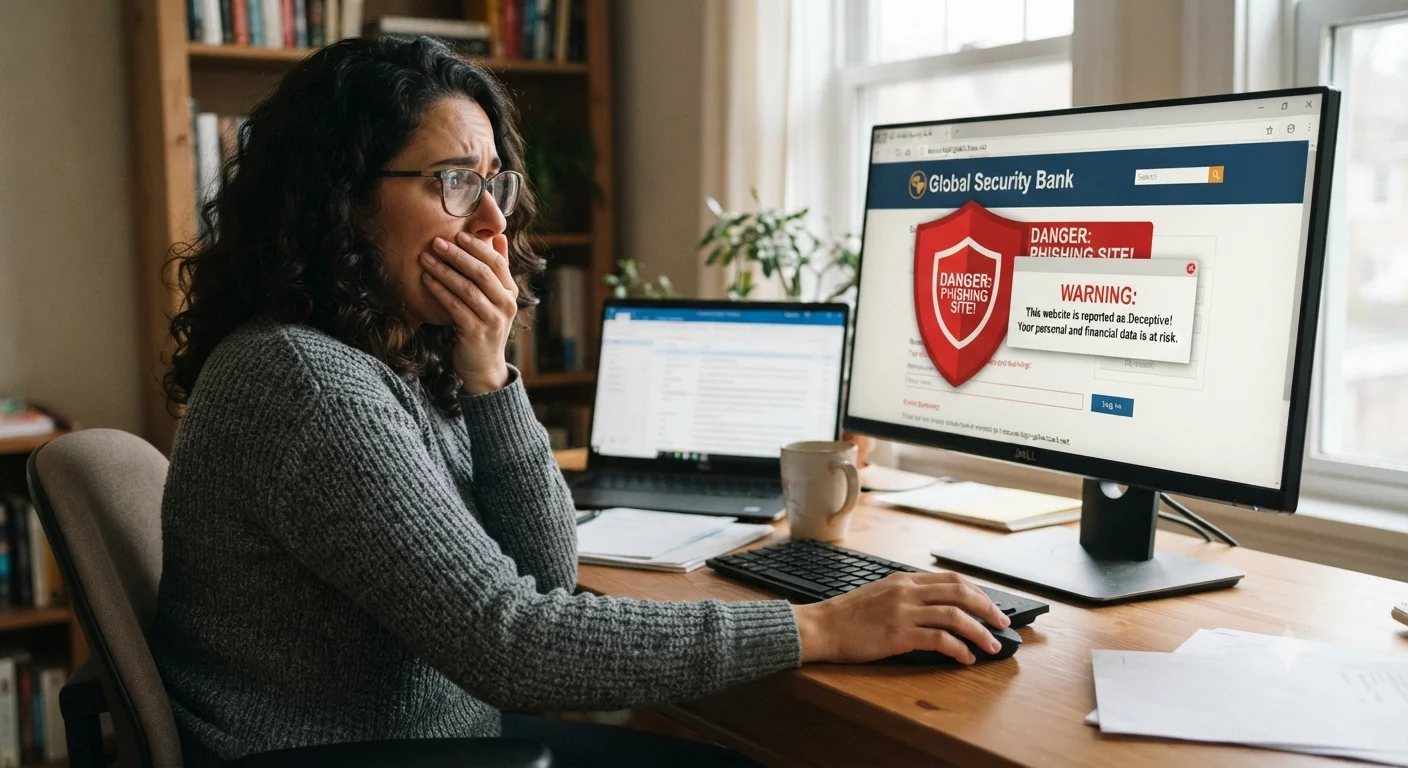
USDA has specifically warned about websites and social media posts that mention food stamps and falsely promise instant cash, monthly payments, or fast-tracked approval in exchange for personal information, and the clearest way to protect yourself is knowing that legitimate SNAP applications only happen through your state's official government agency, never through a third-party website asking for a fee or promising a shortcut.
This guide is independently written and is not affiliated with USDA, OPM, or the official federal Feds Feed Families campaign.
Common Scam Website Red Flags
- Promises of instant cash or guaranteed approval, since no legitimate SNAP process can guarantee approval before reviewing your actual household information
- Requests for payment to "process" an application, since applying for SNAP through your official state agency is always free
- URLs that don't end in .gov, since official SNAP applications are always hosted on a state government website
- Social media posts asking you to sign up for a program by providing personal details directly in a comment or private message
- Urgent language pressuring immediate action, such as claiming your benefits will be lost within hours unless you click a link right away
How Legitimate SNAP Applications Actually Work
- Common Scam Website Red Flags
- How Legitimate SNAP Applications Actually Work
- Phishing Texts and Calls Claiming Your Card Is Locked
- "Free Money" and Prize-Based Scams
- Third-Party Screening Tools vs. Scam Sites
- What to Do If You've Already Shared Information With a Scam Site
- Verifying a Resource Before Trusting It
- FAQ
- How do I know if a food stamp website is legitimate?
- What should I do if I get a text saying my EBT card is locked?
- Are there legitimate benefits screening tools online?
- What should I do if I already shared my EBT information with a suspicious site?
A genuine SNAP application is always submitted through your specific state's official human services or health and human services agency, typically found at a web address ending in .gov, and it never requires a processing fee. If you're unsure whether a website is official, searching your state's name along with "SNAP official application" and confirming the resulting site matches your state government's known domain is a reliable way to verify legitimacy before entering any personal information.
Phishing Texts and Calls Claiming Your Card Is Locked
USDA has specifically flagged a common phishing scam involving text messages claiming a recipient's EBT card has been locked, providing a phone number to call for help, which is designed to trick victims into revealing their card number and PIN to a fraudulent line rather than their actual state agency. If you receive a message like this, contact your state's official EBT customer service number, found on the back of your card or your state agency's official website, rather than any number provided in the suspicious message itself.
"Free Money" and Prize-Based Scams
Some scams specifically target SNAP recipients with offers involving a prize or reward in exchange for photographing their EBT card or sharing personal information, a red flag USDA has directly warned about. No legitimate program offers a prize for sharing your EBT card details, and doing so effectively hands a scammer everything needed to access and drain your account.
Recommended Articles
 NEWS POLICY UPDATES
 NEWS POLICY UPDATES
 NEWS POLICY UPDATES
 NEWS POLICY UPDATES
Third-Party Screening Tools vs. Scam Sites
It's worth distinguishing a legitimate benefits screening tool, including the official Benefits.gov federal tool or a reputable third-party screener that clearly discloses it's a pre-screening service rather than an actual application, from a scam site posing as an application itself. A legitimate screener never asks for payment, never guarantees approval, and always makes clear that you'll still need to apply directly with the actual administering agency.
What to Do If You've Already Shared Information With a Scam Site
If you've already provided personal or card information to a site or message you now suspect was fraudulent, contact your state's EBT customer service line immediately to lock your card and monitor for unauthorized activity, and consider reporting the incident to your state SNAP agency's fraud reporting channel and the Federal Trade Commission, which tracks scam patterns nationally.
Verifying a Resource Before Trusting It
When in doubt about whether a specific website, text, or call related to SNAP is legitimate, the safest approach is contacting your local SNAP office directly using a phone number or website you've independently verified, rather than clicking a link or calling a number provided in the message you're questioning in the first place.
Read More Articals
FAQ
How do I know if a food stamp website is legitimate?
A legitimate SNAP application is always free and hosted on a state government website, typically ending in .gov. Any site charging a fee, guaranteeing approval, or requesting payment to process an application is not legitimate.
What should I do if I get a text saying my EBT card is locked?
Do not call the number provided in the text. Instead, contact your state's official EBT customer service number found on the back of your card or your state agency's verified website.
Are there legitimate benefits screening tools online?
Yes, including the official federal Benefits.gov tool, but a legitimate screener never asks for payment or guarantees approval, and always clarifies that a separate, direct application is still required.
What should I do if I already shared my EBT information with a suspicious site?
Contact your state's EBT customer service line immediately to lock your card, and report the incident to your state SNAP agency and the Federal Trade Commission.
Sources: USDA Food and Nutrition Administration SNAP Scam Alerts, Federal Trade Commission consumer protection guidance.