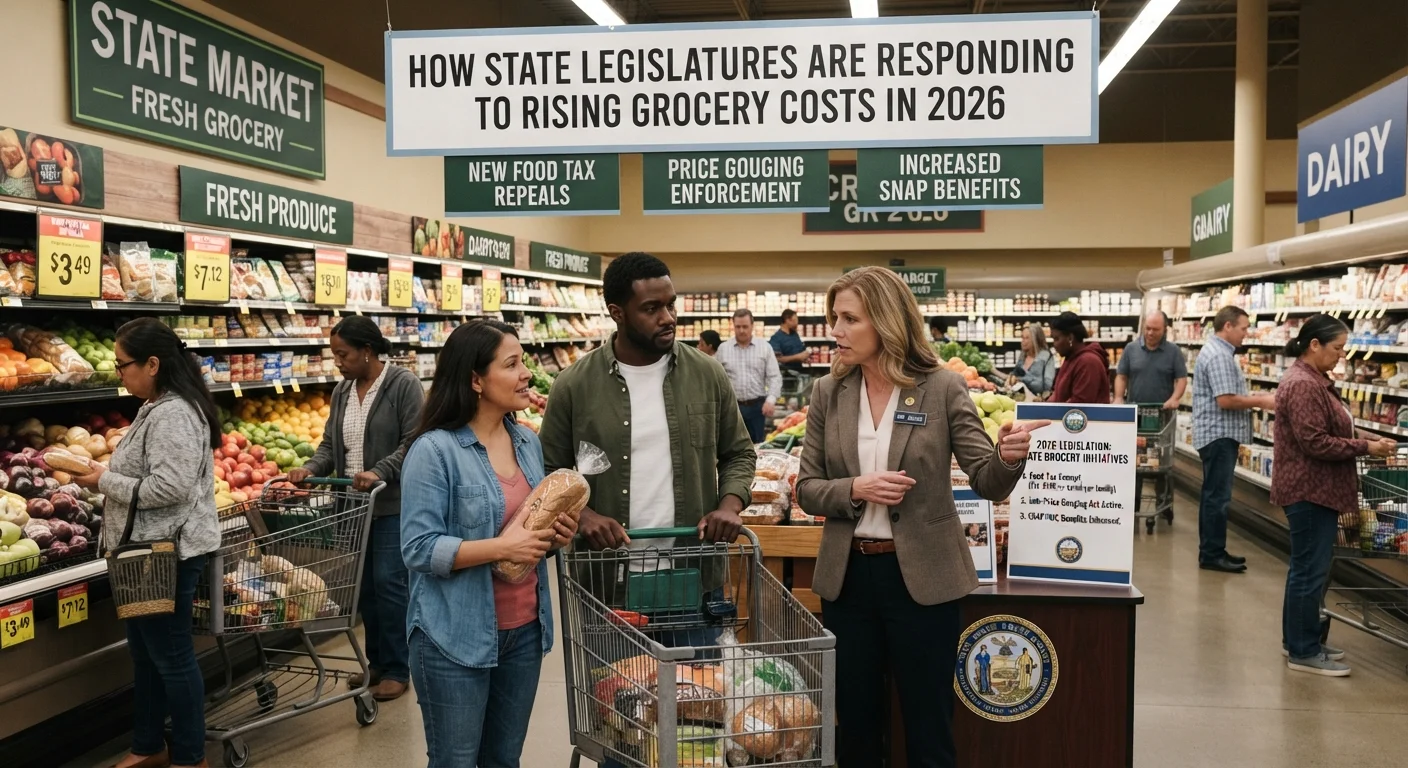
State lawmakers are pursuing genuinely different theories about the root cause of rising grocery bills through 2026 legislation: some states are cutting or eliminating their grocery sales tax directly, while others, including Minnesota, New York, Rhode Island, and Maine, have introduced bills specifically targeting algorithmic and surveillance-based pricing practices they argue are inflating what consumers actually pay.
This guide is independently written and is not affiliated with USDA, OPM, or the official federal Feds Feed Families campaign. This topic involves active political debate, and this article aims to present the facts fairly rather than advocate for a particular position.
States Still Taxing Groceries, and Who's Cutting
As of January 2026, 10 states still impose a statewide sales tax on groceries, though that number has been shrinking as lawmakers in several states introduce bills to reduce or eliminate it. Alabama offers a concrete recent example: the state cut its grocery tax from 4 percent to 3 percent in an earlier reduction, then implemented a second 1-percentage-point cut effective September 2025, bringing the current state rate to 2 percent, though this reduction doesn't apply to additional local grocery taxes that may still be layered on top in specific cities and counties.
State Bills Targeting Surveillance and Dynamic Pricing
- States Still Taxing Groceries, and Who's Cutting
- State Bills Targeting Surveillance and Dynamic Pricing
- The Federal Companion Legislation
- How Proponents Frame This Legislation
- Municipal-Level Experiments
- The Genuine Underlying Debate
- What This Means for Shoppers Right Now
- FAQ
- How many states still tax groceries in 2026?
- What are surveillance pricing bills trying to address?
- Has the federal Stop Price Gouging in Grocery Stores Act become law?
- Are cities also taking action on grocery costs, separate from states?
Lawmakers in Minnesota, New York, Rhode Island, and Maine have introduced bills that would give state enforcement agencies more authority to address price discrimination in the grocery industry, building on the principles of the federal Robinson-Patman Act. These bills would generally require suppliers to offer goods to retailers on equivalent terms and would restrict a store's ability to use personal shopper data, including through mobile apps and electronic shelf labels, to charge different prices to different individual customers for the same item.
The Federal Companion Legislation
At the federal level, the Stop Price Gouging in Grocery Stores Act of 2026, introduced in the Senate by Senators Ben Ray Luján and Jeff Merkley, would prohibit surveillance-based pricing in grocery stores nationally, require grocers to disclose their use of facial recognition technology, and ban electronic shelf labels in large grocery stores, while explicitly preserving states' ability to enact additional, stronger consumer protections of their own on top of the federal baseline. The United Food and Commercial Workers union, representing more than 800,000 grocery workers, has publicly endorsed this legislation.
How Proponents Frame This Legislation
Supporters of these state and federal bills argue that new pricing technologies, including electronic shelf labels that can change a displayed price within seconds from a remote location, create a genuine risk of individualized, data-driven pricing that disadvantages consumers based on factors like their shopping history, income level, or zip code, and that existing antitrust and consumer protection law hasn't kept pace with this specific technological capability.
Recommended Articles
 NEWS POLICY UPDATES
 NEWS POLICY UPDATES
 NEWS POLICY UPDATES
 NEWS POLICY UPDATES
Municipal-Level Experiments
Beyond state legislatures, some cities have pursued their own, more direct approaches. San Francisco's city council has introduced a bill, modeled partly on a similar city-owned grocery store initiative in New York City, designed to support the opening of new grocery stores in underserved neighborhoods through a dedicated affordable grocery fund, paired with a vacancy tax imposed on large grocery chains that close existing store locations within the city.
The Genuine Underlying Debate
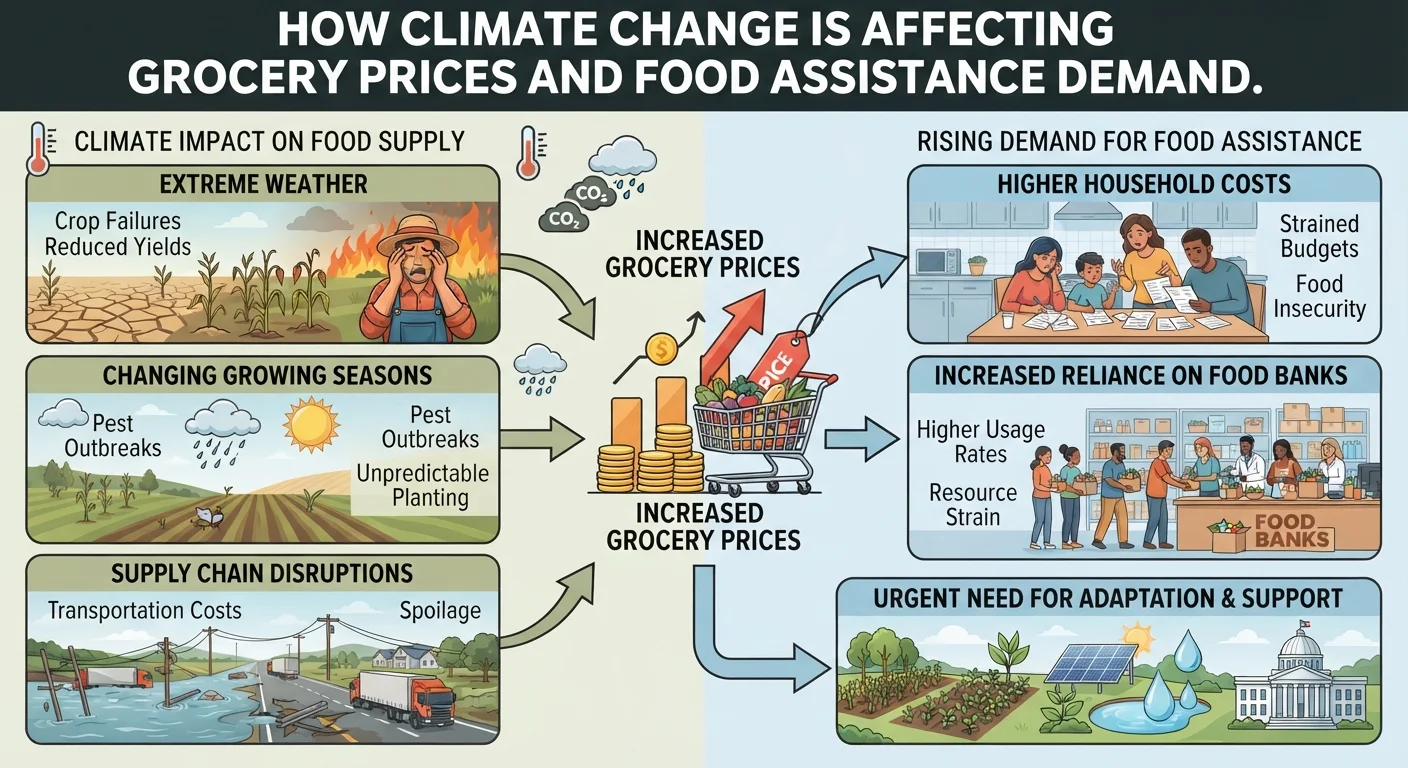
It's worth understanding that these differing legislative approaches reflect genuinely different underlying theories about what's actually driving grocery costs higher, ranging from broader macroeconomic factors like tariffs, trade policy, and climate-driven agricultural disruption, to more targeted concerns about specific pricing technology and market concentration within the grocery industry itself. Reasonable analysts and lawmakers disagree about which of these factors matters most, and different state approaches reflect that genuine underlying disagreement rather than a single, settled diagnosis.
What This Means for Shoppers Right Now
Because most of this legislation is still moving through state and federal legislative processes rather than already being in effect, checking your own state's specific current grocery tax rate, and whether any surveillance pricing restrictions have actually been signed into law rather than simply introduced, is worth doing directly through your state legislature's website if you want to know your current, actual protections rather than relying on headlines about a bill that hasn't yet passed.
Read More Articals
FAQ
How many states still tax groceries in 2026?
10 states still impose a statewide grocery sales tax as of January 2026, though that number has been shrinking as more states introduce reduction or elimination bills.
What are surveillance pricing bills trying to address?
Bills in states including Minnesota, New York, Rhode Island, and Maine aim to restrict a grocery store's ability to use personal shopper data to set individualized prices, and to address broader price discrimination between suppliers and different types of retailers.
Has the federal Stop Price Gouging in Grocery Stores Act become law?
As of this writing, it remains introduced legislation rather than enacted law, so checking its current status directly is worthwhile before assuming its specific protections are already in effect.
Are cities also taking action on grocery costs, separate from states?
Yes. San Francisco has introduced a municipal-level initiative supporting new grocery stores in underserved neighborhoods through a dedicated fund and a vacancy tax on large chains, modeled partly on a similar effort in New York City.
Sources: Senator Ben Ray Luján's office, Congress.gov, Kiplinger, Grocery Dive.