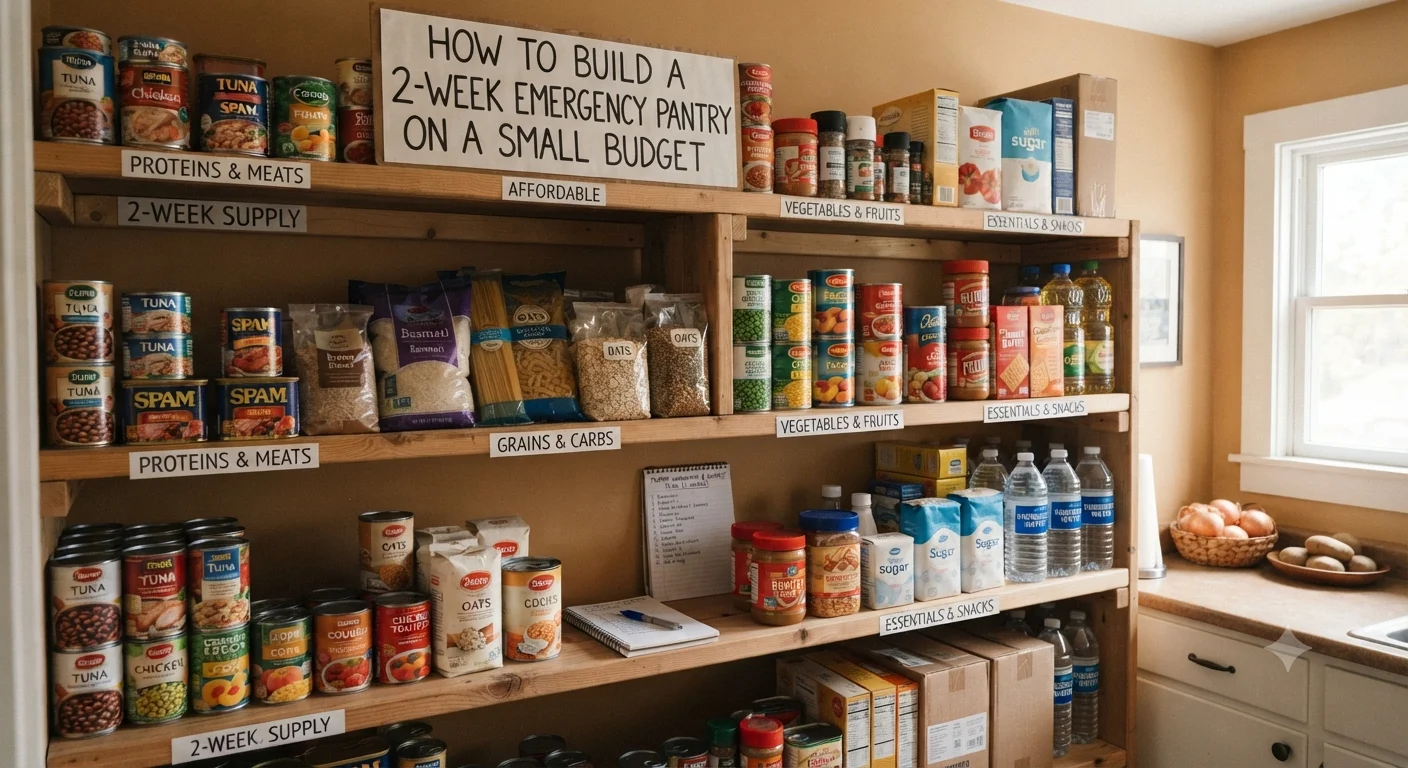
A two-week emergency food supply does not need to be assembled in a single expensive shopping trip. Building it gradually, by adding a few extra shelf-stable items to a regular grocery run each week, is a widely recommended and far more budget-friendly approach than trying to stock an entire emergency pantry all at once.
This guide is independently written and is not affiliated with USDA, OPM, or the official federal Feds Feed Families campaign.
Start With What You Already Have
Before buying anything new, take stock of what's already in your pantry, refrigerator, and freezer. Extension office guidance on emergency food preparation consistently points out that most households already have a partial start on a two-week supply sitting in their cupboards, and understanding that starting point helps avoid unnecessary duplicate purchases.
Build It Gradually, Not All at Once
- Start With What You Already Have
- Build It Gradually, Not All at Once
- Core Foods to Prioritize
- Think About Foods You Can Eat Without Cooking
- Use What You're Storing First
- Storage Doesn't Require Special Equipment
- Rotating Your Supply
- FAQ
- How much does it cost to build a 2-week emergency food supply?
- What foods should be prioritized for an emergency pantry?
- Do I need special storage containers for an emergency food supply?
- Should emergency food include items that don't require cooking?
Rather than a single large trip, adding just a few extra shelf-stable items to each regular grocery run, guided by what's currently on sale, is a more sustainable and budget-friendly way to build an emergency supply over several weeks or months. Setting aside even $10 to $15 extra per shopping trip specifically for this purpose can produce a genuinely solid stockpile within roughly two to three months without significantly straining an existing grocery budget.
Core Foods to Prioritize
- Rice and pasta: long shelf life, filling, and inexpensive per serving, especially bought in a larger bag rather than small packages
- Dried and canned beans and lentils: highly versatile, protein-rich, and among the least expensive foods per serving available
- Canned vegetables and fruits: nutrient-dense and shelf-stable, ideally chosen with lower sodium or packed in juice rather than syrup
- Peanut butter: calorie-dense, requires no cooking, and stores for months unopened
- Canned proteins: tuna, chicken, and similar items that require no refrigeration and no cooking to eat
- Shelf-stable milk: options like dried milk, evaporated milk, or ultra-high-temperature processed boxed milk that don't require refrigeration until opened
Think About Foods You Can Eat Without Cooking
University extension guidance on emergency preparedness specifically recommends including some foods that require no cooking or heating at all, in case of a power outage, alongside foods that can be prepared with minimal water and a simple heat source like a camping stove. Balancing both types ensures the supply remains usable regardless of what specific circumstance triggers the need to use it.
Recommended Articles
 BUDGETING MEAL PLANNING
 BUDGETING MEAL PLANNING
 BUDGETING MEAL PLANNING
 BUDGETING MEAL PLANNING
Use What You're Storing First
A useful principle for any emergency pantry is to use the food that will spoil soonest first, meaning fresh items from the refrigerator, then frozen food, and lastly the fully shelf-stable items at the very back of the rotation. This applies both during an actual emergency and to ongoing pantry management, since it naturally keeps the stockpile fresh through regular use and replacement rather than letting items sit untouched until they expire.
Storage Doesn't Require Special Equipment
An emergency food supply doesn't need a dedicated pantry room or expensive storage containers to be effective. Under a bed, in a closet, or in a cabinet are all reasonable storage locations, as long as the space stays reasonably cool and dry, which is generally sufficient for keeping standard canned and dry goods safe for their labeled shelf life.
Rotating Your Supply
Keep the oldest items toward the front of your storage area and newer purchases toward the back, similar to the First In, First Out method used for regular grocery shopping, and periodically check expiration dates to use and replace items before they expire, which keeps the stockpile both fresh and genuinely useful rather than becoming an untouched, aging collection.
Read More Articals
FAQ
How much does it cost to build a 2-week emergency food supply?
Costs vary significantly, but building the supply gradually, adding around $10 to $15 extra to each regular grocery trip over two to three months, is a widely recommended budget-friendly approach rather than a single large purchase.
What foods should be prioritized for an emergency pantry?
Rice, pasta, dried and canned beans, canned vegetables and fruits, peanut butter, canned proteins, and shelf-stable milk are commonly recommended core items due to their long shelf life and low cost per serving.
Do I need special storage containers for an emergency food supply?
No. A cool, dry space like a closet, cabinet, or under a bed is generally sufficient for standard canned and dry goods, without needing specialized or expensive storage equipment.
Should emergency food include items that don't require cooking?
Yes. Including some no-cook, ready-to-eat foods alongside items that need minimal preparation ensures the supply remains usable during a power outage or similar disruption.
Sources: University of Minnesota Extension emergency food preparation guidance, general emergency preparedness food storage guidance.