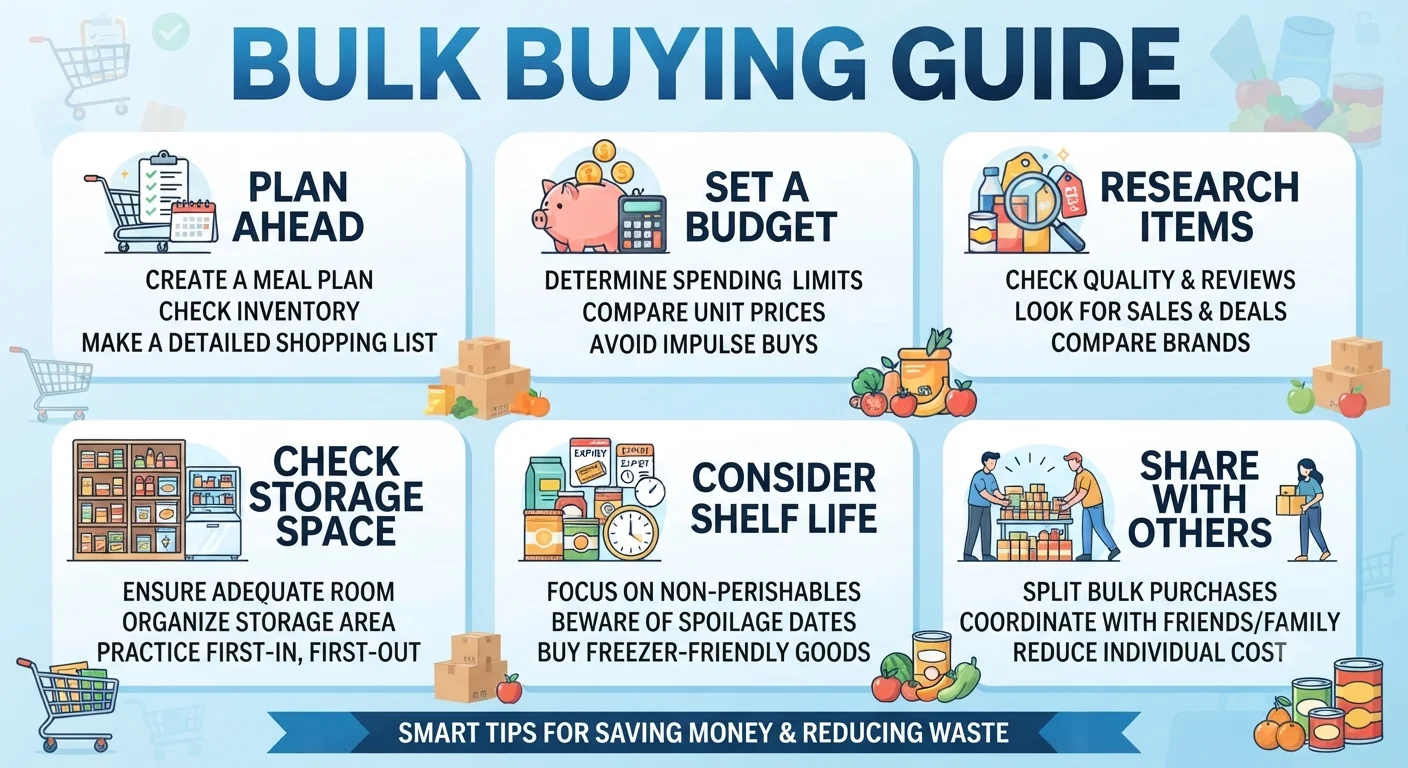
Bulk buying only reliably saves money on items with three characteristics: a genuinely lower unit price compared to a standard package, a long shelf life, and regular, predictable use in the household. Without all three, a bulk purchase risks becoming a larger, more expensive form of food waste rather than actual savings.
This guide is independently written and is not affiliated with USDA, OPM, or the official federal Feds Feed Families campaign.
The Unit Price Test
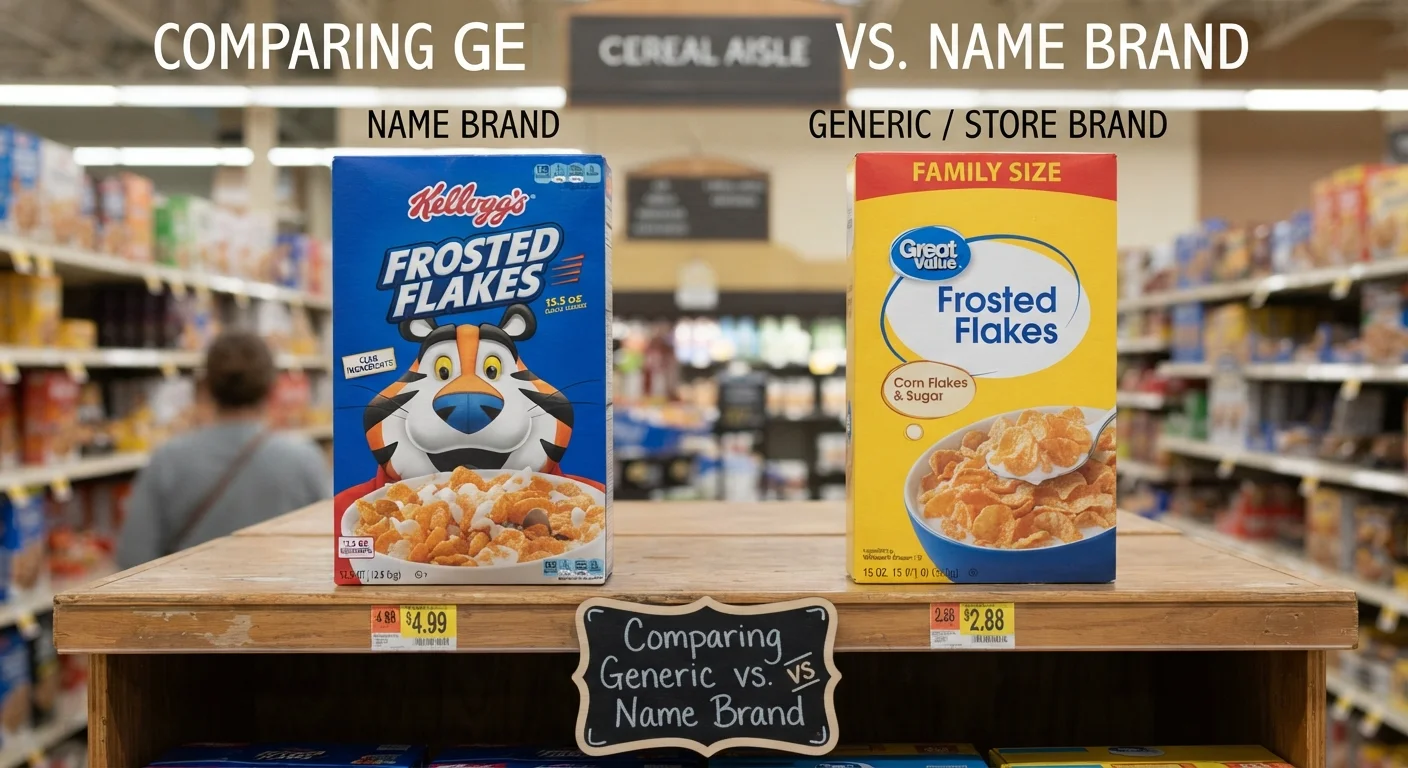
The single most reliable way to evaluate any bulk purchase is comparing the unit price, meaning the price per ounce, pound, or individual count, rather than the total package price. This figure is typically printed in small text on the shelf tag beneath the larger sticker price, and taking a few extra seconds to check it is consistently described as one of the highest-value habits in grocery budgeting. A larger package is not automatically the better deal, and in some cases inflation and shrinkflation have made bulk sizes only marginally cheaper, or occasionally even more expensive per unit, than a standard size on sale.
Foods Generally Worth Buying in Bulk
- The Unit Price Test
- Foods Generally Worth Buying in Bulk
- Foods to Be Cautious About
- Ask Three Questions Before Buying in Bulk
- Is a Warehouse Club Membership Worth It
- Splitting Bulk Purchases
- FAQ
- What's the best way to know if a bulk purchase is actually a good deal?
- What foods are generally worth buying in bulk?
- Should I buy fresh produce in bulk?
- Is a warehouse club membership worth the cost?
- Rice, dried beans, and lentils: extremely long shelf life when stored properly, and unit prices commonly run 30 to 50 percent lower in larger bags
- Frozen proteins like chicken thighs, ground beef, and fish, which keep indefinitely in the freezer and often offer meaningful per-pound savings over smaller fresh packages
- Frozen fruits and vegetables like corn, peas, and spinach, which last for months and avoid the price volatility of fresh produce
- Pasta, given its long shelf life and consistently lower unit price in larger packages
- Canned tomatoes, beans, and broths, which avoid fresh produce price swings and keep flavor well over a year in the pantry
- Spices and seasonings used frequently, since the per-tablespoon cost of a larger jar is often dramatically lower than a small container of the same spice
- Baking staples like flour and granulated sugar for households that bake regularly
Foods to Be Cautious About
Fresh produce is generally not a smart bulk purchase for the average household, since most fresh fruits and vegetables spoil well before a large quantity can realistically be used, making the apparent per-pound savings meaningless once a portion goes to waste. Similarly, any perishable item bought in bulk specifically because it looked like a good deal, rather than because it's a genuine household staple, is a common source of wasted money rather than savings.
Recommended Articles
 BUDGETING MEAL PLANNING
 BUDGETING MEAL PLANNING
 BUDGETING MEAL PLANNING
 BUDGETING MEAL PLANNING
Ask Three Questions Before Buying in Bulk
- Do we buy this regularly, without fail? If an item isn't already a predictable part of the household's routine, a large bulk quantity is a gamble rather than a guaranteed saving.
- Do we have somewhere to store it properly? Pantry space, freezer space, or an airtight container matters just as much as the price, since improper storage can spoil even a genuinely shelf-stable item faster than expected.
- Is the unit price actually lower than a sale-priced standard size? Checking this specifically, rather than assuming bulk always wins, avoids the increasingly common trap of a bulk package that isn't meaningfully cheaper per unit.
Is a Warehouse Club Membership Worth It
Whether a Costco, Sam's Club, or BJ's membership pays for itself depends heavily on total household grocery spending and how consistently the household can take advantage of genuinely lower unit prices on items it already buys regularly. For households spending a substantial amount monthly on groceries who can commit to a consistent shopping list rather than impulse bulk purchases, the membership fee is commonly reported to pay for itself within a few months.
Splitting Bulk Purchases
For households without enough storage space or consistent use to justify a full bulk quantity alone, splitting a large bulk purchase with a friend, neighbor, or family member is a practical way to still capture much of the unit-price savings without the risk of the excess going unused or spoiling before it can be finished.
Read More Articals
FAQ
What's the best way to know if a bulk purchase is actually a good deal?
Compare the unit price, meaning the price per ounce, pound, or count, printed on the shelf tag, rather than relying on the total package price or an assumption that bigger is automatically cheaper.
What foods are generally worth buying in bulk?
Rice, dried beans, pasta, frozen proteins, frozen produce, canned tomatoes and beans, and frequently used spices are commonly cited as strong bulk buys due to their long shelf life and typically lower unit price.
Should I buy fresh produce in bulk?
Generally no, for most households, since fresh produce tends to spoil before a large quantity can be used, which erases the apparent per-pound savings once waste is factored in.
Is a warehouse club membership worth the cost?
It depends on total household grocery spending and consistency of use, but for households that spend a substantial amount monthly and shop with a clear list, the membership fee is commonly reported to pay for itself within a few months.
Sources: Consumer bulk-buying research and guidance, general grocery unit-pricing methodology.