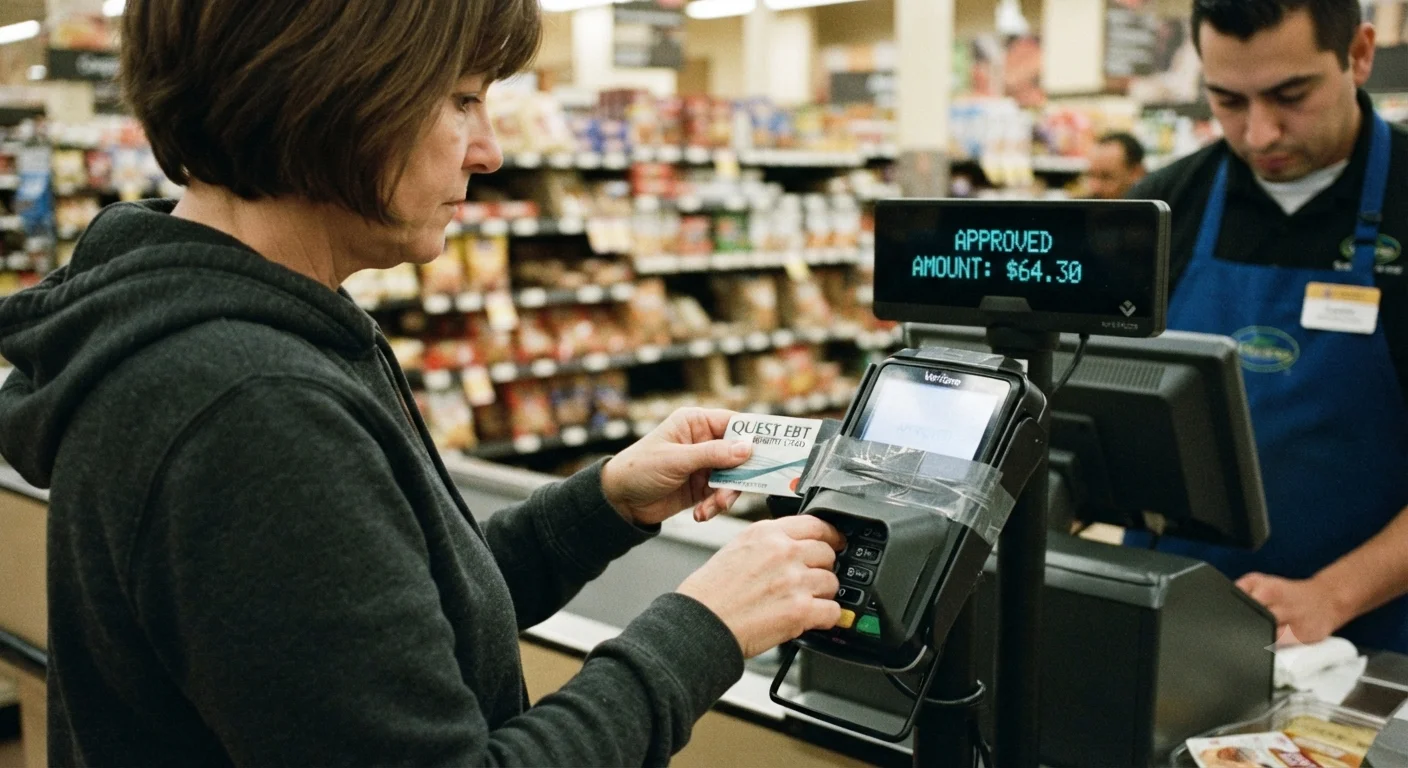
Card skimming, where a hidden device copies your EBT card and PIN information at checkout, remains one of the most common ways SNAP benefits are stolen, and because federal authority to replace stolen benefits expired on December 20, 2024, prevention through steps like locking your card, changing your PIN regularly, and covering the keypad has become significantly more important than it once was.
This guide is independently written and is not affiliated with USDA, OPM, or the official federal Feds Feed Families campaign.
How Skimming Actually Works
A skimmer is a small device criminals attach on top of a store's legitimate card reader, designed to secretly copy your card's magnetic stripe information as you swipe. Combined with a hidden camera or a technique to observe your PIN entry, this stolen information can then be used to create a cloned card and drain your account, often at a completely different location than where the skimming actually occurred.
Why Federal Replacement Funding No Longer Applies
- How Skimming Actually Works
- Why Federal Replacement Funding No Longer Applies
- Locking Your Card: The Single Most Effective Habit
- Changing Your PIN Regularly
- Physical Precautions at the Register
- Blocking Out-of-State and Online Transactions
- Checking Your Account Regularly
- Emerging Security Improvements
- FAQ
- Can I still get stolen SNAP benefits replaced?
- What's the single most effective way to prevent EBT theft?
- How often should I change my EBT PIN?
- Are chip-enabled EBT cards available yet?
Congress passed temporary authority in late 2022 allowing states to use federal funds to replace SNAP benefits stolen through skimming, cloning, and similar methods, but that authority applied only to theft occurring between October 1, 2022, and December 20, 2024, and it was not extended further by subsequent legislation. This means benefits stolen after December 20, 2024, generally cannot be replaced using federal funds, though a small number of states may still offer replacement using their own state funding, so it's worth checking your specific state's current policy rather than assuming replacement is unavailable everywhere.
Locking Your Card: The Single Most Effective Habit
Most states now offer a card lock feature, typically through an app like ConnectEBT or ebtEDGE, that lets you instantly freeze your card between uses, blocking all purchases, balance inquiries, and transactions until you unlock it again, even if a thief has your card number and PIN. Locking your card immediately after each purchase, then unlocking it right before your next intended use, is widely recommended as one of the most effective habits for preventing skimming losses, since a locked card simply cannot be used by anyone, including you, until it's unlocked.
Changing Your PIN Regularly
State agencies consistently recommend changing your EBT PIN on a regular schedule, commonly monthly, and specifically right before your benefit deposit date, since a skimmer who captured an old PIN won't be able to use a newly changed one. Avoiding obvious PIN combinations, such as 1234, 1111, or a birth date, is equally important, since these are the first combinations a thief will try if they've obtained your card number without a matching PIN.
Recommended Articles
 NEWS POLICY UPDATES
 NEWS POLICY UPDATES
 NEWS POLICY UPDATES
 NEWS POLICY UPDATES
Physical Precautions at the Register
- Inspect the card reader before swiping for anything loose, discolored, or that looks added on top of the normal slot
- Cover the keypad completely with your hand while entering your PIN, since hidden cameras are a common companion tool to a physical skimmer
- Be cautious at self-checkout machines and standalone card readers, which are frequently targeted specifically because they receive less staff oversight
Blocking Out-of-State and Online Transactions
Many state EBT apps allow you to block out-of-state and online purchases directly from your account settings, which can prevent a thief from using cloned card data far from your actual location, a common pattern in EBT theft. If you don't regularly shop out of state or online, enabling this block by default and only temporarily disabling it when genuinely needed adds another layer of protection.
Checking Your Account Regularly
Reviewing your EBT transaction history regularly, rather than only checking your balance right before shopping, helps you catch unauthorized charges quickly, which matters more than ever now that federal replacement funding has expired, since early detection gives you the best chance of locking your card and limiting further loss even if replacement isn't guaranteed.
Emerging Security Improvements
A small number of states, including California and Oklahoma, began issuing chip-enabled EBT cards in 2025 and 2026, a more secure standard than the older magnetic stripe cards most states still use. Federal legislation aimed at mandating this upgrade nationwide, including the Enhanced Cybersecurity for SNAP Act, has been reintroduced in Congress but had not passed as of mid-2026, meaning most states still rely on the older, more vulnerable card technology for now.
Read More Articals
FAQ
Can I still get stolen SNAP benefits replaced?
Federal authority to replace stolen benefits expired on December 20, 2024, so theft occurring after that date generally cannot be replaced with federal funds, though a small number of states may still offer replacement using their own funding.
What's the single most effective way to prevent EBT theft?
Using your state's card lock feature, typically through an app like ConnectEBT or ebtEDGE, to freeze your card between uses is widely recommended as one of the most effective prevention habits.
How often should I change my EBT PIN?
State agencies commonly recommend changing your PIN monthly, ideally right before your benefit deposit date, and always avoiding obvious combinations like 1234 or a birth date.
Are chip-enabled EBT cards available yet?
A small number of states, including California and Oklahoma, began issuing chip-enabled cards in 2025 and 2026, but most states still use the older, more vulnerable magnetic stripe cards as of mid-2026.
Sources: USDA Food and Nutrition Administration, National Council on Aging, North Carolina Department of Health and Human Services, New York Office of Temporary and Disability Assistance.