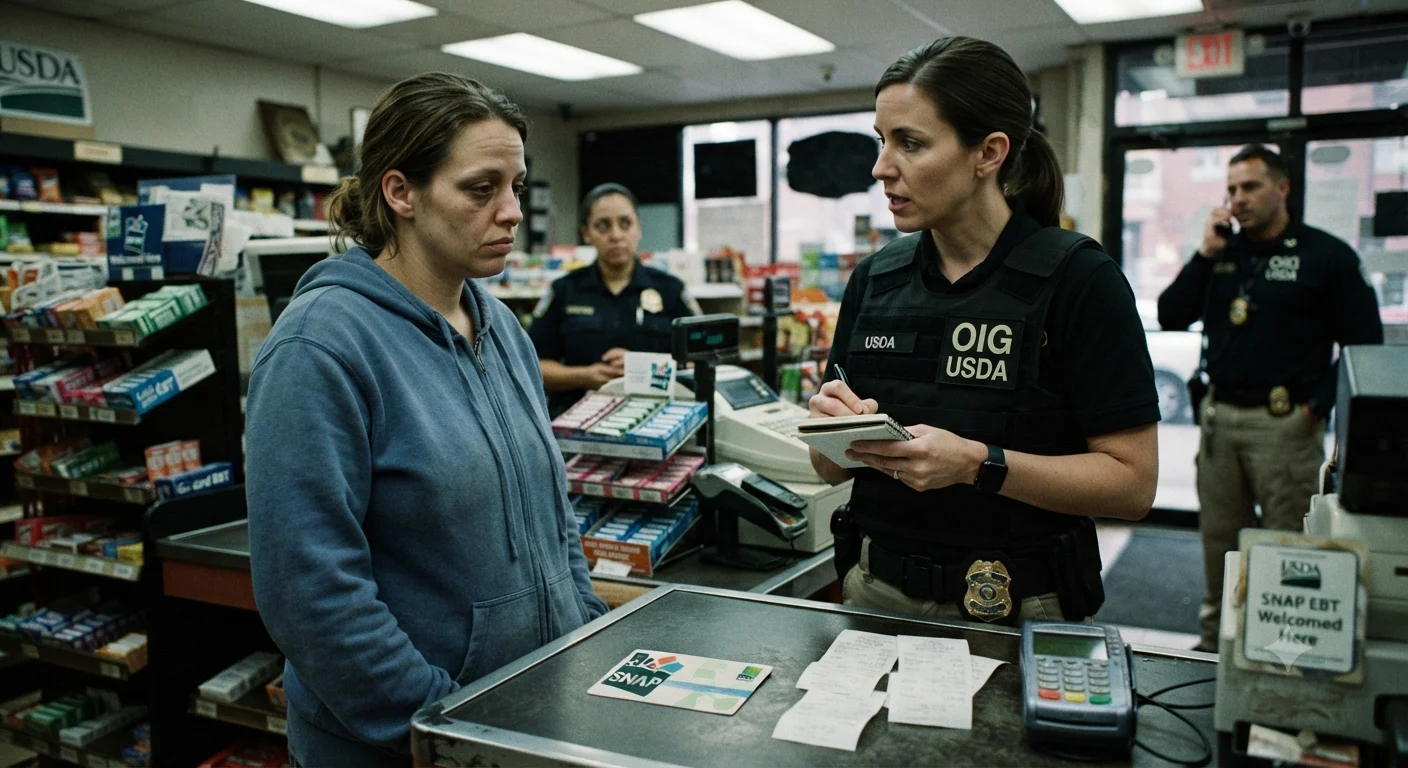
According to USDA's own data, about 98 percent of SNAP households use their benefits correctly, meaning genuine fraud is relatively rare compared to the program's overall size, though it does still occur in several distinct forms, including recipient fraud, retailer fraud, and external scams targeting individual cardholders, each with its own reporting process.
This guide is independently written and is not affiliated with USDA, OPM, or the official federal Feds Feed Families campaign.
What Counts as SNAP Fraud
USDA defines fraud broadly as intentionally breaking program rules to get benefits, extra benefits, money, or services someone isn't entitled to, which can involve a recipient, a retailer, or an outside scammer with no legitimate connection to the program at all. It's worth distinguishing genuine intentional fraud from an honest mistake, such as accidentally underreporting income on an application, which typically results in a requirement to repay overissued benefits rather than criminal fraud charges.
Recipient Fraud
- What Counts as SNAP Fraud
- Recipient Fraud
- Retailer Fraud
- External Scams Targeting Recipients
- How to Report Suspected Fraud
- Filing a Complaint if You're a Victim
- Why This Matters for the Program's Integrity
- FAQ
- How common is SNAP fraud?
- What's the difference between recipient fraud and retailer fraud?
- Where do I report suspected SNAP fraud?
- Can I report SNAP fraud anonymously?
This involves a SNAP recipient intentionally breaking program rules, such as lying about income or household composition to qualify for benefits, or selling their benefits for cash, sometimes called trafficking. Recipients found to have committed fraud can face disqualification from the program, required repayment of overissued benefits, and in serious cases, criminal charges.
Retailer Fraud
Retailer fraud occurs when a store becomes authorized to accept SNAP through fraudulent means, or when a store owner participates in trafficking, such as exchanging SNAP benefits for cash instead of food, or selling ineligible items like alcohol or tobacco in exchange for benefits. Signs of possible retailer fraud include a store that accepts SNAP but stocks little or no actual food for sale, or a store offering to let SNAP customers buy on credit against future benefits.
External Scams Targeting Recipients
Unlike recipient or retailer fraud, external scams are committed by criminals with no legitimate connection to SNAP, targeting recipients directly to steal their benefits through methods including card skimming, phishing texts or calls claiming a card has been locked, and social media posts falsely promising instant cash in exchange for signing up with personal information. USDA has specifically warned that any message asking for your EBT card number or PIN by phone, text, or a social media signup link is fraudulent, since legitimate state agencies will never request this information that way.
Recommended Articles
 NEWS POLICY UPDATES
 NEWS POLICY UPDATES
 NEWS POLICY UPDATES
 NEWS POLICY UPDATES
How to Report Suspected Fraud
Where and how you report depends on the type of fraud suspected:
- Recipient or retailer fraud is generally reported to your state SNAP agency, most of which offer an online reporting form, a phone hotline, or an in-person option at a local office
- Fraud involving federal funds or larger schemes can be reported directly to the USDA Office of Inspector General by phone at 1-800-424-9121 or online at usdaoig.oversight.gov
- Suspected benefit theft through skimming or phishing should be reported to your state's EBT customer service line as soon as possible, in addition to any broader fraud report
Reports can generally be made anonymously, and you don't need to be completely certain something is wrong before reporting a genuine concern.
Filing a Complaint if You're a Victim
If you believe your own benefits were affected by an error, a third-party scam, or another SNAP-related problem, contacting your state SNAP agency directly to file a complaint is the appropriate first step, since state agencies are responsible for investigating individual cases, separate from the broader fraud-reporting process used to flag suspected abuse by others.
Why This Matters for the Program's Integrity
Because SNAP costs taxpayers more than $100 billion per year, USDA treats program integrity as a priority separate from, but connected to, its core mission of feeding eligible households. Reporting genuine fraud helps protect the program's funding and public trust, while understanding that the vast majority of SNAP households use their benefits appropriately helps counter the misconception that fraud is widespread.
Read More Articals
FAQ
How common is SNAP fraud?
According to USDA, about 98 percent of SNAP households qualify for and use their benefits correctly, meaning genuine fraud is relatively rare compared to the program's overall scale.
What's the difference between recipient fraud and retailer fraud?
Recipient fraud involves an individual lying to qualify for benefits or selling them for cash, while retailer fraud involves a store fraudulently becoming authorized to accept SNAP or trafficking benefits with recipients.
Where do I report suspected SNAP fraud?
Report recipient or retailer fraud to your state SNAP agency, and larger or federal-fund-related fraud directly to the USDA Office of Inspector General at 1-800-424-9121 or usdaoig.oversight.gov.
Can I report SNAP fraud anonymously?
Yes, most reporting channels accept anonymous reports, and you don't need to be completely certain before reporting a genuine concern.
Sources: USDA Food and Nutrition Administration, Georgia Department of Human Services, Illinois Department of Human Services, BenefitsCheckUp.