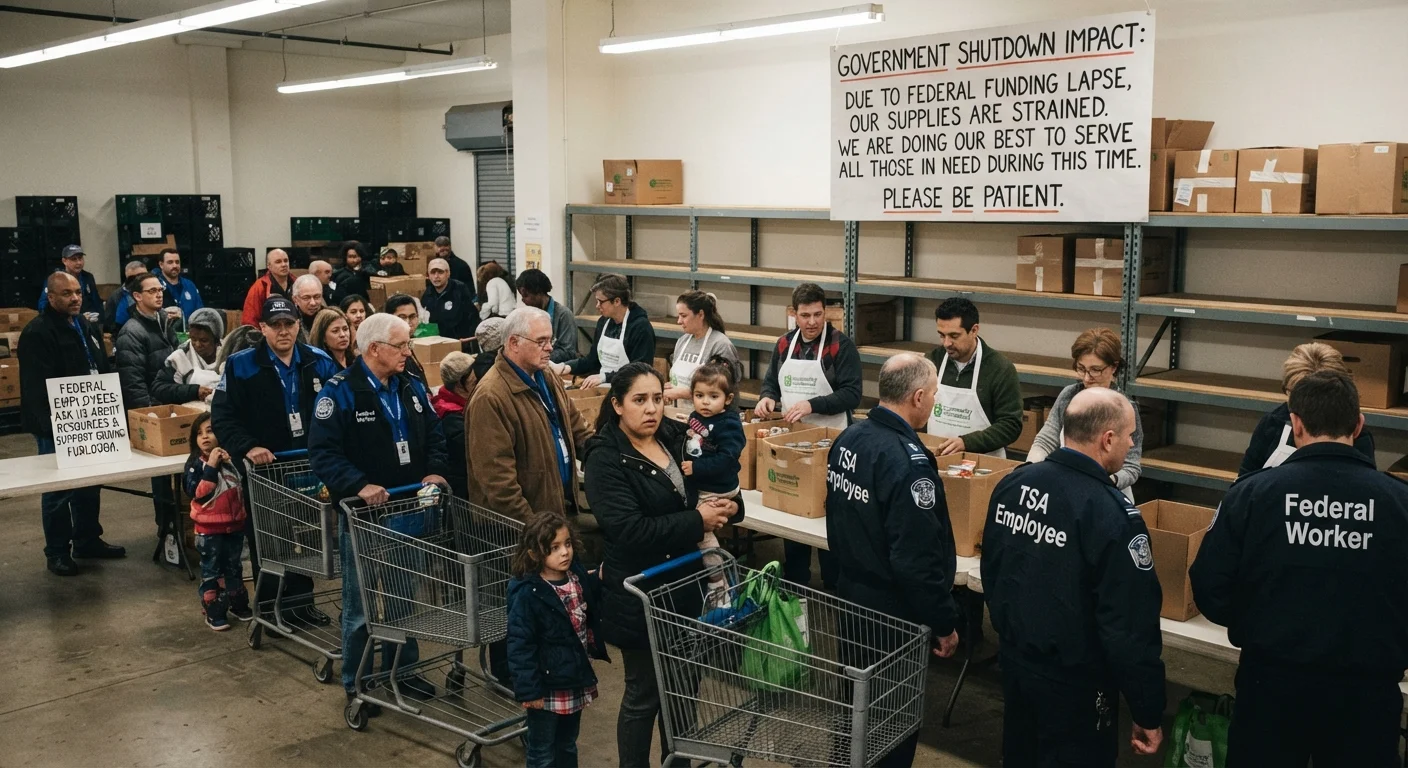
The government shutdown that ran from October 1 through November 12, 2025, the longest in modern U.S. history, caused SNAP payments to be delayed for the first time in the program's 60-year history, forcing millions of households to lean on local food banks for support and prompting two federal judges to order USDA to release partial emergency funding before the shutdown ultimately ended. Congress has since given SNAP its own dedicated funding line through September 30, 2026, meaning a future shutdown before that date would not delay SNAP payments the same way.
This guide is independently written and is not affiliated with USDA, OPM, or the official federal Feds Feed Families campaign.
What Actually Happened in Fall 2025
USDA notified regional SNAP offices in an October 10, 2025 letter that there were insufficient funds to pay benefits after October 31. On October 31, a day before benefits were set to end, two federal judges ruled USDA had to pay at least partial SNAP benefits using its emergency contingency reserve. The shutdown ended on November 12, 2025, with November SNAP benefits delayed, though December and January benefits ultimately went out on time and in full.
How Food Banks Responded in Real Time
- What Actually Happened in Fall 2025
- How Food Banks Responded in Real Time
- A Structural Fix: SNAP Now Has Its Own Funding Line
- What Happens After September 30, 2026
- TANF Faces Different Rules
- Broader Pressure on Food Banks Beyond Shutdown Risk
- What to Do If a Future Disruption Affects You
- FAQ
- Did SNAP payments actually get delayed during a government shutdown?
- Is SNAP protected from a future government shutdown?
- Does a government shutdown affect TANF the same way it affects SNAP?
- Where can someone get help if a future disruption affects their SNAP benefits?
Feeding America and its member food banks explicitly committed to helping affected families during the disruption, and organizations reported the November 2025 disruption as one of the most significant single events their networks had ever managed. One North Carolina food pantry director described it as a challenge unlike anything her organization had previously faced, reflecting how sharply and suddenly demand spiked across the country.
A Structural Fix: SNAP Now Has Its Own Funding Line
Following the fall 2025 shutdown, Congress passed a full-year appropriation specifically funding SNAP and WIC through September 30, 2026, separating these programs from the broader annual appropriations fight that can otherwise trigger a shutdown. This is why a brief partial shutdown in late January 2026, which lasted only a few days before Congress reached an agreement, did not delay SNAP or WIC payments at all, since neither program was actually part of that particular funding dispute.
-
How to Spot Fake "Food Stamp Help" Websites and Scams
What Happens After September 30, 2026
It's worth understanding that SNAP's current dedicated funding protection is not permanent, it runs through the end of fiscal year 2026. If Congress doesn't pass a new continuing resolution or full appropriations bill covering SNAP by October 1, 2026, the program could return to the same kind of contingency-fund legal uncertainty that caused the November 2025 disruption, a fundamentally different situation from a permanent cut to who qualifies or how much SNAP pays.
Recommended Articles
 NEWS POLICY UPDATES
 NEWS POLICY UPDATES
 NEWS POLICY UPDATES
 NEWS POLICY UPDATES
TANF Faces Different Rules
Unlike SNAP and WIC, TANF cash assistance is funded through a different mechanism and can be affected by a government shutdown even when SNAP itself is protected, so a household relying on TANF should understand this program faces separate risk during a funding lapse, distinct from the specific protections now covering SNAP.
Broader Pressure on Food Banks Beyond Shutdown Risk
Separate from shutdown-specific disruption, the Center on Budget and Policy Priorities estimates SNAP participation fell by more than 4.5 million people between the July 2025 enactment of the One Big Beautiful Bill Act and April 2026, with the number of children receiving SNAP likely falling by more than 1.5 million, driven by new work requirements and other eligibility changes. Feeding America's CEO has described food banks as purchasing record levels of food to meet this increased demand, even separate from any shutdown-related disruption.
What to Do If a Future Disruption Affects You
If a future funding lapse does affect your benefits, contacting your local food bank, calling 211, or reaching the USDA National Hunger Hotline at 1-866-3-HUNGRY are all reliable ways to find immediate support while any disruption is being resolved, and it's worth knowing that food banks serve everyone affected by this kind of disruption, including federal employees and contractors who may also be experiencing a paycheck delay.
Read More Articals
FAQ
Did SNAP payments actually get delayed during a government shutdown?
Yes, for the first time in the program's history, during the October to November 2025 shutdown, when USDA warned of insufficient funds before two federal judges ordered emergency partial payments.
Is SNAP protected from a future government shutdown?
Through September 30, 2026, yes, since Congress gave SNAP and WIC a dedicated full-year funding line separate from the broader appropriations process. This protection has an expiration date and would need to be renewed.
Does a government shutdown affect TANF the same way it affects SNAP?
No. TANF is funded through a different mechanism than SNAP and WIC's current dedicated appropriation, meaning it can be affected by a shutdown differently.
Where can someone get help if a future disruption affects their SNAP benefits?
Contacting a local food bank, calling 211, or reaching the USDA National Hunger Hotline at 1-866-3-HUNGRY are reliable ways to find immediate support during any future disruption.
Sources: Feeding America Action, AARP, Axios, Civil Eats, Propel, Center on Budget and Policy Priorities.