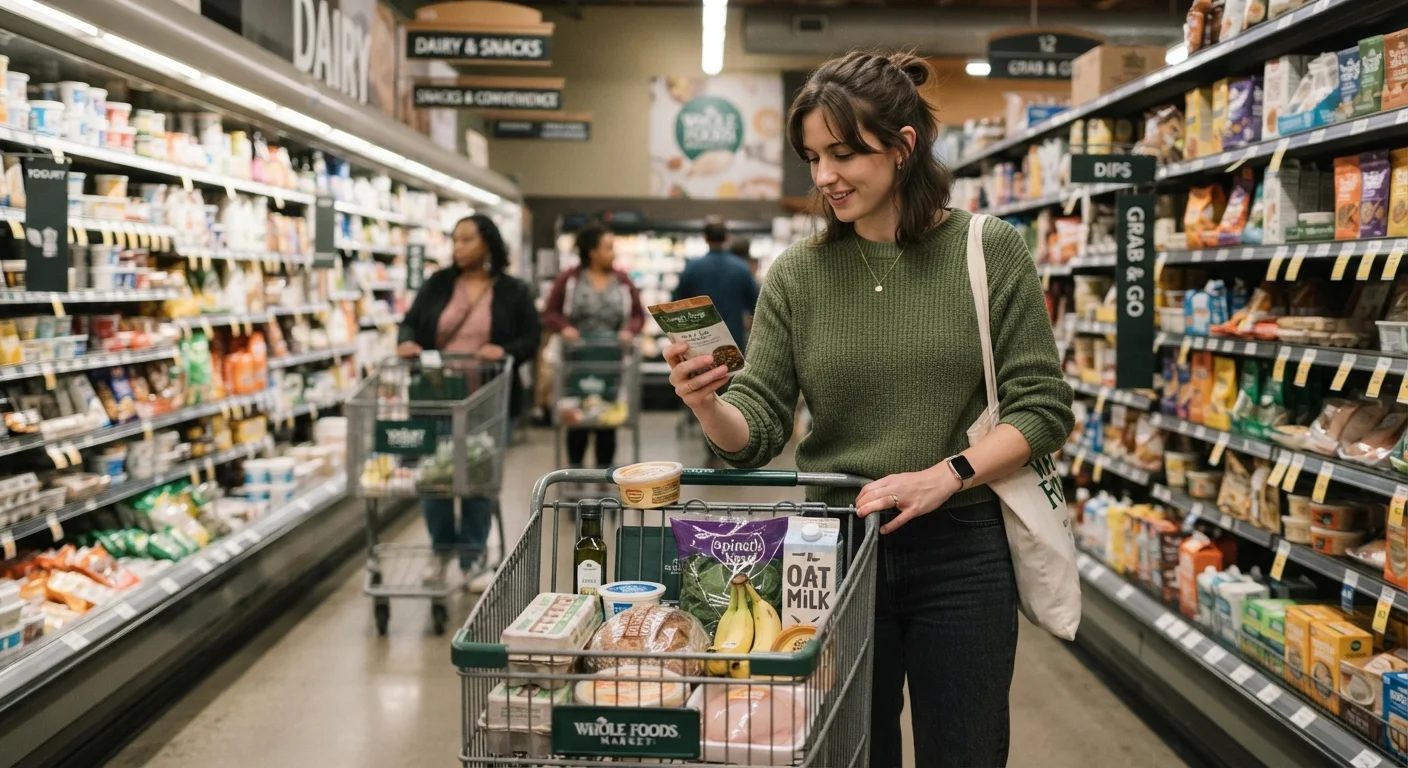
Single-person households genuinely spend more per person on groceries than larger families do, and food waste from oversized packaging is a major reason why, according to USDA's own food plan benchmarks, a single adult can expect to spend roughly $300 to $580 a month depending on which of the four USDA food plans best matches their habits, a noticeably higher per-person figure than a larger household typically spends.
This guide is independently written and is not affiliated with USDA, OPM, or the official federal Feds Feed Families campaign.
Why One-Person Households Face a Structural Disadvantage
Most grocery packaging, from family-sized meat packs to large bags of salad greens, is sized for a household of three or more, which means a solo shopper often either overbuys and throws away the unused portion, or pays a higher per-unit price for a smaller package specifically to avoid that waste. Understanding this as a structural feature of how stores package food, rather than a personal budgeting failure, is a useful reframe before diving into specific strategies.
Buy Loose Produce Instead of Pre-Packaged Bags
- Why One-Person Households Face a Structural Disadvantage
- Buy Loose Produce Instead of Pre-Packaged Bags
- Lean on the Freezer Aisle
- Portion and Freeze Fresh Purchases Immediately
- Choose Recipes That Reuse the Same Core Ingredients
- Have a Go-To "Use It Up" Meal
- Shop Smaller and More Often, If That Works Better
- Track Your Actual Spending Before Assuming You're Overspending
- FAQ
- Why do single-person households often spend more per person on groceries?
- Is buying loose produce actually cheaper than pre-bagged produce?
- Should a single person avoid buying fresh meat in family-sized packages?
- What is the USDA's estimated monthly grocery cost for a single adult?
Choosing individual, loose fruits and vegetables rather than a pre-packaged bag lets you buy exactly the quantity you'll realistically use before it spoils, which for a single person is often far less than a standard bag contains. Some price comparisons have found loose produce actually costs less per pound than the pre-bagged equivalent, meaning this habit can save money on both ends: avoiding waste and avoiding the pre-packaging premium.
Lean on the Freezer Aisle
Frozen vegetables, fruits, and proteins let you use exactly the portion needed for a single meal while the rest stays safely stored rather than slowly spoiling in the refrigerator. Frozen produce is nutritionally comparable to fresh in most cases, and buying a bag of frozen vegetables specifically to avoid the common single-person problem of a fresh bag going bad before it's finished is a genuinely practical trade rather than a compromise.
Portion and Freeze Fresh Purchases Immediately
When you do buy fresh meat or a larger package of anything perishable, dividing it into single-meal portions and freezing everything you won't use within a couple of days, rather than leaving the whole package in the refrigerator, is one of the most effective single habits for reducing waste. A package of chicken thighs split into individual freezer bags right after the shopping trip means you're never facing a choice between eating the same protein for a week or throwing part of it away.
Recommended Articles
 BUDGETING MEAL PLANNING
 BUDGETING MEAL PLANNING
 BUDGETING MEAL PLANNING
 BUDGETING MEAL PLANNING
Choose Recipes That Reuse the Same Core Ingredients
Building a small rotation of meals that share overlapping ingredients, rather than a different recipe with entirely unique items each time, is especially important for a single-person household, since a random specialty ingredient bought for one recipe often goes unused and wasted afterward. Before buying anything fresh and unfamiliar, it's worth asking whether it will realistically be used in at least two planned meals that week.
Have a Go-To "Use It Up" Meal
Keeping one or two flexible recipes in your regular rotation specifically designed to absorb odds and ends, a stir fry, a soup, or a frittata that can take whatever vegetables or small amounts of protein are left over, gives leftover ingredients a genuine purpose before they spoil, rather than letting them sit forgotten until they're no longer usable.
Shop Smaller and More Often, If That Works Better
Rather than one large weekly haul, a smaller weekly trip supplemented by a quick midweek stop for a few fresh items can actually reduce waste for a single person, since it avoids the temptation to buy a large quantity of something perishable that ultimately goes unused before the next trip.
Track Your Actual Spending Before Assuming You're Overspending
Because estimates of grocery spending are frequently lower than actual spending once someone tracks it carefully, keeping a simple running total for two to three weeks before assuming a budget problem exists gives a far more accurate picture of where money is actually going, and often reveals that produce waste specifically, rather than the overall grocery bill, is the real source of overspending.
Read More Articals
FAQ
Why do single-person households often spend more per person on groceries?
Most grocery packaging is sized for larger households, meaning a solo shopper often either overbuys and wastes food or pays a higher per-unit price for smaller packages to avoid that waste.
Is buying loose produce actually cheaper than pre-bagged produce?
Often yes, some price comparisons have found loose produce costs less per pound than the bagged equivalent, in addition to letting you buy only the amount you'll realistically use.
Should a single person avoid buying fresh meat in family-sized packages?
Not necessarily, but portioning and freezing the unused amount immediately after the shopping trip, rather than leaving it all in the fridge, prevents it from spoiling before it can be used.
What is the USDA's estimated monthly grocery cost for a single adult?
Roughly $300 to $580 a month, depending on which of USDA's four food plans, from Thrifty to Liberal, most closely matches the person's spending habits.
Sources: National Council on Aging, USDA Food Plan benchmarks, Washington Post food reporting.