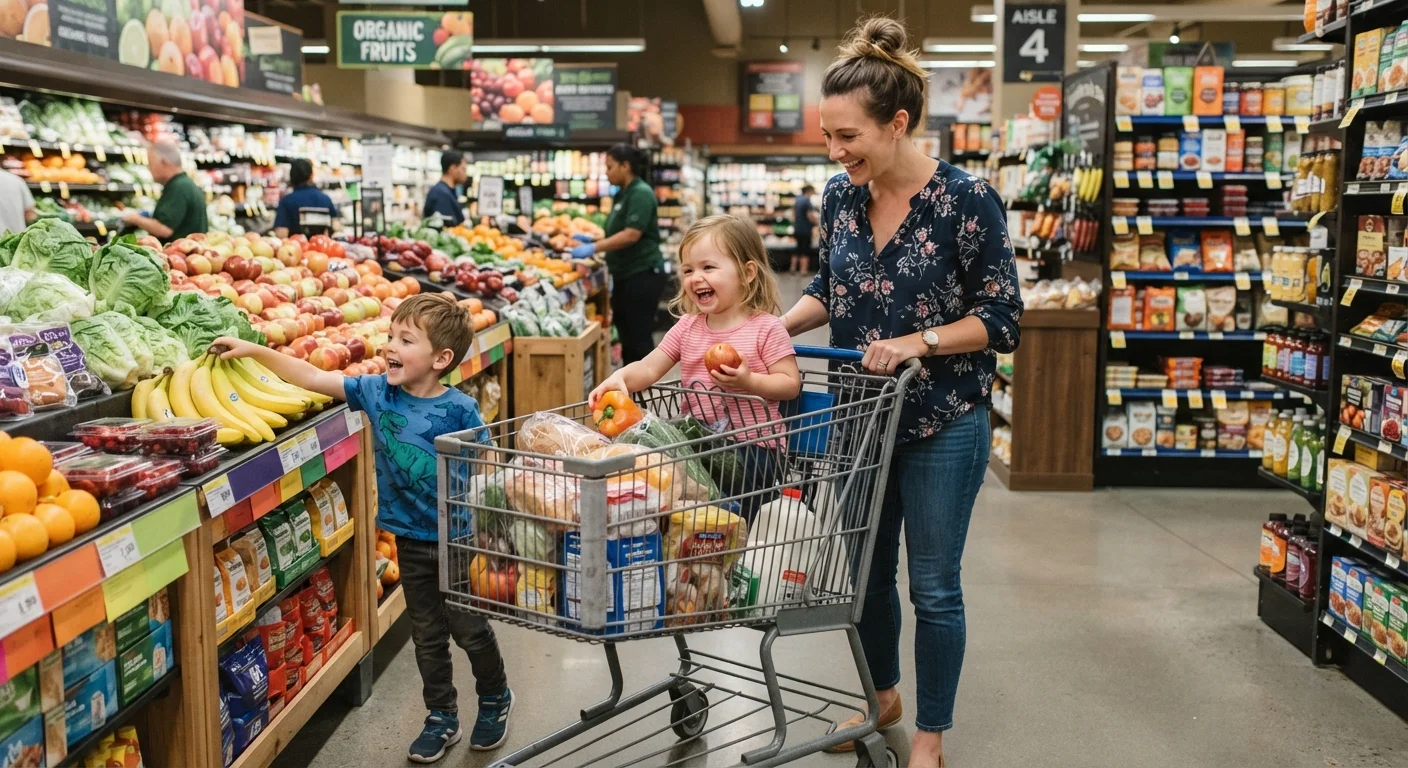
A grocery store is genuinely overwhelming for a young child, packed with bright lights, unfamiliar sounds, and eye-level packaging specifically designed to grab attention, and according to Mayo Clinic guidance, children who are tired, hungry, or facing a change in routine have a lower tolerance for frustration, all of which makes the grocery store a near-perfect setup for a meltdown. The good news is that the same preparation that helps prevent a meltdown, planning ahead, timing the trip well, and involving your child, also tends to keep spending under control.
This guide is independently written and is not affiliated with USDA, OPM, or the official federal Feds Feed Families campaign.
Timing the Trip Matters More Than It Seems
Shopping during off-peak hours, like a weekday morning, means shorter lines, more space to maneuver, and a calmer overall environment for a young child, and Michigan State University Extension specifically recommends going when children are well-rested and well-fed rather than at the end of a long day. A hungry or tired child isn't just harder to manage emotionally, they're also more likely to beg for whatever's at their eye level, which tends to push spending off your planned list.
Build the List Together Before You Leave
- Timing the Trip Matters More Than It Seems
- Build the List Together Before You Leave
- Bring a Snack, Every Single Time
- Give Kids a Real Job in the Store
- Set Clear Expectations Before You Walk In
- Have a Plan for When It Doesn't Go Perfectly
- Consider Pickup or Delivery for the Toughest Weeks
- Turn the Trip Into a Teaching Moment for Older Kids
- FAQ
- What's the single most effective way to prevent a grocery store meltdown?
- Does involving kids in grocery shopping actually help the budget?
- Should I set spending expectations with my child before entering the store?
- What should I do if a meltdown happens despite my preparation?
Involving kids in making the shopping list before you go, even young children who can only draw simple pictures of items, gives them a sense of ownership over the trip and something concrete to look for once you're in the store. For older kids, this is also a natural opportunity to talk about the household's budget and why certain choices get made over others, turning a routine errand into a genuine life skill lesson.
Bring a Snack, Every Single Time
Hunger is consistently identified as one of the most common root causes of mid-shopping meltdowns, so packing a small snack, fruit slices, crackers, or a granola bar, addresses the problem before it starts. This single habit is inexpensive, takes almost no planning, and prevents both an emotional meltdown and the financial one that follows when a hungry child successfully lobbies for an unplanned treat at the register.
Give Kids a Real Job in the Store
Letting a child help find items on the list, cross things off, or compare prices for older kids turns the trip into an active task rather than a passive, boring wait, and boredom is another well-documented meltdown trigger. This also directly protects your budget, since a child engaged in a genuine task is less likely to wander toward the candy aisle or fixate on something not on the list.
Recommended Articles
 BUDGETING MEAL PLANNING
 BUDGETING MEAL PLANNING
 BUDGETING MEAL PLANNING
 BUDGETING MEAL PLANNING
Set Clear Expectations Before You Walk In
Talking with your child in the car or at home about what to expect, including whether there will be a small treat at the end and what the ground rules are, sets a boundary before you're standing in the aisle negotiating in front of other shoppers. Being specific and consistent, such as "you can pick one thing under $2," gives a child a real choice within a real limit, rather than an open-ended request that's harder to say no to once you're already there.
Have a Plan for When It Doesn't Go Perfectly
Even with good preparation, a meltdown will sometimes happen anyway. Staying calm, speaking quietly, and if needed, stepping away from the immediate area for a moment to help your child reset are more effective than trying to power through the rest of the shopping list at that moment. It's also completely reasonable to cut a trip short and finish another time if things aren't working, since forcing your way through a full list during a genuine meltdown rarely saves money or time in the end.
Consider Pickup or Delivery for the Toughest Weeks
If a particular week feels especially hard, whether due to your child's mood, your own energy, or a genuinely tight schedule, using a store's order-ahead pickup option, where available, removes the in-store variable entirely and can also help avoid impulse purchases that tend to happen when browsing the aisles with a restless child in tow.
Turn the Trip Into a Teaching Moment for Older Kids
For school-age children, involving them in comparing unit prices, sticking to a specific dollar limit for a category, or helping track the running total as items go into the cart builds real financial literacy skills while also functioning as a genuinely engaging distraction from boredom, addressing both the budget goal and the behavior goal at the same time.
Read More Articals
FAQ
What's the single most effective way to prevent a grocery store meltdown?
Bringing a snack and shopping when your child is well-rested and well-fed addresses hunger and fatigue, the two most commonly cited triggers for a mid-shopping meltdown.
Does involving kids in grocery shopping actually help the budget?
Often yes. A child given a real task, like finding items on a list or comparing prices, is engaged and less likely to wander toward unplanned purchases, and discussing the budget together builds awareness that can reduce requests for extras.
Should I set spending expectations with my child before entering the store?
Yes. Setting a clear, specific limit, such as one item under a certain price, before you're standing in an aisle gives your child a real choice within a real boundary, which is easier to hold than an open-ended negotiation.
What should I do if a meltdown happens despite my preparation?
Stay calm, step away from the immediate area if needed to help your child reset, and don't hesitate to cut the trip short and finish another time rather than pushing through the full list.
Sources: Mayo Clinic, Michigan State University Extension, First 5 California.