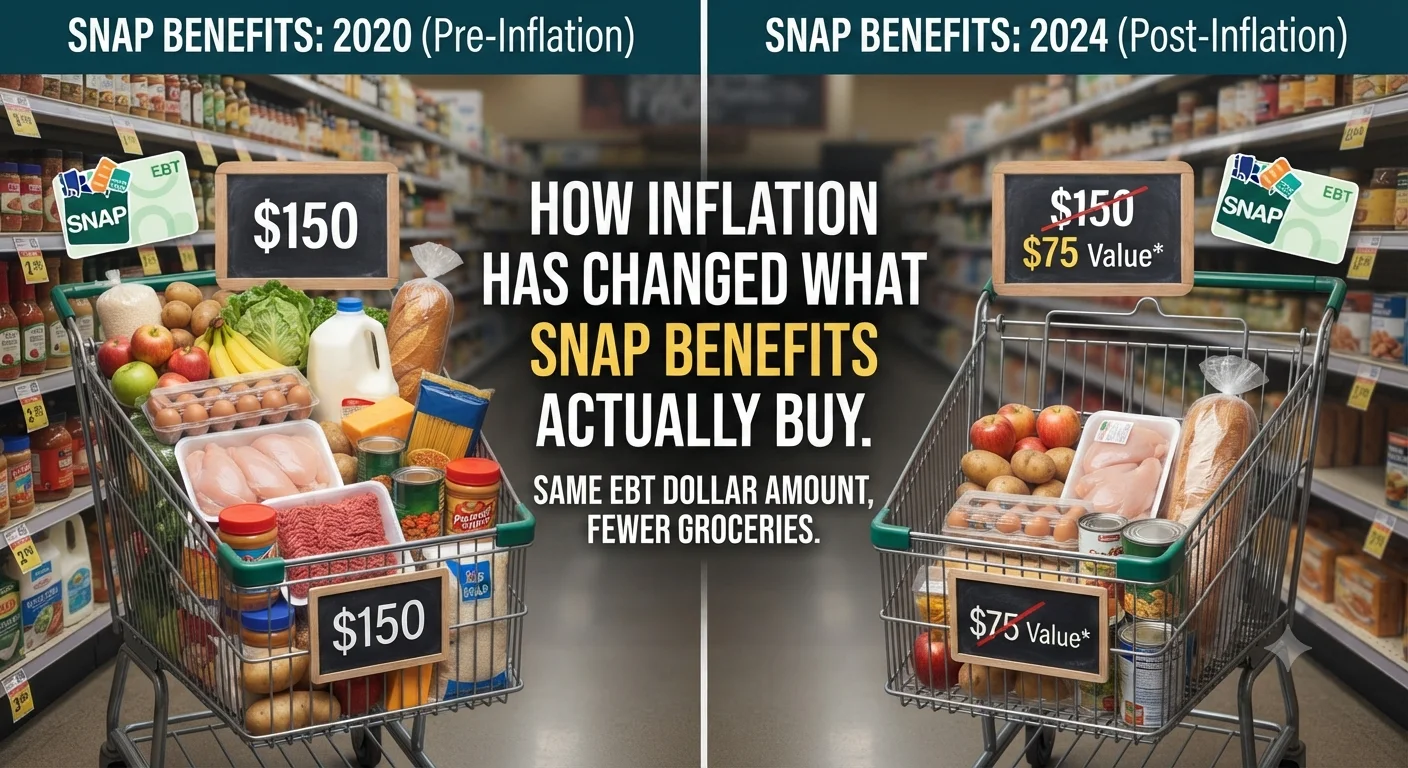
SNAP benefits are recalculated annually based on the Thrifty Food Plan, a USDA model grocery basket, with a cost-of-living adjustment of approximately 2.7 percent applied starting October 1, 2025 for fiscal year 2026. Because this adjustment is calculated in advance and grocery prices can rise faster than projected, many households experience a real-world gap where their benefit buys noticeably less by the middle or end of the benefit year than it did at the start.
This guide is independently written and is not affiliated with USDA, OPM, or the official federal Feds Feed Families campaign.
How the Thrifty Food Plan Sets Benefit Levels
The Thrifty Food Plan is a USDA-calculated model grocery basket representing the lowest-cost way to feed a family of four a nutritionally adequate diet, and it forms the basis for maximum SNAP allotments nationwide. As of 2026, the Thrifty Food Plan cost for a family of four runs approximately $229 per week, or roughly $993 to $1,003 per month, a figure USDA updates monthly using the Consumer Price Index to reflect current grocery costs.
Why the Annual Adjustment Can Lag Real Prices
- How the Thrifty Food Plan Sets Benefit Levels
- Why the Annual Adjustment Can Lag Real Prices
- The 2021 Thrifty Food Plan Recalculation
- How Households Experience the Gap
- How SNAP Enrollment Has Responded
- What This Means Going Forward
- FAQ
- How much has SNAP purchasing power changed due to inflation?
- What is the Thrifty Food Plan?
- Did SNAP benefits increase significantly in recent years?
- How often are SNAP benefit amounts updated?
SNAP's maximum allotments are set once a year, effective each October 1, based on Thrifty Food Plan projections calculated in advance of that fiscal year. If grocery inflation accelerates faster than projected partway through the year, as it has during several recent years of unusually high food price increases, the fixed benefit amount set in October effectively buys less by the following summer than it did when the fiscal year began, since the benefit itself doesn't adjust again until the next October.
-
Food Insecurity in America: Current Statistics and What They Mean
The 2021 Thrifty Food Plan Recalculation
In October 2021, USDA conducted a more fundamental revision of the Thrifty Food Plan, resulting in a roughly 21 percent permanent increase to maximum SNAP allotments, the first major recalculation of the plan's methodology in decades. The U.S. Government Accountability Office later reviewed this update and found that while it substantially improved benefit adequacy, the accelerated timeline USDA used to complete the recalculation, about two and a half months instead of the roughly eight months originally planned, meant certain steps to ensure the update was fully robust and transparent were not taken as thoroughly as they could have been.
How Households Experience the Gap
For a family relying on SNAP, this dynamic often shows up as a benefit that stretches comfortably through the first few months after the October reset, but feels noticeably tighter by summer, particularly during years when grocery inflation runs above the rate USDA projected when setting that year's allotment. This is one of the reasons budgeting strategies like dividing a monthly benefit evenly across four weeks, and prioritizing shelf-stable staples that resist price volatility, can help households manage the practical effects of this lag.
Recommended Articles
 NEWS POLICY UPDATES
 NEWS POLICY UPDATES
 NEWS POLICY UPDATES
 NEWS POLICY UPDATES
How SNAP Enrollment Has Responded
Rising food costs relative to income have also affected who qualifies for SNAP in the first place, since eligibility is based on comparing household income to a poverty-level threshold that doesn't move in lockstep with grocery prices. Combined with many states' continued use of Broad-Based Categorical Eligibility, this has kept SNAP enrollment relatively elevated compared to pre-pandemic levels, even as unemployment has remained comparatively low.
What This Means Going Forward
Because SNAP's benefit-setting mechanism is structurally built around an annual, forward-looking projection rather than a real-time cost tracker, some degree of lag between actual grocery prices and benefit adequacy is likely to remain a persistent feature of the program rather than a one-time issue tied to a specific year's inflation spike. Staying informed about your specific state's current maximum allotment and your own recertification date is the most direct way to make sure your benefit reflects USDA's most recent calculation.
Read More Articals
FAQ
How much has SNAP purchasing power changed due to inflation?
SNAP benefits are adjusted annually based on the Thrifty Food Plan, but because this adjustment is set once a year in advance, benefits often buy less by the end of a fiscal year than they did at the start during periods of above-projection grocery inflation.
What is the Thrifty Food Plan?
A USDA-calculated model grocery basket representing the lowest-cost way to feed a family of four a nutritionally adequate diet, which forms the basis for maximum SNAP benefit amounts nationwide.
Did SNAP benefits increase significantly in recent years?
Yes, most notably in October 2021, when a methodology-level Thrifty Food Plan recalculation resulted in a roughly 21 percent permanent increase to maximum allotments, separate from the smaller annual cost-of-living adjustments applied most other years.
How often are SNAP benefit amounts updated?
Maximum allotments are formally updated once a year, effective each October 1, though the underlying Thrifty Food Plan cost figure itself is recalculated monthly by USDA using the Consumer Price Index.
Sources: USDA Food and Nutrition Administration, U.S. Government Accountability Office Thrifty Food Plan review.