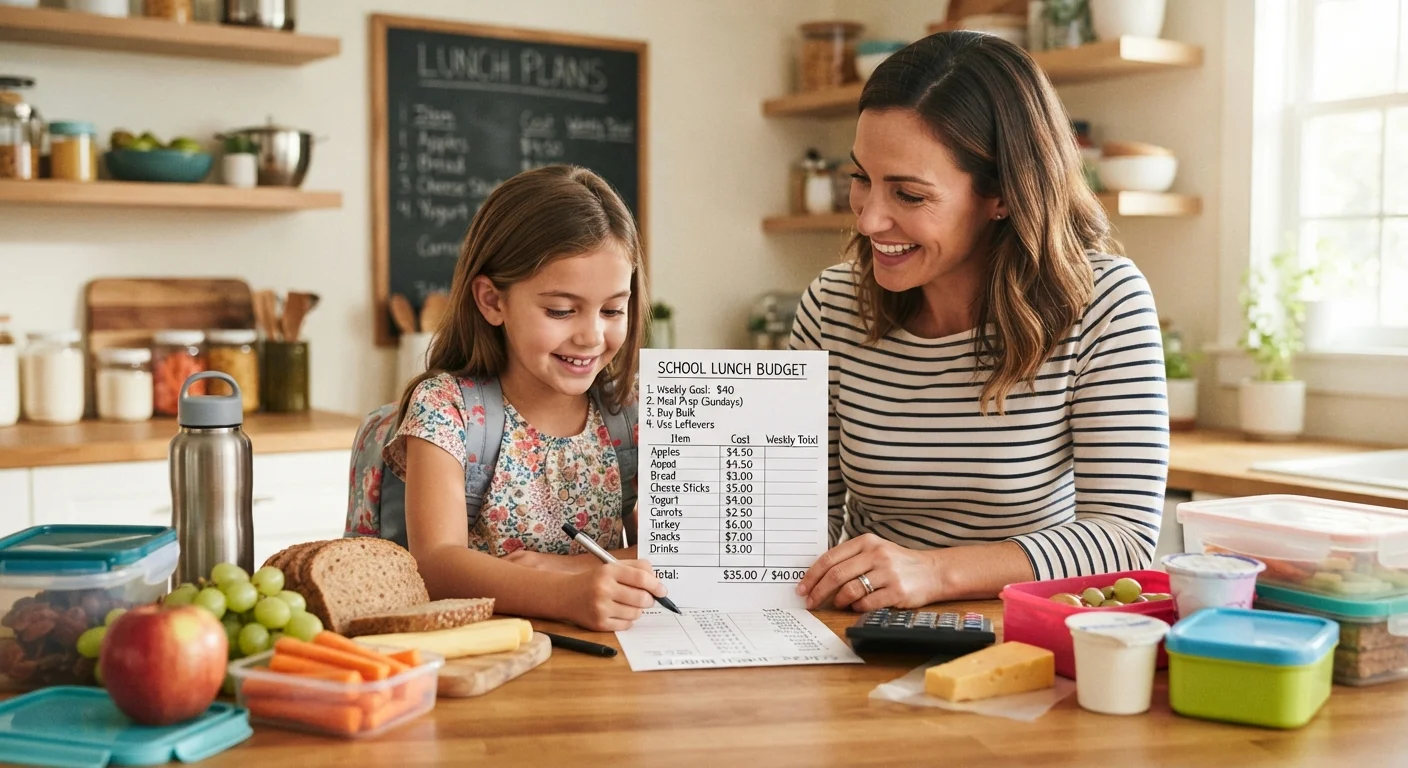
According to Deloitte data, the average cost of a packed school lunch rose from $6.03 in 2023 to $6.33 in 2026, which means the long-held assumption that packing lunch is automatically cheaper than buying it in the cafeteria genuinely deserves a second look, since the average school cafeteria lunch has hovered closer to $3 to $4 per meal in recent reporting.
This guide is independently written and is not affiliated with USDA, OPM, or the official federal Feds Feed Families campaign.
Run the Actual Numbers for Your Family First
Before assuming packing lunch is the more affordable option, doing a genuine price comparison for your specific household, factoring in how many kids you're packing for and what they'll actually eat, is worth the time. For families with more than one child, mornings can also become genuinely rushed trying to pack multiple lunches, which is part of why some families settle on a mixed approach, packing most days and having kids buy on the busiest mornings.
Check Free and Reduced-Price Meal Eligibility First
- Run the Actual Numbers for Your Family First
- Check Free and Reduced-Price Meal Eligibility First
- Skip Individually Packaged Snacks
- Choose Fruit in Its Own Natural Packaging
- Watch for the Character-Packaging Markup
- Get Kids Involved in the Planning
- Invest in Reusable Containers
- Use Leftovers Strategically
- FAQ
- Is packing a school lunch always cheaper than buying one at school?
- Should I check free or reduced-price meal eligibility before optimizing a lunch budget?
- What's the single most effective way to lower packed lunch costs?
- How can I reduce lunch waste from spoiled pre-cut fruit?
Before optimizing a packed lunch budget at all, it's worth confirming whether your child already qualifies for free or reduced-price school meals, since this can eliminate the cost question entirely. Households receiving SNAP or TANF are typically automatically certified, and many other households qualify based on income alone through a simple application submitted to the school.
Skip Individually Packaged Snacks
Buying large containers of yogurt, crackers, and other snacks, then portioning them yourself into reusable containers, is consistently cited as one of the most effective ways to lower a packed lunch budget, since individually wrapped, single-serving packaging carries a real price premium over the bulk equivalent.
Choose Fruit in Its Own Natural Packaging
Apples, oranges, and bananas already come in their own protective packaging, reducing both cost and the food waste that comes from more delicate pre-cut or pre-packaged fruit spoiling before it's eaten. One dietitian interviewed on this topic specifically noted that throwing away moldy pre-cut fruit is money lost twice, once on the purchase and again on the wasted food.
Recommended Articles
 BUDGETING MEAL PLANNING
 BUDGETING MEAL PLANNING
 BUDGETING MEAL PLANNING
 BUDGETING MEAL PLANNING
Watch for the Character-Packaging Markup
Snack items featuring popular cartoon or movie characters on the packaging can carry a meaningfully higher price than the identical product in plain packaging. A practical workaround some families use is buying a cheap sheet of stickers and letting kids personalize a plain container themselves, capturing the same fun factor without the branded product markup.
Get Kids Involved in the Planning
Asking children what they'd actually like in their lunch, within reasonable limits, increases the odds the food actually gets eaten rather than thrown away untouched, and for older kids, involving them in the cost side of the decision can double as an introduction to basic budgeting.
Invest in Reusable Containers
Replacing disposable sandwich bags and paper lunch bags with reusable containers and a reusable lunch bag costs more upfront but pays off over the course of a school year, since the ongoing cost of constantly replacing disposable packaging adds up meaningfully by June.
Use Leftovers Strategically
Cooking a slightly larger dinner specifically with lunch leftovers in mind is one of the most effective, low-effort ways to lower a lunch budget, since it essentially eliminates a separate ingredient cost for that day's lunch entirely.
Read More Articals
FAQ
Is packing a school lunch always cheaper than buying one at school?
Not necessarily anymore. The average packed lunch now costs over $6, while a school cafeteria lunch has generally run closer to $3 to $4, so it's worth comparing actual costs for your specific household rather than assuming packing is automatically cheaper.
Should I check free or reduced-price meal eligibility before optimizing a lunch budget?
Yes, this should be the first step, since households receiving SNAP or TANF are often automatically eligible, and many other households qualify based on income through a simple school application.
What's the single most effective way to lower packed lunch costs?
Buying items in bulk and portioning them yourself into reusable containers, rather than purchasing individually packaged single-serving snacks, consistently saves the most money.
How can I reduce lunch waste from spoiled pre-cut fruit?
Choosing whole fruit that comes in its own natural packaging, like apples, oranges, and bananas, reduces spoilage compared to more delicate pre-cut fruit.
Sources: Deloitte data via WTKR/Norfolk news reporting, North Carolina Cooperative Extension, Budget Bytes.